
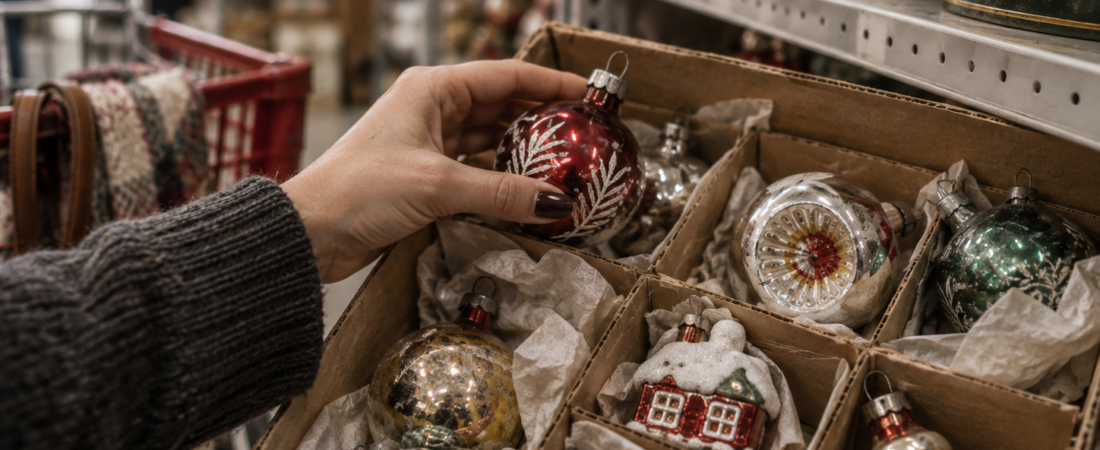
There is a particular kind of thrift-store box that is very easy to walk past in November.
It is usually low on a shelf, slightly crushed, full of tissue paper and mismatched Christmas decorations. There may be a plastic ornament from five years ago sitting beside something much older. Nothing is arranged beautifully. Half the pieces are tangled together.
And then you spot one.
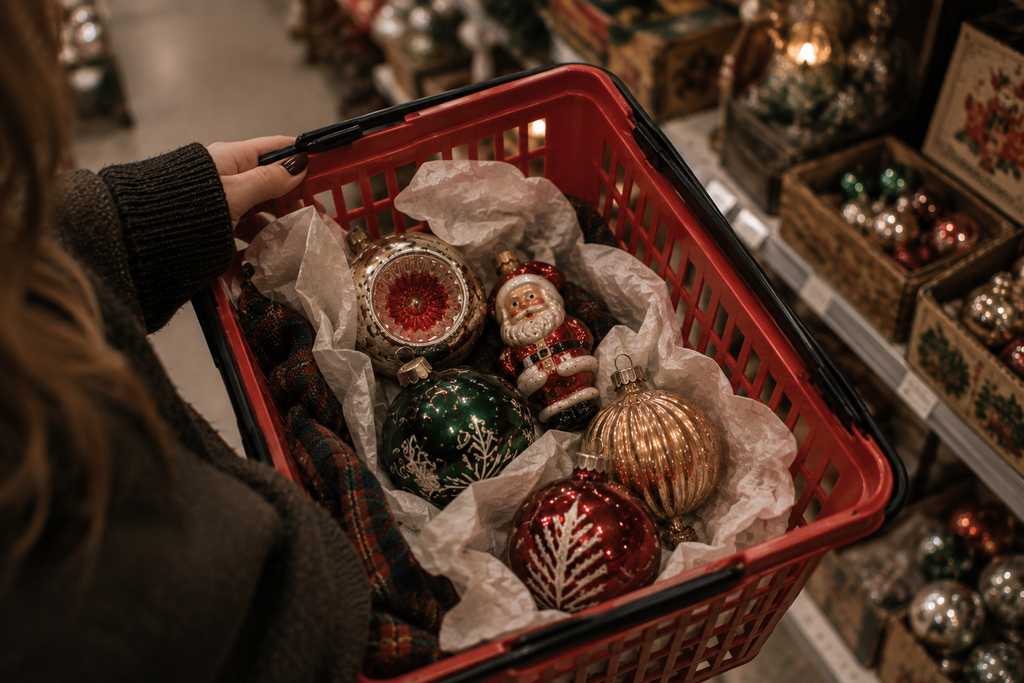
A thin glass bauble with faded paint. A deep indent that catches the light. A tiny Santa with an imperfect face. An old cardboard divider holding ornaments that clearly did not come from the same decade.
That is exactly what The Weekend Hunt is for.
Not shopping for the sake of shopping, but spending an hour looking closely enough to notice the things other people overlook.
This weekend, we’re hunting for vintage Christmas ornaments.
Things worth looking for at the thrift store – Learn more
This post may contain affiliate links. If you make a purchase through one of these links, After Friday may earn a small commission at no extra cost to you. We only include products that naturally support the activity or help care for the finds featured in the article.
Start With the Box Everyone Else Is Ignoring
The best Christmas section at a thrift store rarely looks curated.
In fact, the more chaotic the ornament area is, the more reason there is to slow down.
Look underneath newer plastic decorations. Check the loose tissue paper. Open old boxes even when the ornaments inside do not match the picture on the lid. Scan baskets filled with miscellaneous holiday pieces rather than limiting yourself to anything labeled “vintage.”
Old ornaments often arrive at thrift stores as mixed household donations, which means genuinely interesting pieces can end up beside modern decorations worth very little.
You are not looking for perfection.
You are looking for age, craftsmanship, unusual shapes, old materials and evidence that somebody made an object differently from the way most inexpensive ornaments are made today.
1. Old Silvered Glass Ornaments
If there is one category worth learning to recognize, it is older glass.
Pick up the ornament carefully. Older glass ornaments can feel surprisingly light and delicate compared with heavier modern reproductions.
Look for:
- softly faded silvering
- areas where the reflective finish has naturally worn away
- thin glass walls
- aged metal caps
- hand-painted stripes, flowers or leaves
- subtle variation between apparently matching ornaments
- patina that looks gradual rather than artificially distressed
Do not reject an ornament simply because the silvering is imperfect.
A little fading, spotting or unevenness can make an old ornament more interesting — particularly if the glass itself is intact.
What matters more is whether you actually like the piece.
This is a weekend hunt, not an appraisal desk.

2. Reflector and Indent Ornaments
These are the ornaments that can stop you mid-box.
Instead of a completely round surface, part of the glass is pushed inward to create a deep reflective center. The indent often forms petals, geometric patterns or a starburst effect.
They were designed to play beautifully with Christmas-tree light, which is exactly why they remain so visually distinctive today.
Look closely at the recessed section.
Older examples may have layers of silver, red, gold, green or painted detail inside the indent, sometimes with noticeable wear around the edges.
They do not need to be pristine.
In fact, an imperfect old reflector ornament can be far more beautiful than a flawless new reproduction.
Weekend Hunt rule: if an ornament makes you rotate it in your hand to figure out how it was made, it deserves a second look.
3. Shiny Brite Ornaments
This is one name worth remembering.
Shiny Brite became one of the recognizable names in American glass Christmas ornaments during the mid-20th century, and surviving examples still appear regularly in secondhand shops.
Look at the metal cap.
You may find SHINY BRITE or MADE IN U.S.A. stamped into it.
Common designs include simple colored balls, striped ornaments, bells, pointed shapes and reflector-style designs.
But do not make the mistake of hunting only for a famous name.
A marked cap is useful evidence. It is not the only thing that makes an ornament worth bringing home.
An unmarked hand-painted ornament you love is still a better find than a branded ornament you do not.
4. Figural Glass Ornaments
Now the hunt becomes more fun.
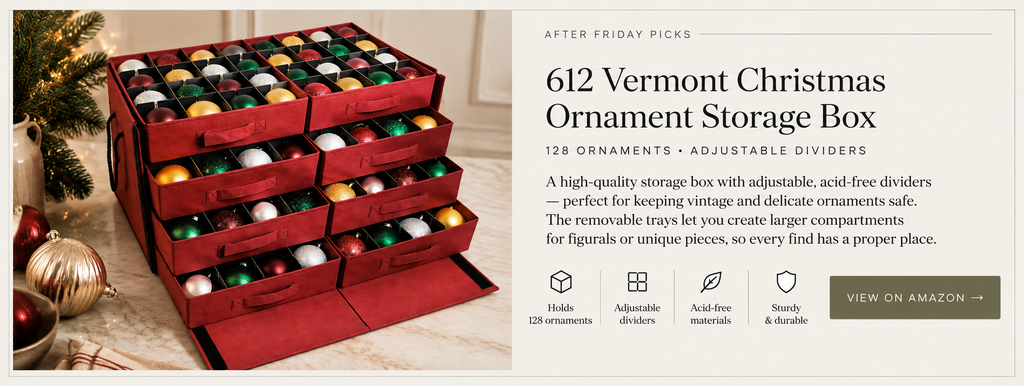
Instead of another round bauble, look for ornaments shaped like:
- Santas
- houses
- bells
- fruit
- pinecones
- animals
- people
- birds
- mushrooms
- little everyday objects
Older figural ornaments often feel charming precisely because they are not perfectly symmetrical.
Paint may sit slightly differently from one side to the other. Faces may be a little odd. Details can feel hand-finished rather than printed with machine precision.
That personality is part of the appeal.
Before buying, check protruding areas carefully. Noses, tails, rooftops and narrow tips are often where fragile glass ornaments are damaged first.
5. Hand-Painted Details
Sometimes the shape is ordinary but the decoration is not.
Look for brushwork.
Leaves, stars, flowers, snowy branches and thin decorative lines can all turn a simple glass ball into something worth noticing.
Bring the ornament closer and compare repeated details.
Perfectly identical decoration can indicate modern mass production. Small inconsistencies may suggest a more hands-on decorative process.
That does not automatically tell you how old an ornament is, but it is a useful reason to examine it more closely.
6. Original Boxes — Even When They Are Not Complete
Do not ignore the packaging.
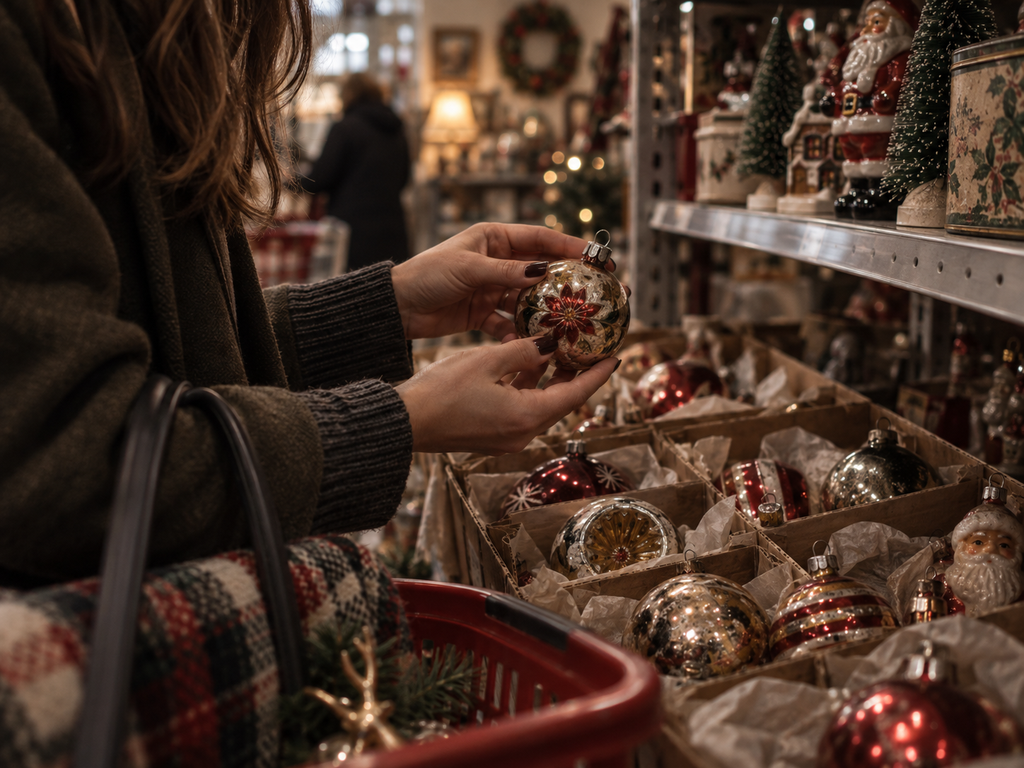
An old ornament box can be almost as interesting as what is inside it.
Look for:
- illustrated cardboard lids
- old typography
- divided cardboard interiors
- manufacturer names
- country-of-origin markings
- faded store labels
- old price stickers
And always open the box.
The ornaments inside may not be original to it at all.
Families reuse ornament boxes for decades, adding and removing decorations year after year. That means a modest old box can sometimes hold a completely unrelated mix of ornaments.
Which is exactly why opening it is part of the hunt.
7. Sets That Are Almost Sets
Do not wait for twelve identical ornaments in perfect condition.
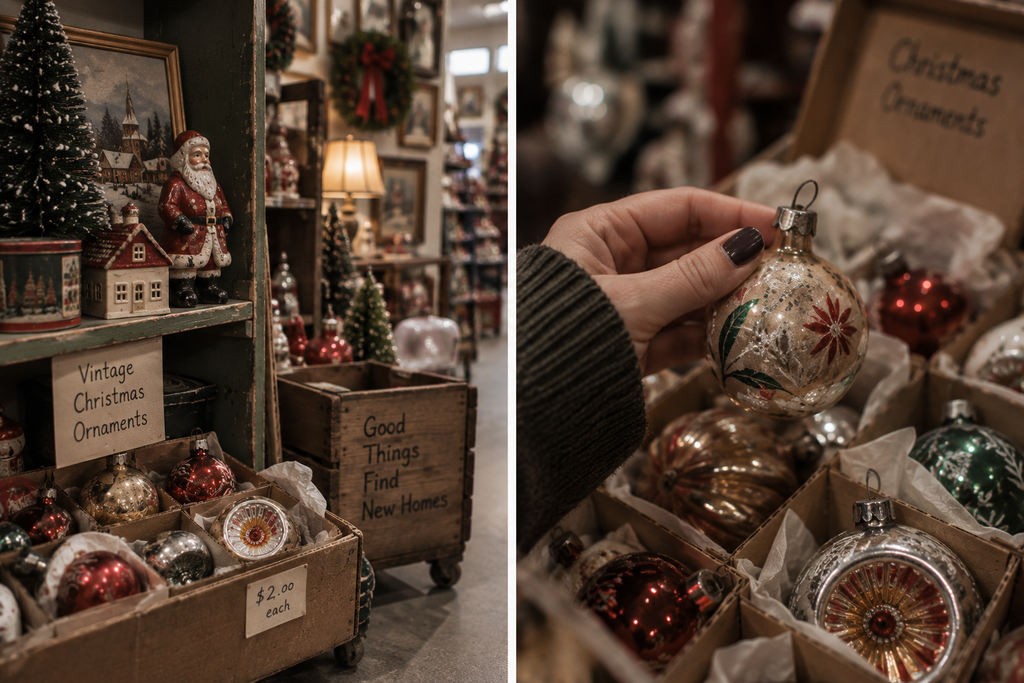
Three matching glass balls can be useful.
So can four ornaments in the same color family, even when the patterns are different.
Vintage Christmas decorating tends to look better when it feels collected rather than purchased in one afternoon anyway.
A tiny group of red reflector ornaments could sit together on a tree. A handful of silver pieces could hang from a branch in a vase. Two unusual figurals could become the beginning of a collection you add to every December.
The goal is not to find an instant complete set.
It is to find one good thing at a time.
8. The Slightly Strange Ones
Every good thrift hunt needs this category.
The ornament that makes you wonder:
Who decided this belonged on a Christmas tree?
A tiny pickle. A glass mushroom. A strange bird. A miniature vegetable. An oddly serious Santa. Something shaped like an object you cannot immediately identify.
Pick it up.
Unusual subject matter is often what gives a vintage tree personality.
And even if the ornament turns out not to be particularly old or collectible, finding something genuinely peculiar for a few dollars can still qualify as a very good Saturday.
What to Check Before You Buy
Once you find something promising, take thirty seconds before putting it in your basket.
Check the neck
Look underneath the metal cap if it moves easily, but never force it.
The narrow glass neck is one of the most fragile areas of an ornament. Chips there can spread into larger cracks.
Look for cracks, not just scratches
Surface wear is one thing.
A structural crack through thin glass is another.
Hold the ornament gently near a light source and rotate it.
Check the cap
Stamped lettering, shape and aging can provide useful clues, but caps can also be replaced over the years.
Treat them as evidence rather than absolute proof of age.
Look at the paint
Natural wear usually appears in places that have been handled or rubbed over time.
Be more skeptical when every part of an ornament has the exact same theatrical “antique” finish.
Smell the box
This sounds ridiculous until you bring home a cardboard ornament box that has spent twenty years in a damp basement.
Strong mildew or musty odors deserve caution, particularly with paper, cardboard and fabric decorations.
Do Not Assume “Old-Looking” Means Old
Vintage-style Christmas decorations are enormously popular, which means there are plenty of convincing reproductions.
Some are beautiful.
There is nothing wrong with buying one.
The important thing is simply not paying a collectible price because something looks old.
Artificial distressing, mottled silver finishes and retro packaging are now common design choices.
When age matters to you, look at the whole object:
glass + cap + paint + wear + construction + packaging + provenance when available.
One clue is rarely enough.

What Is Actually Worth Buying?
Here is our favorite rule:
Buy character before theoretical value.
A $4 ornament you genuinely want to hang every December is a better find than a supposedly collectible one you bought only because somebody online said it was valuable.
For an After Friday hunt, we would prioritize:
- unusual shapes
- beautiful old glass
- hand-painted details
- reflector ornaments
- interesting figurals
- original packaging
- small cohesive groups
- anything that immediately feels unlike the decorations in a big-box Christmas aisle
That is enough.
You do not need a rare collector’s piece for the hunt to be successful.
If You Find a Box Full of Them
This is the dream scenario.
Do not immediately buy everything.
Take them out carefully and separate the genuinely interesting pieces from ordinary modern fillers.
Look for repeated construction, similar caps and related decoration if you are trying to determine whether some ornaments originally belonged together.
Then ask the most useful question:
Would I still want these if nobody told me they were vintage?
If yes, you probably found something good.
Bring Them Home Carefully
Vintage glass is not the category to throw into the trunk underneath your groceries.
Wrap fragile pieces individually before leaving the store if possible.
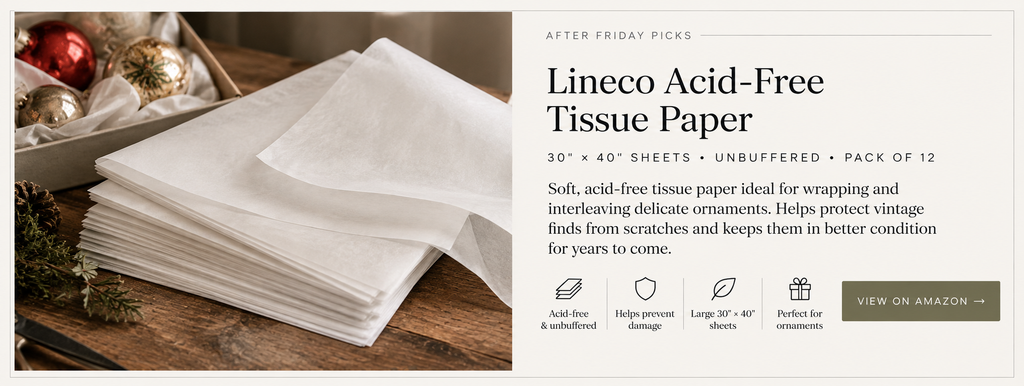
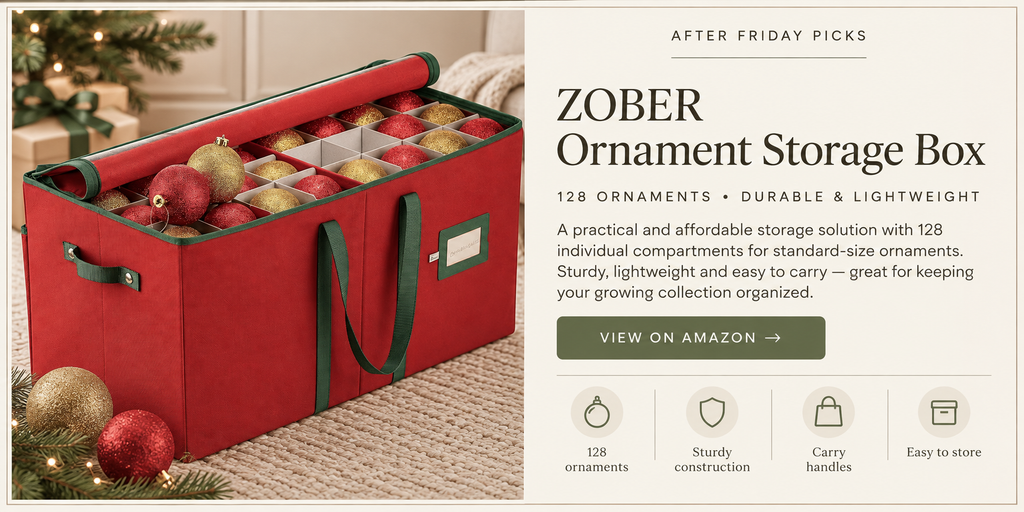
At home, use tissue and divided storage so ornaments cannot knock against one another during the other eleven months of the year.
Avoid aggressive cleaning.
A dry, very soft cloth is often enough for loose dust. Painted, glittered and silvered finishes can be delicate, so when you are uncertain, leave the patina alone rather than trying to make an old ornament look new.
The Best Part Happens Next December
One vintage ornament does not transform a Christmas tree.
That is almost the point.
You find one this year.
Another turns up at a flea market next winter.
A friend gives you one from an old family box.
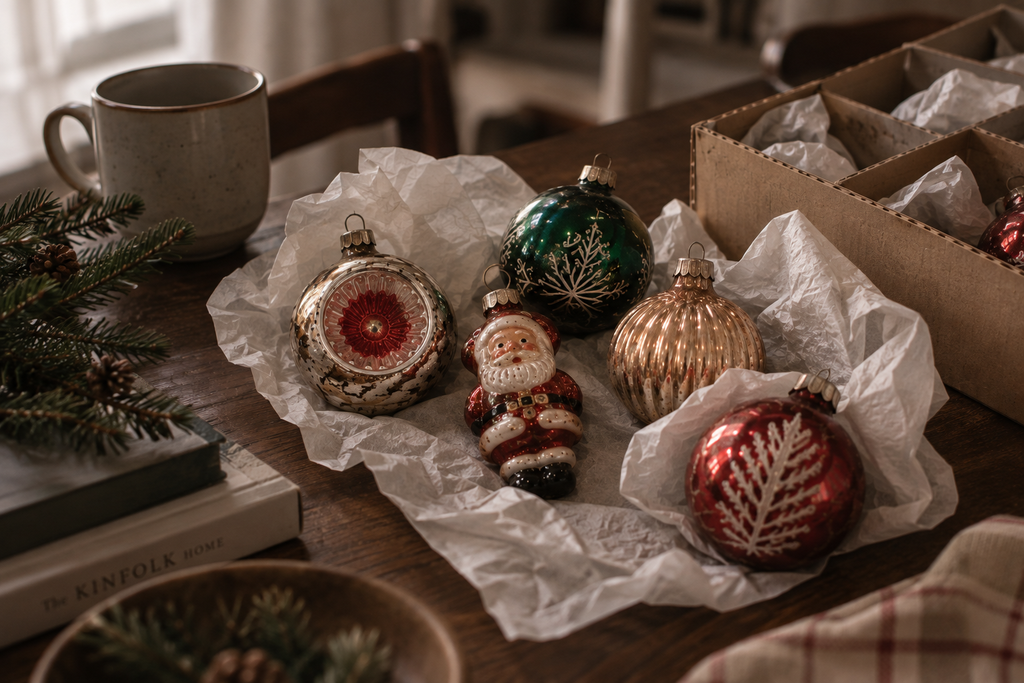
Five Christmases later, you suddenly have a collection — and can remember where half of it came from.
That is much more interesting than buying forty identical ornaments in one box.
This Weekend’s Hunt
So if you have an hour this weekend, find the thrift store with the least glamorous Christmas section.
Skip the perfectly organized display for a minute.
Look underneath.
Open the old boxes.
Turn the strange ornament over in your hand.
Check the cap.
Notice the paint.
And if one little glass decoration makes you stop long enough to wonder where it has been for the last several decades, put it in the basket.
That is the one you came for.
Another thing we always check at the thrift store – Learn More
AFFILIATE DISCLOSURE
This post may contain affiliate links. If you make a purchase through one of these links, After Friday may earn a small commission at no extra cost to you. We only include products that naturally support the activity or help care for the finds featured in the article.