
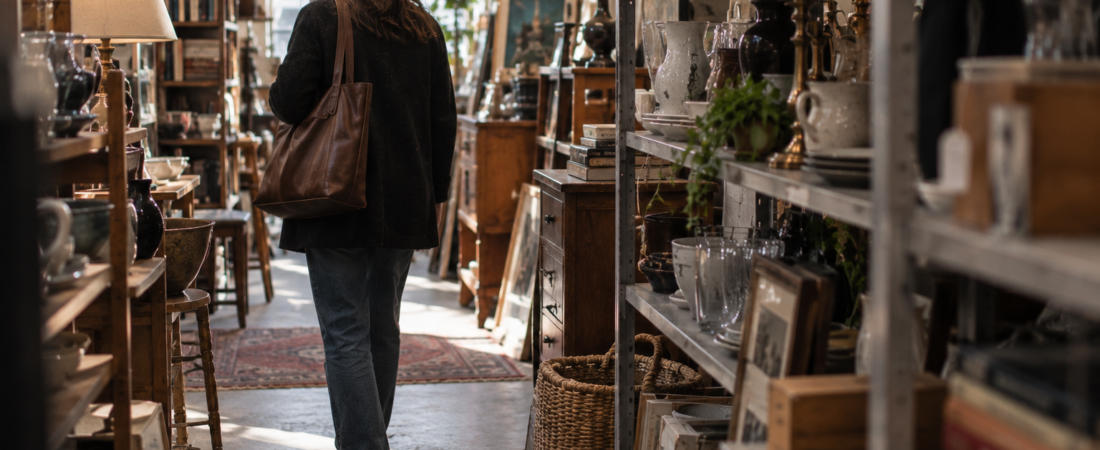
There is a particular kind of Saturday that starts without much of a plan.
You grab a coffee, pick a couple of thrift stores you haven’t visited in a while, and give yourself an hour or two to wander. Maybe you come home with something. Maybe you don’t. Either way, the looking is part of the afternoon.
That is the idea behind The Weekend Hunt: things worth looking for, not things you need to buy.
And fall is an especially good time for it. As evenings get darker and home starts to feel like the center of the weekend again, secondhand shops are full of objects that can add warmth, usefulness and character without requiring an entire seasonal decorating haul.
The trick is knowing where to slow down.
Instead of scanning every shelf for something vaguely “cute,” it helps to have a few categories in mind — objects that tend to be better secondhand, pieces that become more interesting with age, or finds that can make an everyday corner of your home feel a little more collected.
Here are nine thrift store finds worth watching for this fall, plus what makes a good one, what to check before you buy it and when it is probably better left behind.
Before You Go: Hunt for Something, Not Everything
A thrift store becomes much easier to browse when you are not trying to see everything at once.
Before you leave, choose two or three things from this list to keep in the back of your mind. If you have a specific spot at home you are hoping to fill, take a quick measurement and save it in your phone. A small tape measure in your bag can prevent a surprising number of bad furniture decisions.
It also helps to decide what you are willing to spend before you find something exciting.
The goal is not to come home with a full trunk. A good Weekend Hunt can end with one useful object, a new idea, or absolutely nothing.
That is still an afternoon well spent.
1. Small Table Lamps
The lighting aisle is worth checking even when everything on it initially looks a little chaotic.
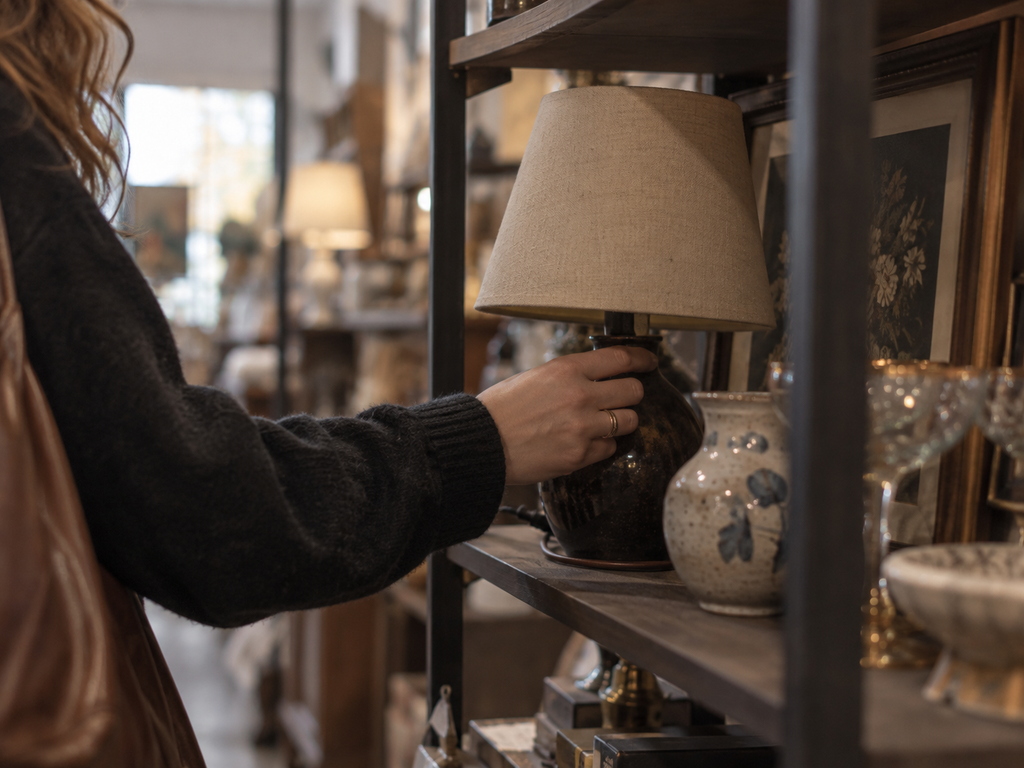
Small table lamps are one of those objects that can have far more personality secondhand than new, particularly when you find an interesting ceramic, glass, stone or metal base. They are also genuinely useful: one small lamp can soften a kitchen counter, bookshelf, bedside table or dark corner far more effectively than another decorative object.
Look beyond the existing shade, especially if it is dated or damaged. Shades are easy to replace. The base is the part worth judging.
Pick it up. Does it feel stable? Is the shape interesting enough that you would notice it in a regular store? Does the scale work somewhere in your home?
Then check the electrical parts.
If the cord is cracked, frayed or damaged, do not plug the lamp in just to see whether it works. Damaged electrical cords can create shock and fire hazards, so either leave it behind or buy it knowing it needs to be professionally repaired or rewired before use.
Why it works for fall: shorter days make pools of low light feel especially good. A thrifted lamp is seasonal without being seasonal décor.

2. Brass, Pewter or Aged-Metal Candlesticks
Candlesticks are easy to overlook because thrift stores usually have a lot of them.
That is exactly why it is worth becoming selective.
Skip the flimsy ones and look for pieces with satisfying weight, good proportions and a finish that has aged in an interesting way. Solid brass is lovely, but the point is not to become an amateur antiques dealer in the aisle. You are looking for an object that feels substantial and looks better because it is not perfectly new.
Pairs are useful, but they do not need to match. Two candlesticks with different heights often look more relaxed than a perfectly identical set.
Check that the base sits flat and that the candle cup has not been badly bent or damaged.
Then picture it somewhere specific: on the dinner table, a mantel, the kitchen counter or beside a stack of books.
If you cannot picture using it, leave it for someone else.
Why it works for fall: warm metal and candlelight bring autumn into a room without adding a single pumpkin.

3. Stoneware Bowls, Crocks and Pitchers
The ceramics section is where a little restraint pays off.
There will almost always be bowls. Most of them do not need to come home with you.
What is worth looking for is a piece with something you rarely get from inexpensive new homeware: weight, an interesting glaze, good proportions, subtle irregularity or a surface that becomes more appealing when you hold it.
A large stoneware bowl might live on the kitchen counter filled with apples. A small crock could hold wooden spoons. A pitcher can work for flowers or branches even if you never pour a drink from it.
For anything you intend to use with food, be more careful with older or unidentified ceramics. The FDA specifically flags antique, damaged, heavily worn and flea-market pottery among the types that may warrant caution because some glazes or decorations can contain lead that may leach into food. If you cannot establish that an older piece is food-safe, use it decoratively instead.
That still leaves plenty of reasons to bring home a beautiful bowl.
Why it works for fall: tactile pottery naturally suits the season, especially when it is actually being used rather than displayed as “fall décor.”
4. Solid-Wood Frames: Even When You Hate the Art
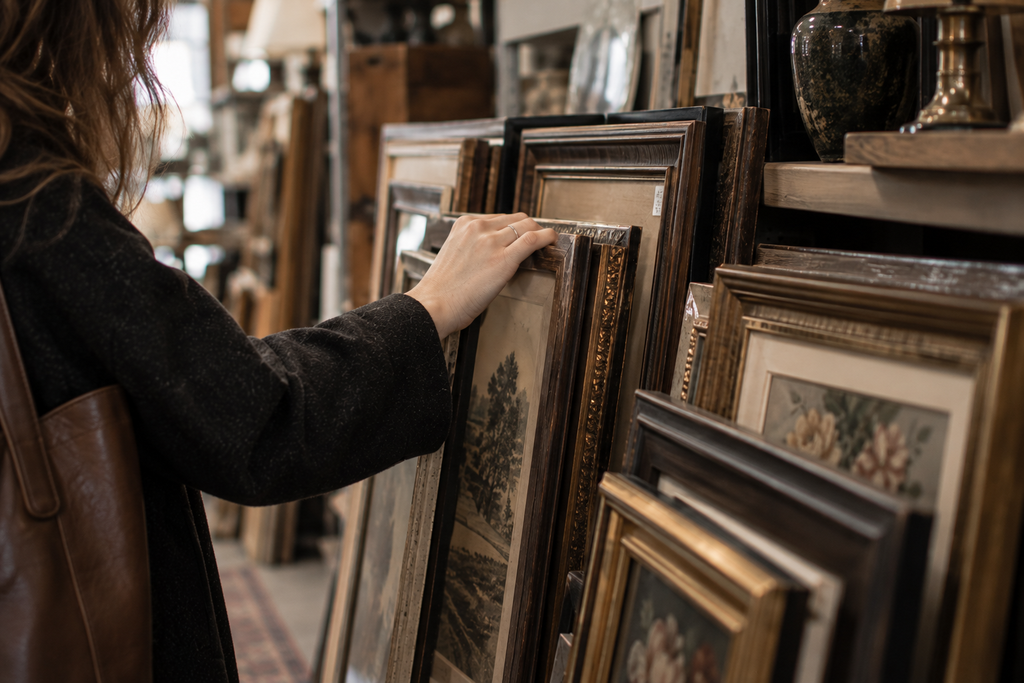
One of the best thrift-store habits is learning to look at the frame instead of the picture inside it.
A strange print, faded landscape or questionable piece of motivational typography can be hiding an excellent solid-wood frame.
Check the corners first. Good joints matter more than a perfect finish. Look for useful dimensions, interesting profiles and wood that could work as it is or with very minor restoration.
Then turn the frame around and inspect the back. If the structure is warped, badly split or falling apart, consider how much work you are realistically willing to do.
The glass is a bonus, particularly on larger frames where replacing it can become expensive.
The fun part comes later. Use it for a photograph you already own, a small piece of art, a pressed botanical, a print from a museum archive or even a child’s drawing that deserves a better frame.
A good frame gives you options long after the original artwork has been removed.
Why it works for fall: darker woods and aged finishes add depth to a room without requiring a full seasonal restyle.
5. Woven Baskets and Trays
There is a difference between finding a useful basket and accidentally starting a basket collection.
Before putting one in your cart, give it a job.
Could it hold blankets beside the sofa? Shoes near the door? Magazines? Market produce? Pet supplies? Firewood accessories? Weekend breakfast on the coffee table?
Then inspect the construction.
Look for a tight weave, stable base and handles that still feel strong. A few broken fibers may simply be cosmetic; large structural breaks are different. Smell matters too. Deep mustiness or visible mold on a porous object is usually a good reason to walk away, because mold can be difficult to remove completely from absorbent materials.
The best thrifted baskets tend to look as though they have already had a useful life and are perfectly capable of having another one.
Why it works for fall: baskets bring texture into a room while earning their space through storage.

6. Small Solid-Wood Side Tables and Stools
Furniture requires a little more commitment, which is why small pieces are such a good place to start.
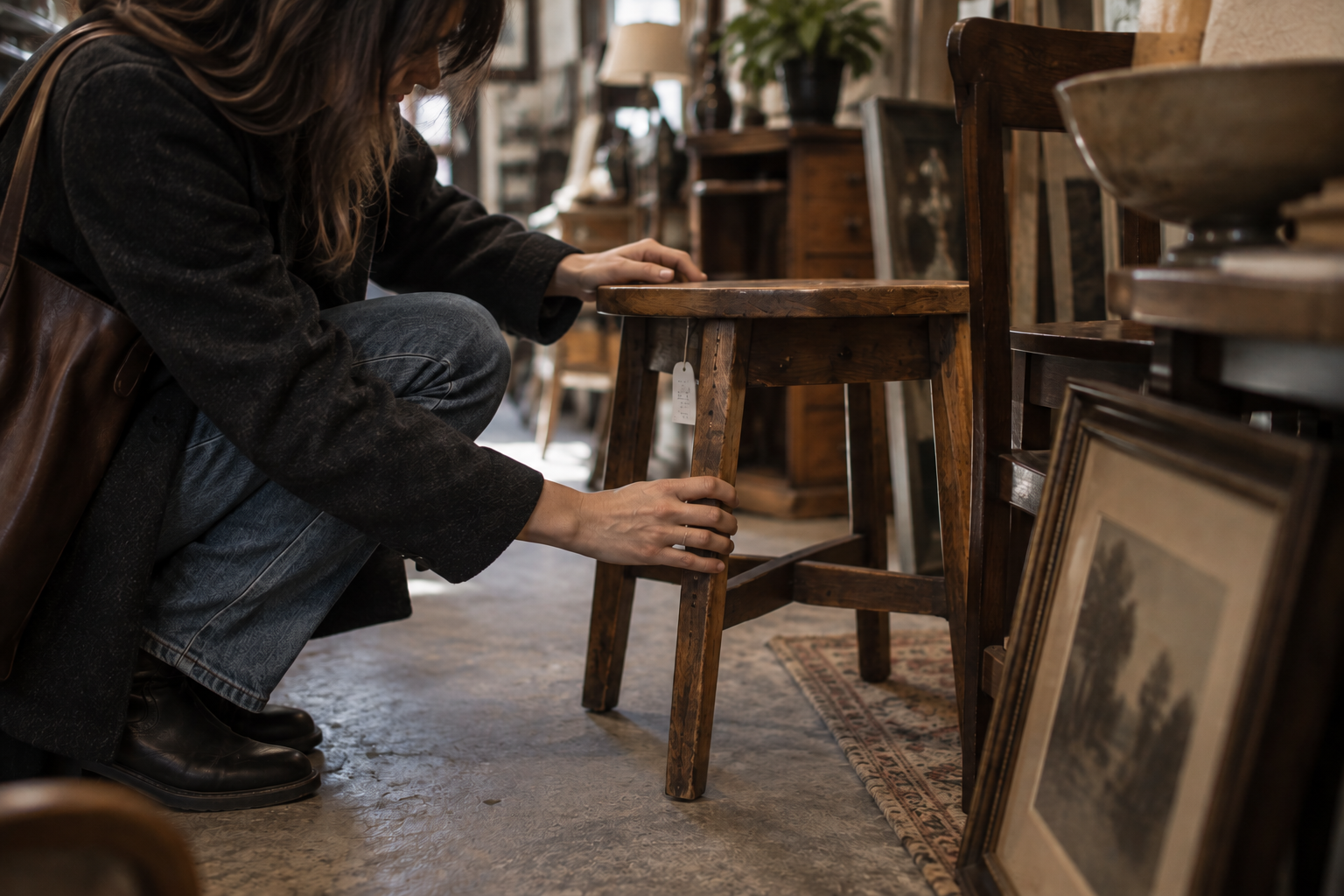
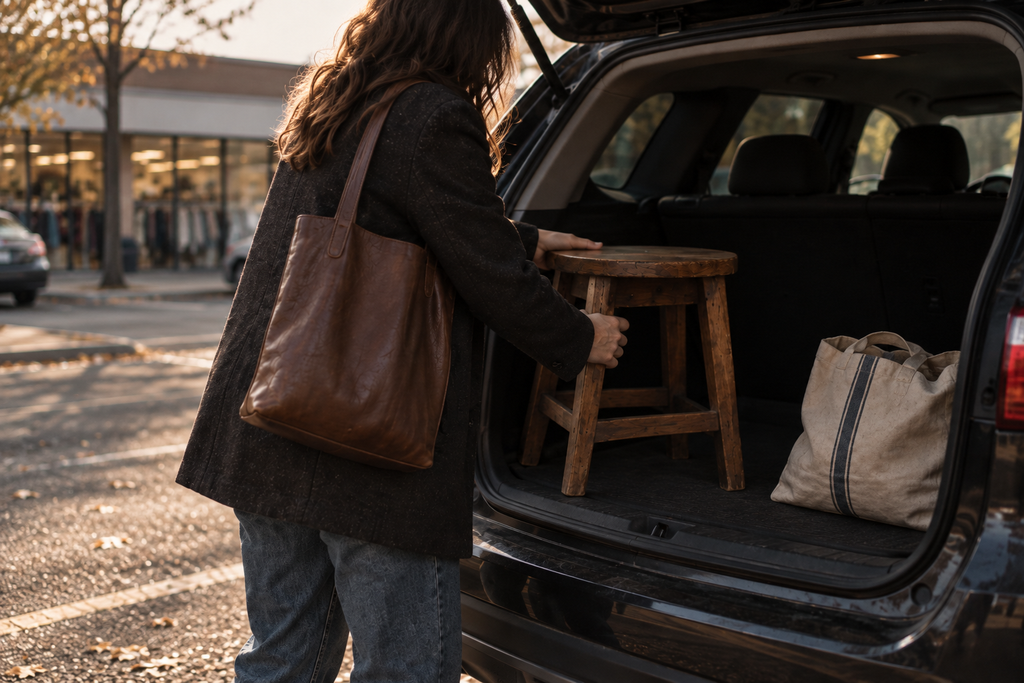
A stool, plant stand or compact side table can fit into the car, move easily around the house and solve the kind of awkward little space that never seems to have the right piece of furniture.
Ignore superficial scratches for a moment and look at the structure.
Give the table a gentle wobble. Check the legs and joints. Look underneath. Open any drawers. Inspect for swelling from water damage, major veneer separation and repairs that have compromised the piece rather than strengthened it.
Secondhand furniture can also carry pests, so check joints, screw holes, cracks, undersides and other small hiding places before bringing a piece home. EPA guidance specifically recommends inspecting secondhand furniture for signs of bed bugs before it enters your home.
This is where that tape measure becomes useful. A lovely table that is four inches too wide is still four inches too wide.
Why it works for fall: wood brings warmth and depth into a room, and a small table can make a reading chair, sofa or bedside corner much more usable through the colder months.
7. Vintage Glassware
You do not need to find a set of eight.
In fact, part of the charm of thrifted glassware is allowing a collection to build slowly.
Look for interesting stems, pressed patterns, unusual shapes or subtle color — smoky gray, amber, olive, clear ribbed glass or whatever catches your eye without screaming “theme.”
Hold each piece up to the light and run your eyes carefully around the rim and base. Tiny chips matter when a glass is going to be used for drinking, and cracks rarely become less annoying once you get home.
One beautiful glass can still be useful. It might hold a small bunch of flowers, cocktail picks or matches until another one turns up six months later.
That slower approach is part of the point.
You are not trying to recreate a matching shelf display in one afternoon. You are noticing things and allowing your home to become more personal over time.
Why it works for fall: interesting glassware makes simple drinks and weekend dinners feel slightly more intentional without requiring a special occasion.
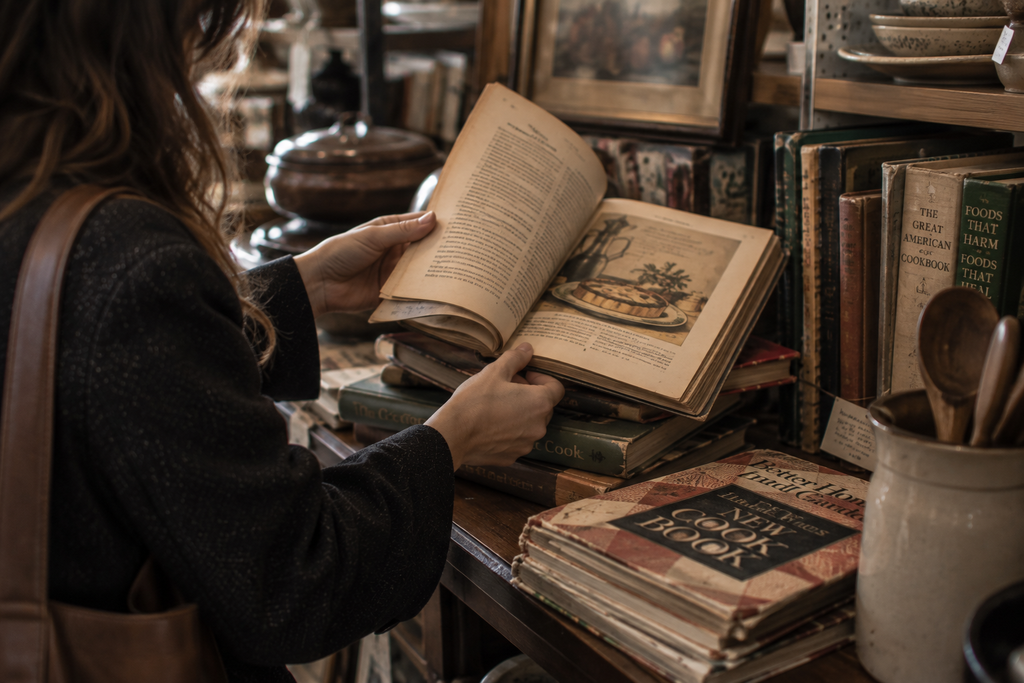
8. Old Cookbooks and Hosting Books
Do not skip the book section.
Old cookbooks are one of the few thrift store finds that can give you both an object and something to do.
Look beyond famous titles. Regional cookbooks, community recipe collections, old baking books, cocktail guides and entertaining books can be far more interesting than the pristine coffee-table volumes.
Open them.
Look for notes in the margins, recipes someone clearly made repeatedly, strange illustrations, menus from another decade or a cake that suddenly seems exactly right for Sunday afternoon.
The book itself does not need to be visually perfect. It just needs to make you curious.
Check for water damage, active mold and strong musty odors before buying, particularly if the pages have been stored somewhere damp.
Then give yourself a rule: if you bring a cookbook home, choose one recipe from it to make within the next couple of weekends.
That turns the find into an activity instead of another object on a shelf.
Why it works for fall: this is the season when cooking slowly on a Saturday afternoon starts sounding good again.
9. Linen Napkins and Small Table Linens
The textile section can contain some of the least exciting things in the store — and occasionally something you could never have found new for the same price.
Linen and cotton napkins, small tablecloths, runners and embroidered cloths are worth a quick look, particularly if you enjoy casual weekend dinners.
Feel the fabric rather than relying entirely on the label. Look at the hems. Hold it up so you can see stains, thinning areas or holes that were hidden on the shelf.
A little wear can be charming. A smell you already dislike in the store is less likely to become charming later.
Only buy a set if the quantity works for your real life. Four good napkins you will use are more useful than twelve mediocre ones you bought because they were inexpensive.
Once home, launder secondhand textiles appropriately before putting them into regular use.
Why it works for fall: a simple cloth napkin can make soup and bread on a Sunday evening feel like enough of an occasion.
The 30-Second Weekend Hunt Test
The hardest part of thrifting is not finding things.
It is deciding which ones deserve to come home.
When you pick something up, give yourself half a minute before putting it into the basket:
Would I notice this if it were new?
Is the material, construction or character better than the price suggests?
Do I already know where or how I would use it?
Is the damage character — or just damage?
And most importantly:
Would I still want it if it weren’t cheap?
That last question eliminates a surprising number of almost-purchases.
Because the goal of a good thrift trip is not to spend as little as possible on as many things as possible.
It is to notice the occasional thing that feels worth keeping.
Make It This Weekend’s Hunt
You do not need to look for all nine.
Pick two.
Maybe this weekend you check the lighting shelf and the frames. Next time, cookbooks and glassware. Eventually you begin to recognize the things you genuinely like — which woods you always stop for, which shapes catch your eye, which objects you actually use once they get home.
And sometimes you will find nothing.
That might be the best part of making thrifting a weekend activity rather than a shopping mission. There is no failed trip if buying something was never the only point.
Browse slowly. Pick things up. Look underneath them. Open the old cookbooks. Check the shelf behind the shelf everyone else is looking at.
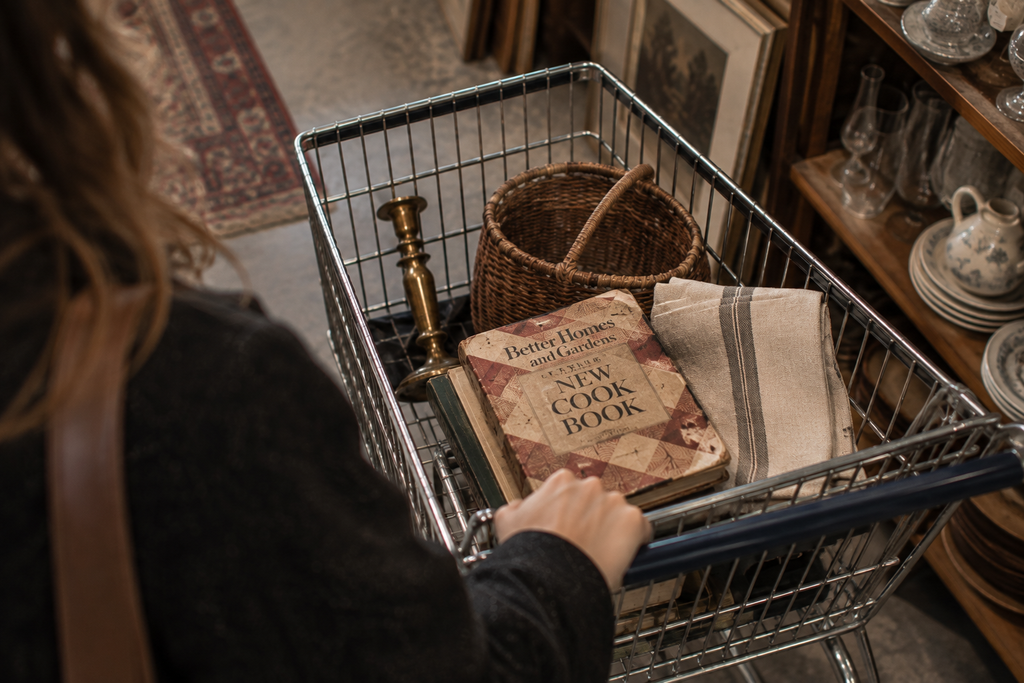
You may come home with a lamp, a slightly mismatched pair of candlesticks or one very good wooden frame.
Or you may just come home after a Saturday spent looking.
Either way, the hunt did its job.
Frequently Asked Questions
What are the best things to look for at thrift stores?
Look for objects where age, materials or construction can add value rather than detract from it. Small furniture, solid-wood frames, lamps, baskets, candlesticks, glassware, useful ceramics, natural-fiber table linens and books are all good categories to check. The best thrift store find, however, is one you already know how you will use.
How do you know if thrifted home decor is worth buying?
Ignore the low price for a moment and assess the object as though it were being sold somewhere else. Check its construction and condition, consider whether repairs are realistic, and decide exactly where it would go in your home. If the only argument in its favor is “but it’s cheap,” it probably is not much of a find.
What should I check before buying secondhand furniture?
Measure it first, then inspect the piece from every side, including underneath. Check joints, legs, drawers, cracks, water damage and signs of pests. For upholstered pieces in particular, inspect seams, folds and crevices carefully before bringing them home.
Are there things I should avoid buying secondhand?
Condition and intended use matter more than a universal yes-or-no list. Be cautious with damaged electrical items, badly compromised furniture, moldy porous materials and unidentified vintage ceramics intended for food use. Some finds are perfectly useful decoratively even when they are not appropriate for their original purpose.