
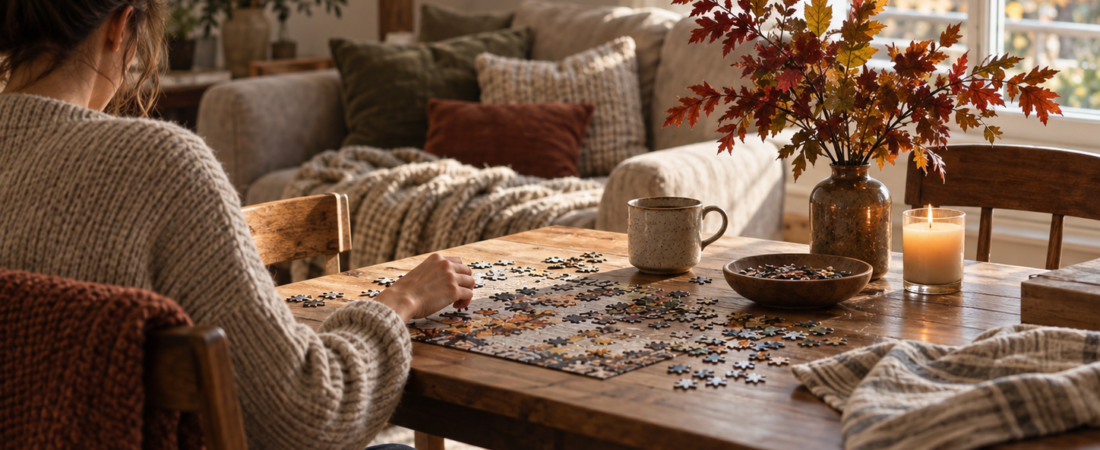
There is absolutely nothing wrong with putting on a good show when you get home. The problem is when “watch something” becomes the automatic answer every single time you have a free evening.
Fall is particularly good at offering an alternative. It is dark earlier, staying home starts sounding appealing again, and activities that would feel slightly inconvenient in July suddenly make sense on a cool Saturday afternoon.
The key is not finding a brand-new hobby or planning an elaborate seasonal night. It is having a few things that are easy enough to begin before the remote wins.
As an Amazon Associate, After Friday earns from qualifying purchases. If you buy through a link in this post, we may earn a commission at no extra cost to you.
First, Pick the Kind of Night You Actually Want
You do not need to be in the mood for all seven of these.
Choose based on how you feel right now:
| If you want… | Try… |
|---|---|
| Almost no setup | Reading or an album night |
| Something for your hands | A puzzle or small craft |
| Something finished at the end | Baking or changing one corner of the room |
| Something to do together | A game night |
And if what you really want is a hobby you can return to beyond fall, [INTERNAL LINK — 7 Screen-Free Hobbies — anchor: these screen-free hobbies for adults] are a better place to start.
1. Start a Puzzle and Let It Take Over the Table for a While
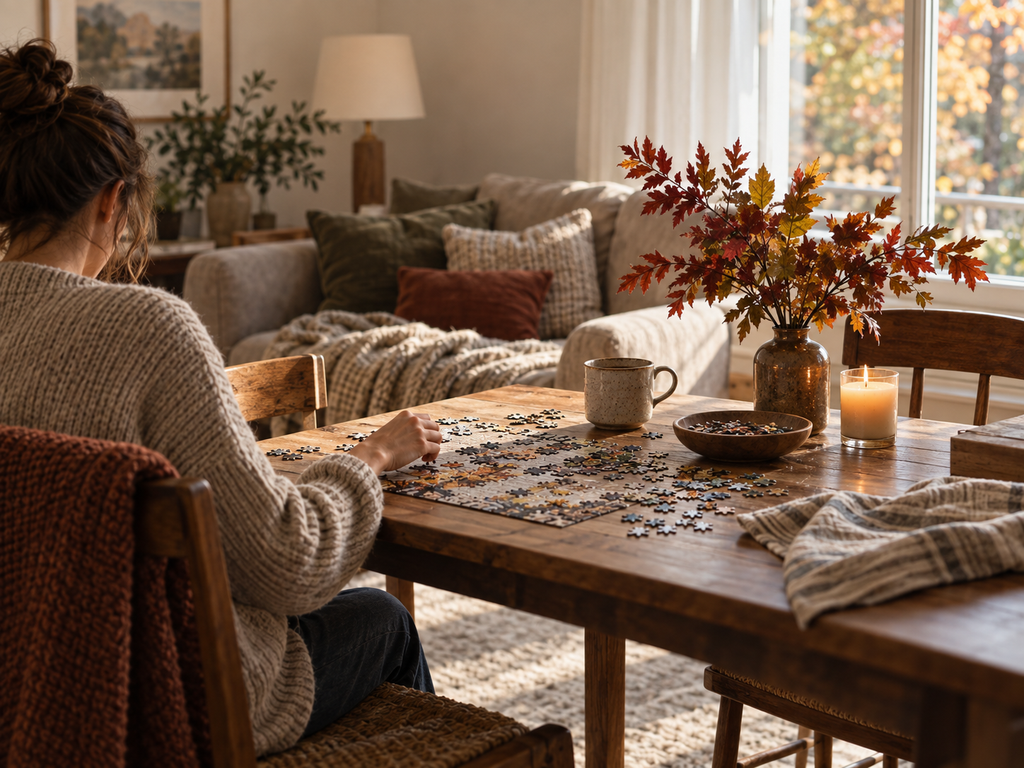
A puzzle works particularly well on a fall weekend because it does not demand a big block of time.
Put it out after lunch. Do twenty pieces while the kettle boils. Come back later. Leave it overnight. Finish it Sunday morning.
The important part is giving it somewhere to live.
If you have to unpack the box, clear a table and put everything away every time you stop, you have created enough friction to make the television much more attractive.
Use one end of a dining table, a console you rarely need, or a board that can be moved intact when necessary.
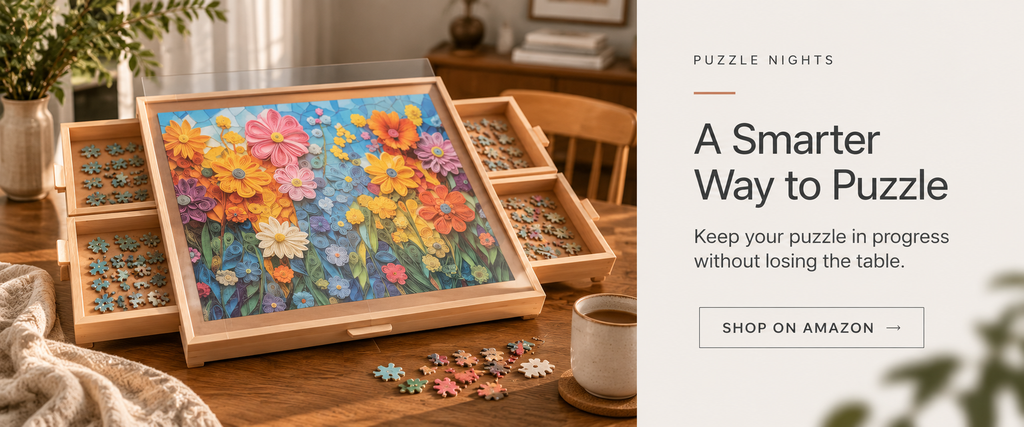
A 500-piece puzzle is a good scale for a weekend if you want the satisfaction of actually finishing. Go larger if the point is having something to return to over several evenings.
You are not trying to become a puzzle person. You are just giving your hands somewhere else to go.
2. Bake One Thing You Normally Buy
Do not turn this into an ambitious baking project.
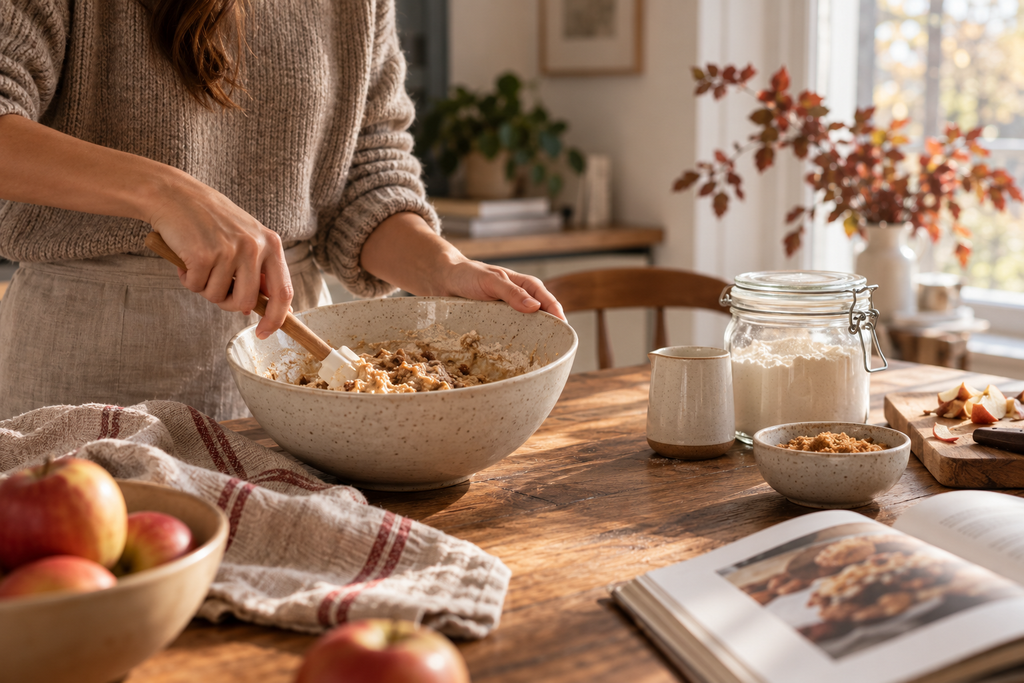
Choose one familiar thing you normally pick up already made and spend the afternoon making it yourself: a loaf of bread, granola, focaccia, apple crisp, crackers or a batch of muffins for the freezer.
The appeal is partly the result, but the actual activity matters too. Measuring, mixing, waiting and cleaning up create a natural rhythm for an afternoon that otherwise might disappear into a screen.
For the most relaxed version, pick something with forgiving timing and very little decorating.
If you already own the equipment the recipe needs, use it. This is not an excuse to build an entirely new baking cabinet.
3. Make Something Small Enough to Finish Tonight
The best craft for an ordinary evening is not necessarily the most impressive one.
It is the one with a clear ending.
Paint a few small objects. Try a beginner embroidery piece. Make a simple paper project. Put together a tiny model. Work on one small piece of air-dry clay rather than deciding tonight is the night you become a ceramicist.
A project that can reasonably be finished—or reach a satisfying stopping point—in one evening is much easier to begin.
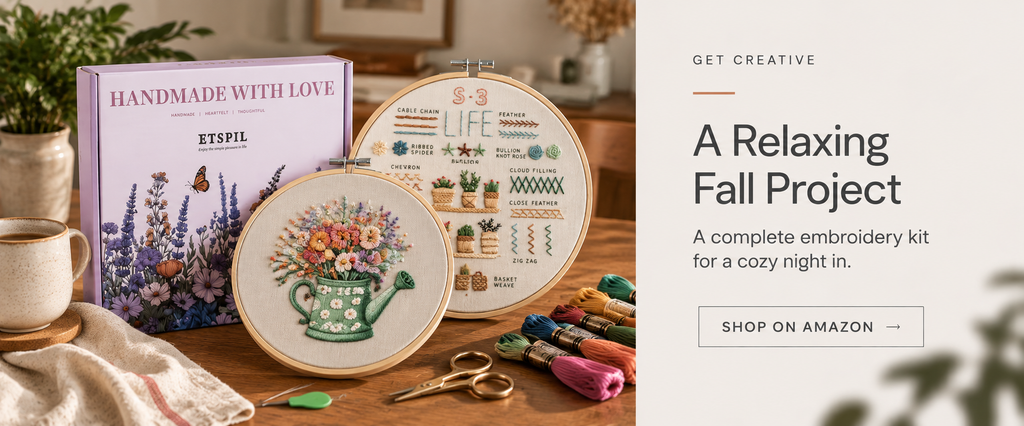
One more rule: put away most of the packaging before you start. A small tray with the materials you actually need feels like an activity. An exploded box of supplies feels like work.
4. Change One Corner of the Room for Fall
Not decorate the entire house.
One corner.
Move the chair closer to the window. Clear the side table. Bring the lamp over from another room. Replace something summery with one warmer textile you already own. Put a branch from the yard in a vase. Move a small stack of books to where you might actually read them.
The goal is not to create a seasonal display.
It is to make one place in your home feel noticeably better to use for the next few months.
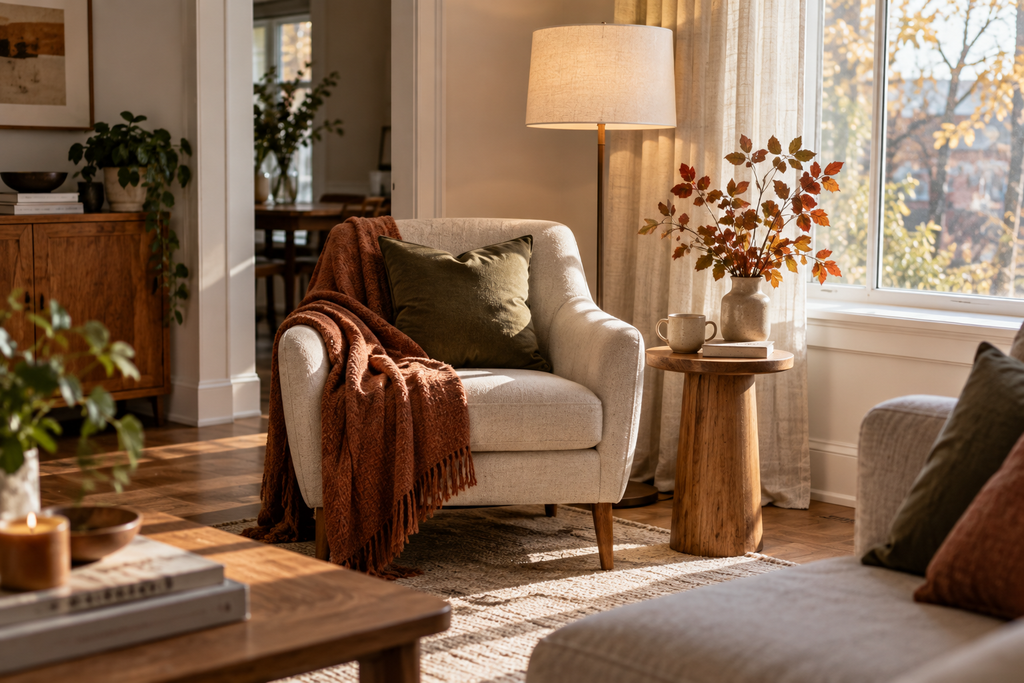
Before buying anything, shop your own rooms. A lamp that feels ordinary in the bedroom may be exactly what a living-room corner needs. A throw stored away all summer may be enough seasonal change by itself.
5. Have a Game Night That Does Not Require a Crowd
A game night sounds like an event.
It does not have to be.
Two people, one game and something to drink is enough. So is a deck of cards at the kitchen table.
Choose the game before the evening begins. The fastest way to turn “we should play something” into another hour of television is spending twenty minutes searching for what to play.
For two people, look for something designed to work well at that player count rather than forcing a large-group party game into a quiet evening. If you live alone, a physical solo game, crossword book or logic puzzle can do the same job.
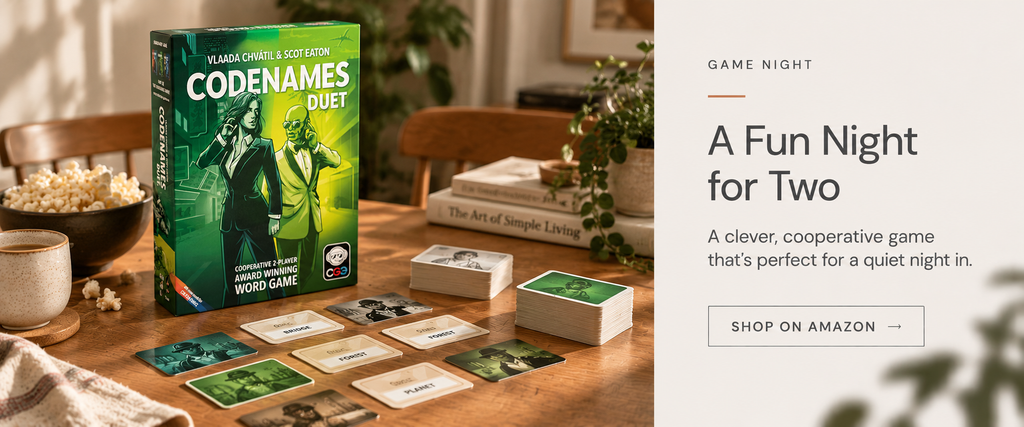
Keep food secondary. You do not need a grazing board large enough to feed a wedding just because cards are on the table.
6. Read Somewhere You Do Not Usually Scroll
Reading makes every list of things to do instead of watching television, which is not very useful if your unread books are already sitting beside you every night.
Change the setup instead.
Take one book or magazine somewhere you do not normally use your phone: the chair by the window, the dining table after dinner, the kitchen while something bakes, or even the floor beside the sofa.
Then give the session a finish line.
One chapter. Thirty pages. One magazine feature. Twenty minutes.
You can always keep going.
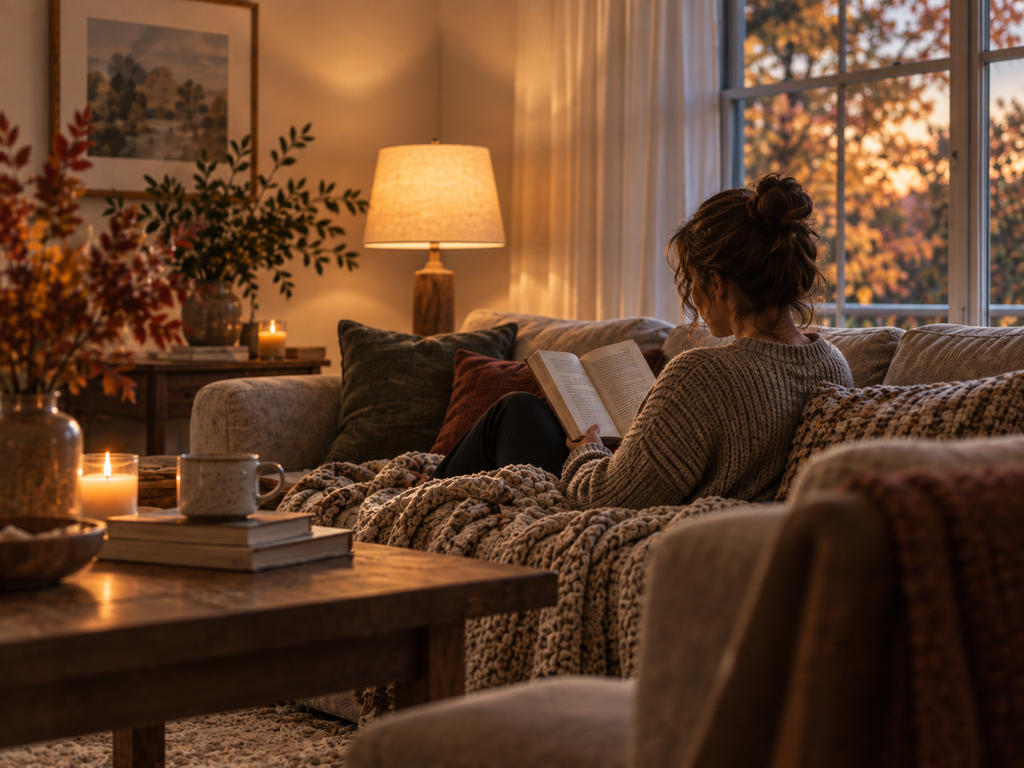

This works especially well on nights when starting a craft or setting up a game feels like too much. The point is not to have an impressive offline evening. It is simply to choose something on purpose.
7. Listen to an Album From Beginning to End
Not a playlist while you answer messages.
Not music running underneath five other things.
Choose one album and listen to it from the first track to the last.
Use a record or CD if you have one. Streaming is fine too; start the album, put the phone down and let the screen disappear from the activity.
You can sit and listen, cook, fold laundry, sketch, work on the puzzle from earlier or simply look out the window for a while.
The important difference is that you are not continuously choosing what comes next.
An album gives the evening a beginning, a middle and an end without requiring you to make anything productive out of it.
The Trick Is Making the Other Option Easier to Start
Television and scrolling win a lot of evenings because they are ready immediately.
So give your alternative the same advantage.
Leave the puzzle board where you can see it. Put the book on the chair instead of back on the shelf. Decide on the game before dinner. Put the craft materials you need in one small container.
Then make the first session deliberately small.
You do not need a screen-free Saturday. You need ten minutes in which doing something else is easier than deciding what to watch.
If you keep going, good.
If you do not, the evening still counted.
A Good Fall Night Does Not Need to Become a Project
The goal is not to perform autumn correctly.
You do not need a perfect house, a pumpkin-shaped mug, six candles and an entire evening planned around being cozy.
Pick one thing.
Put what you need somewhere easy to reach.
Then start before you open the streaming app.
That is usually enough to make staying home feel like an actual plan.