
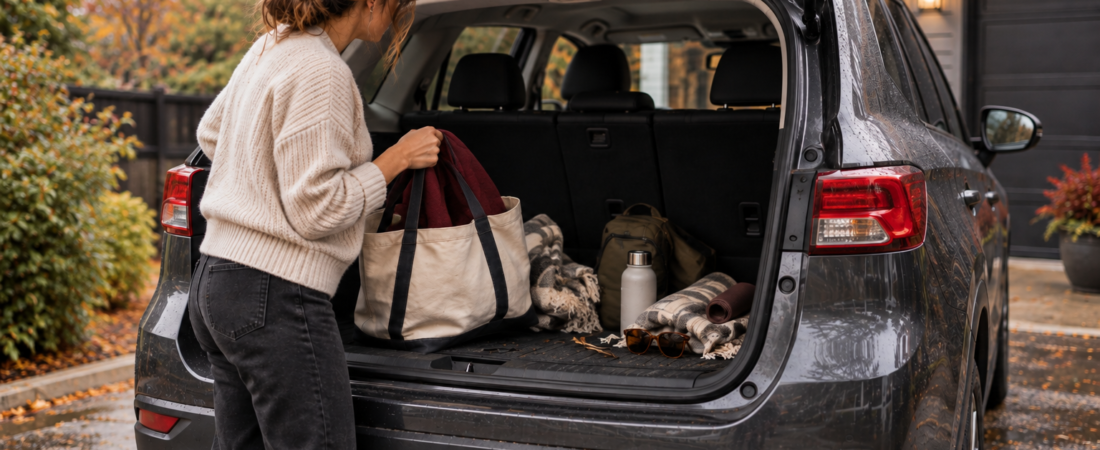
By the end of September, your car can start to feel like a storage unit for the season you just finished.
There’s a reusable bag you forgot was there. A pair of sunglasses in the wrong compartment. Receipts tucked into the center console. Sand or dried grass still hiding in the floor mats. A water bottle rolling around somewhere in the back. And the trunk has somehow accumulated enough miscellaneous stuff that putting groceries in it requires rearranging everything first.
None of this calls for a full detail.
But before October brings wetter roads, darker evenings, muddy shoes and colder mornings, it’s worth giving the car the same kind of seasonal reset you might give an entryway or closet at home.
The goal isn’t to make it spotless. It’s to clear out what belongs to summer, clean the areas fall is about to make worse, check the basics you rely on when visibility and weather change, and put back only what will actually be useful for the season ahead.
Disclosure: This post contains affiliate links. As an Amazon Associate, After Friday earns from qualifying purchases, at no extra cost to you.
Start by taking summer out of the car
Before organizing anything, empty it.
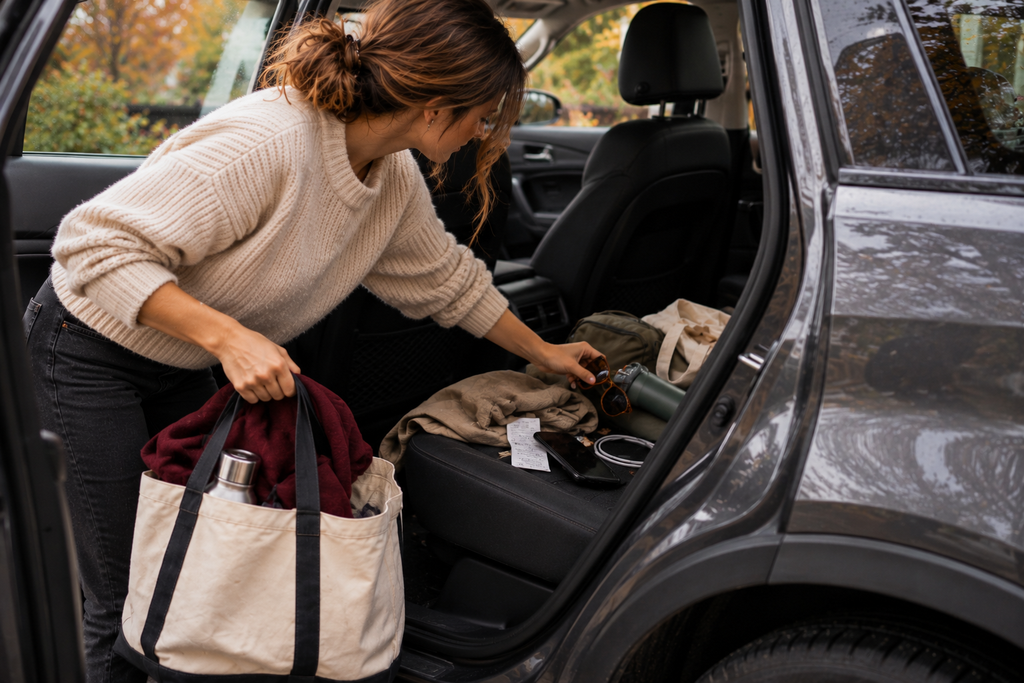
Take a bag or basket with you and work through the obvious collection points: door pockets, cup holders, center console, back seat and trunk.
Pull out the beach things that never made it back inside. The extra tote bags. Empty drink bottles. Old receipts. Sports gear. Random cables. The sweatshirt someone abandoned in July.
Then sort what comes out into three simple groups: things that belong at home, things that can be thrown away, and things that genuinely need to stay in the car.
This part matters because it is very easy to mistake rearranging for organizing.
A trunk organizer full of things you don’t need is still a trunk full of things you don’t need.
The same goes for the glove compartment. You don’t have to dismantle your entire filing system, but this is a good moment to remove expired parking permits, old paperwork that no longer belongs there and the collection of takeout napkins that somehow becomes permanent.
You should already notice the car feeling lighter before you have cleaned anything.
Clean the parts that fall is about to make worse
This does not need to become a detailing project.
Think less about getting every surface perfect and more about dealing with the dirt that becomes particularly annoying once wet weather arrives.
Vacuum the seats, footwells and trunk. Shake out or clean the floor mats. Get the sand, crumbs, dry leaves and other summer debris out now, before muddy shoes are added to the mix.
Wipe down the places you touch or use most: the center console, cup holders, door pockets and dashboard surfaces that collect dust.
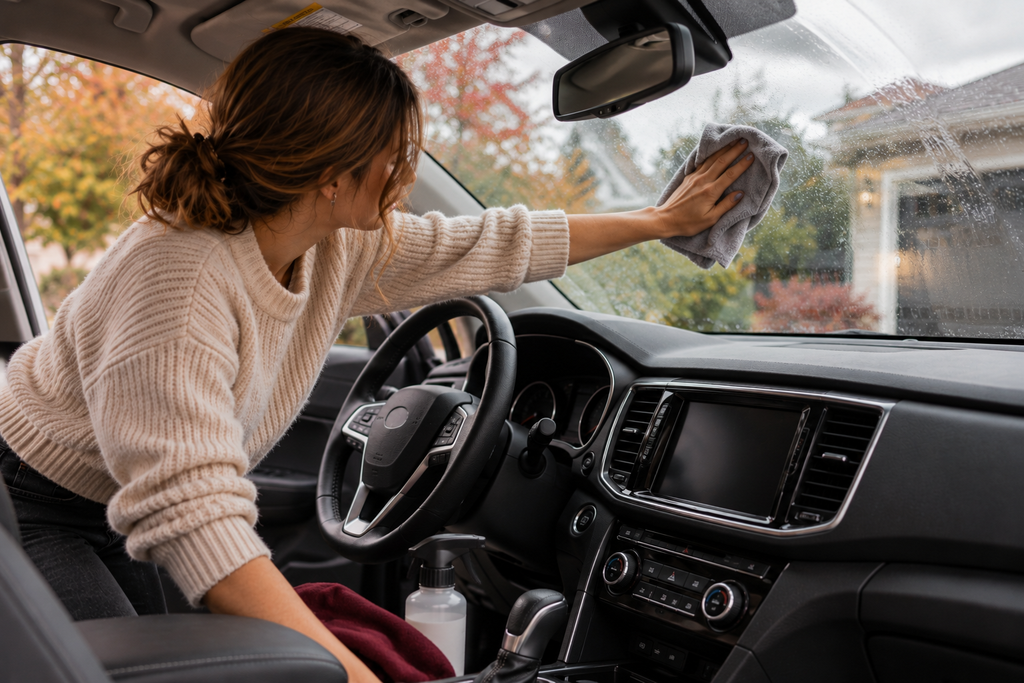
Then give the glass some attention.
Clean the inside of the windshield as well as the outside. That slightly cloudy film that is easy to ignore on a bright summer afternoon becomes much more obvious when you are driving into low sun, rain or headlights at night.
If your car has been carrying pets, children, plants, weekend projects or anything else that tends to leave evidence behind, deal with the most-used areas rather than chasing perfection.
The car should feel clean enough to use comfortably, not ready for a concours lawn.
Reset the trunk around empty space
The best result of a trunk reset is not a perfectly packed organizer.
It is room.
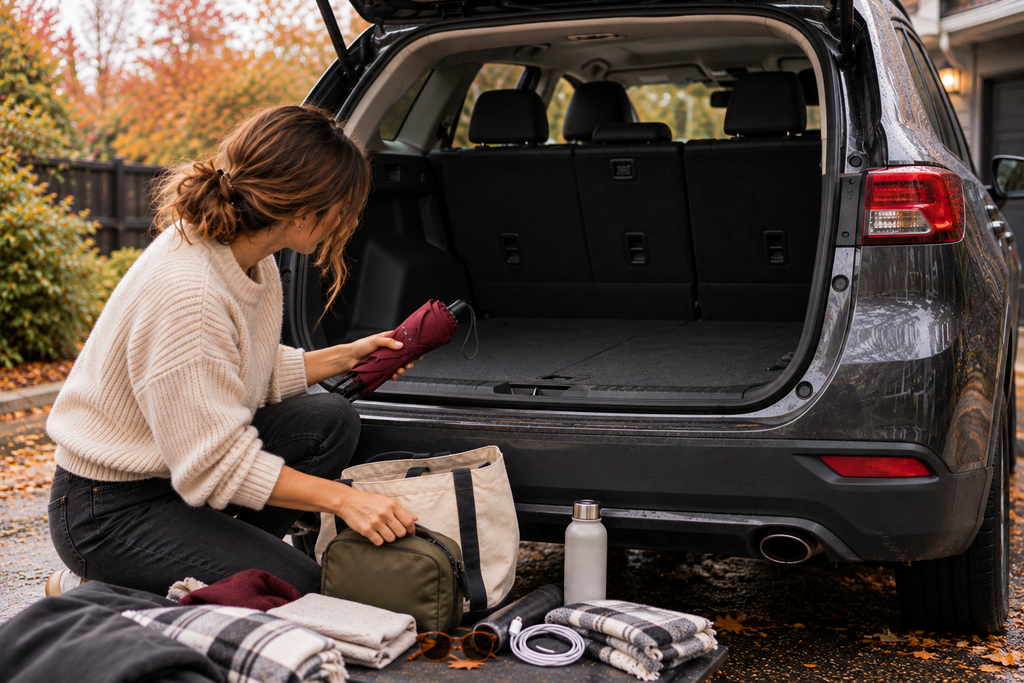
Once the trunk is empty and vacuumed, resist the urge to immediately put everything back.
Instead, think about what you regularly use from the car and what has simply been living there.
A few loose categories can help: everyday, shopping, weather and emergency.
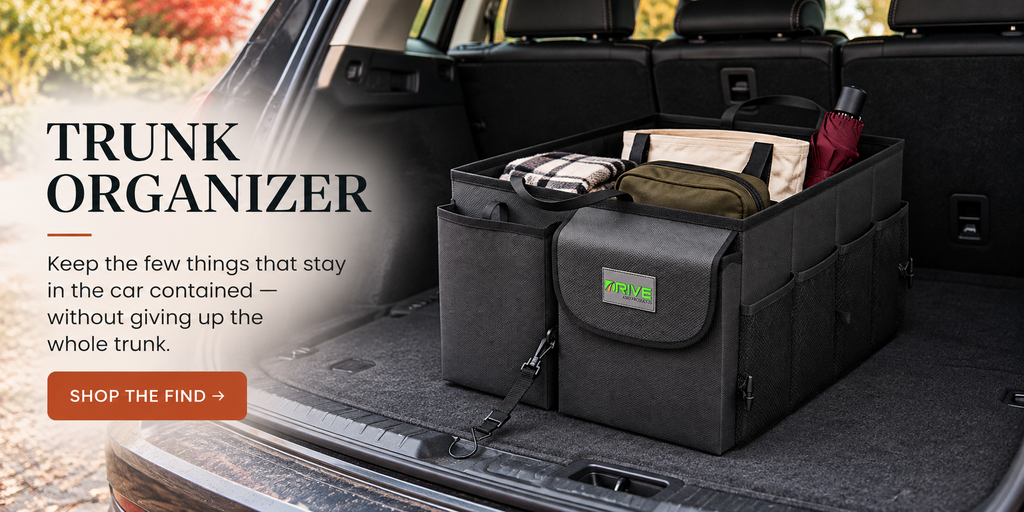
Reusable shopping bags can live together instead of spreading into every corner. A small emergency kit can have one permanent place. Anything you reach for regularly should be accessible without unloading half the trunk to find it.
But leave some space unassigned.
You want to be able to bring home groceries, pick something up from a store, throw in a weekend bag or deal with an unexpected errand without having to reorganize the car first.
A useful car is allowed to have an empty trunk.
Give visibility its own pass
Fall changes the way you use the car before winter technically begins.
The days get shorter. Morning condensation returns. Rain becomes more frequent in many places. Suddenly the systems you barely thought about in July matter again.
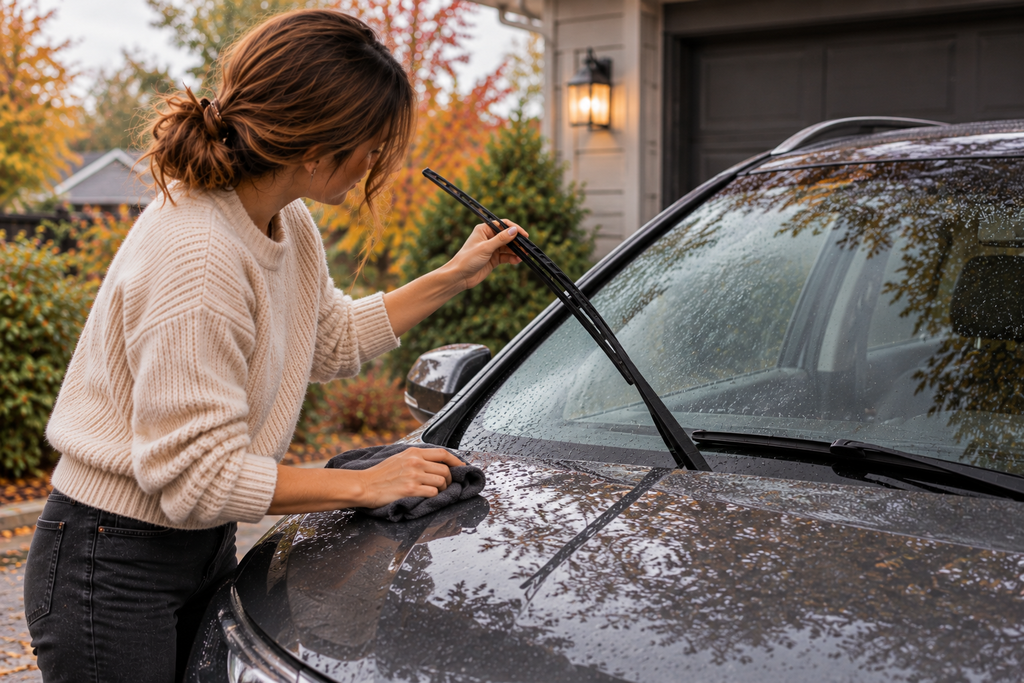
Start with the windshield wipers. Run them with the washer and notice what happens.
Do they clear the glass cleanly, or leave streaks, skips or areas they are no longer reaching properly?
Check that you have washer fluid and that the system is working as expected.
Turn on the headlights and indicators and make sure the exterior lights are working. Brake lights are easier to check with another person helping.
And try the front and rear defrost or defog functions before the first morning you urgently need them.

These are intentionally simple checks. You are not diagnosing electrical systems or repairing anything in the driveway; you are noticing whether the basic visibility equipment you depend on is doing its job.
If it isn’t, that becomes something to replace, service or have checked rather than something to keep ignoring.
Look at the tires before the weather changes
You do not need to turn a Saturday reset into a tire workshop.
You do want to actually look at them.
Walk around the car and check for anything visibly unusual: damage, cracking, bulges, noticeably uneven wear or a tire that looks lower than the others.
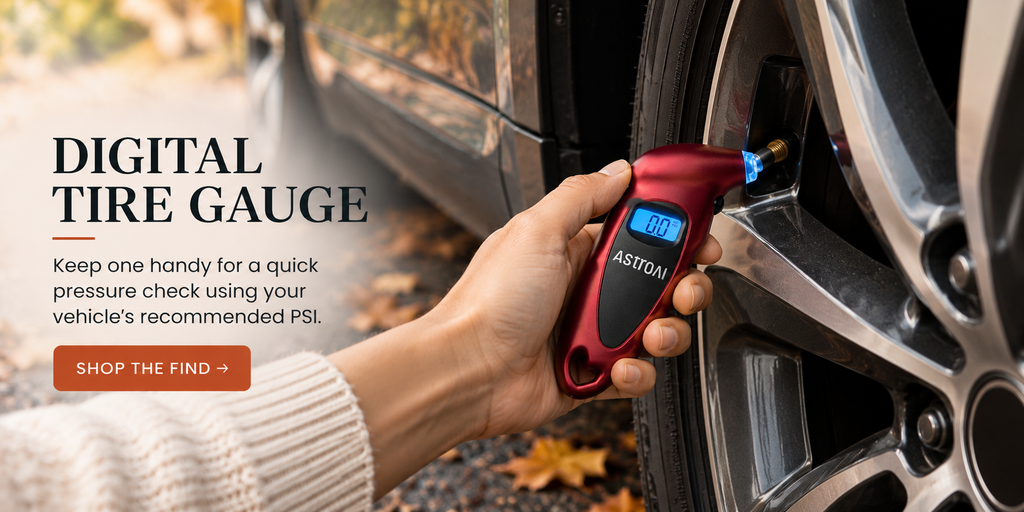
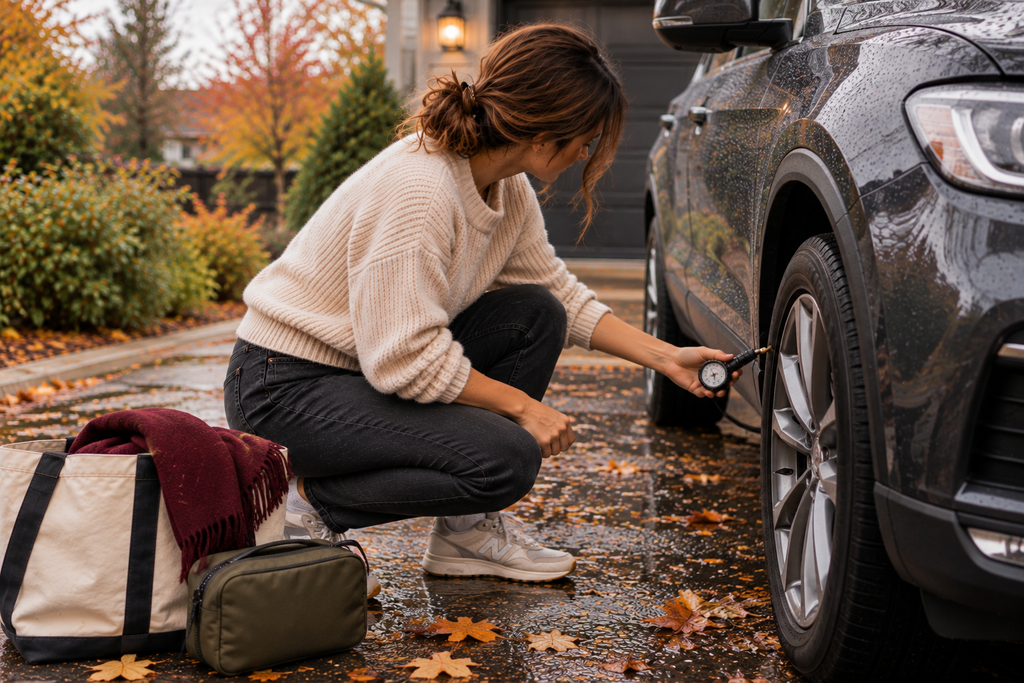
Then check the pressure when the tires are cold, using the pressure specified by the vehicle manufacturer on the tire information label or in the owner’s manual — not a universal number and not the maximum pressure printed on the tire itself.
If your car has a spare tire, include it in the reset if it is accessible.
This is also a useful moment to notice rather than diagnose. If the condition of a tire concerns you, have it inspected rather than trying to turn an editorial Saturday task into a DIY repair.
Notice the things you’ve been postponing
There is often one small car issue that becomes part of the background.
A warning light you keep meaning to ask about.
A strange noise that only happens sometimes.
A service reminder that has been on the screen long enough that you barely see it anymore.
A wiper that has been bad since spring.
A slow leak you keep topping up rather than resolving.
The fall reset is a good point to make a very short deal-with-this-before-winter list.
Check your vehicle’s service history or maintenance schedule and see whether anything routine is approaching. If something has changed in how the car starts, sounds, drives or behaves, put it on the professional-service list rather than attempting to diagnose it as part of this reset.
You do not need to solve everything today.
You do need to stop relying on yourself to remember it indefinitely.
Put back for the season you’re actually entering
Only now should things start going back into the car.
And this is where fall car advice can become strangely excessive.
You probably do not need to buy a trunk full of “fall car essentials.” You need a small group of things that make sense for your actual life, climate and driving.
A charging cable might deserve a permanent place.
So might reusable shopping bags, tissues, a small cleaning cloth, a flashlight and basic roadside supplies.
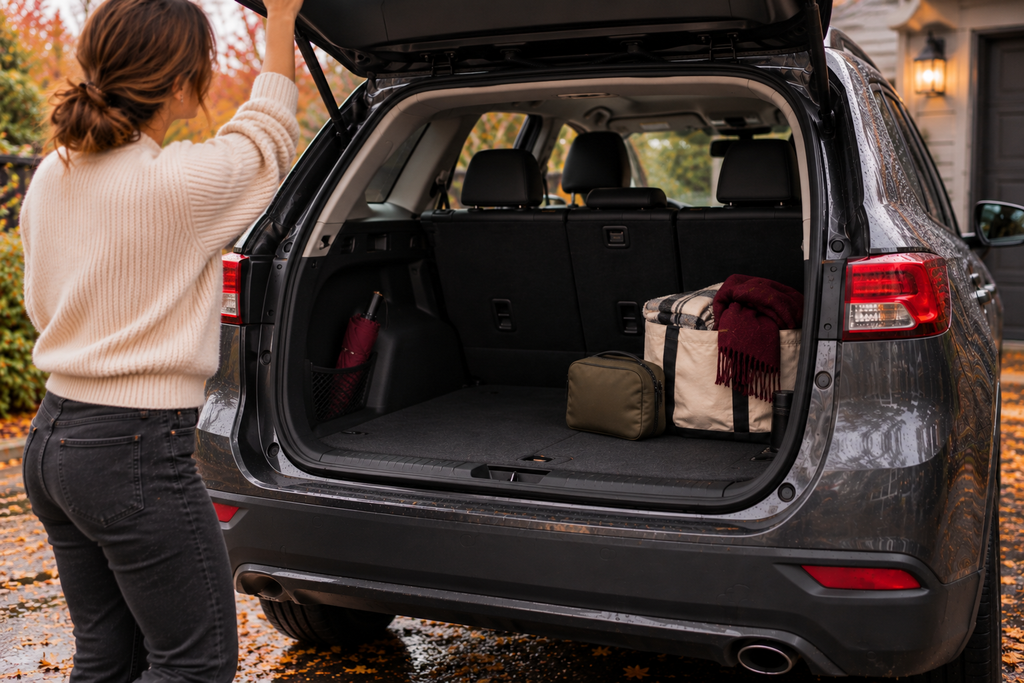
If wet weather is common where you live, keeping an umbrella or compact rain layer in the car can be more useful than another organizer.
If colder weather is approaching, this might also be the point when a blanket, gloves or ice scraper returns to the car.
But geography matters.
Preparing a car for October in Minnesota is not the same as preparing one in Florida.
The useful rule is simpler: prepare for the fall you actually get where you live.
Remove what doesn’t deserve another season
A seasonal reset should involve as much removing as adding.
Take out damaged or expired supplies.
Get rid of unnecessary duplicates.
Return objects that belong in the house.
Remove summer equipment you realistically will not use again until next year.
And pay attention to bulky loose objects that have been rolling around the cabin or trunk simply because nobody decided where they should live.
The aim is not to build a beautifully styled mobile storage system.
It is to make the car easier to use.
The Fall Car Reset, at a Glance
CLEAR OUT
Summer gear, trash, old receipts, duplicates and anything that belongs back in the house.
CLEAN
Floor mats, footwells, seats, cup holders, console, interior glass and trunk.
CHECK
Tires, wipers, washer system, lights, defrost functions, dashboard warnings and upcoming routine maintenance.
PUT BACK
Only the everyday, weather and emergency items that make sense for your car, your driving and your climate.
Ready is better than perfect
There is no dramatic before-and-after required here.
The payoff comes on an ordinary October morning.
You open the door and there isn’t a pile of summer stuff on the passenger seat. The windshield is clear. The floor mats are ready for wet shoes. Your wipers actually wipe. The trunk has room in it. The things you regularly need are where you expect them to be.
And nothing is rattling around reminding you of a task you meant to deal with three months ago.
That is enough.
A seasonal car reset is not really about having a cleaner car.
It is about making one of the spaces you use all week feel ready for what comes next.
Note: This article is for general informational purposes only. Always follow your vehicle manufacturer’s recommendations and consult a qualified professional if you notice damage, warning lights, unusual behavior or anything you’re unsure about.