

There is a particular kind of evening when the overhead light suddenly feels like too much.
Dinner is over. The laptop is closed. There is nowhere else you really need to be. And yet the room still feels oddly like 3 p.m. because one bright ceiling fixture is illuminating every inch of it equally.
The good news is that making a room feel better at night usually doesn’t require a new sofa, a different paint color, or a weekend-long makeover.
It often starts with one much smaller change: put the light where you actually want to be.
The best evening lighting creates pockets rather than coverage. A lamp beside the sofa, a soft glow in an unused corner, a small light in the kitchen after dinner — each one subtly changes how the room feels and how you use it.
These five projects can all be tackled individually. Start with the room where you spend tonight.
After Friday may earn a commission from qualifying purchases made through affiliate links in this article, at no additional cost to you.
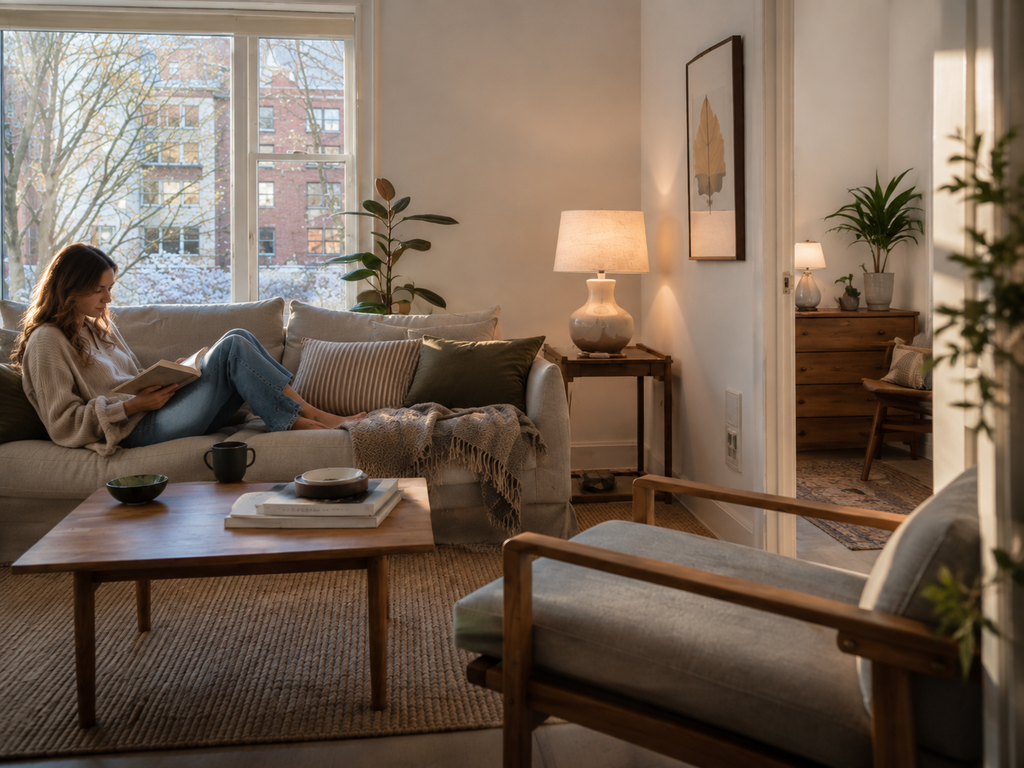
1. Put a Small Lamp Beside the Place You Actually Sit
Start with the most obvious question: where do you end up after dinner?
If the answer is one particular corner of the sofa, that is where your first lamp should go.
Not across the room because there happens to be an outlet there. Not on the console because that is where lamps traditionally live. Put it close enough to the sofa that its light reaches the book, cup of tea, knitting, crossword, or whatever else happens there.
A table lamp around seated eye level usually creates a much more intimate feeling than a ceiling fixture because the light stays concentrated in one part of the room.
You are not trying to illuminate the whole living room.
You are creating a reason to stay in one corner of it.
If the lamp is mainly for atmosphere, a warm bulb and fabric, paper, or frosted-glass shade will usually feel softer than a completely exposed bulb. If you read there regularly, make sure there is still enough directional light to comfortably see the page.

A useful test: turn on the lamp, switch off the overhead light, and sit in your usual spot for ten minutes.
If you stop thinking about the lighting, it is probably working.
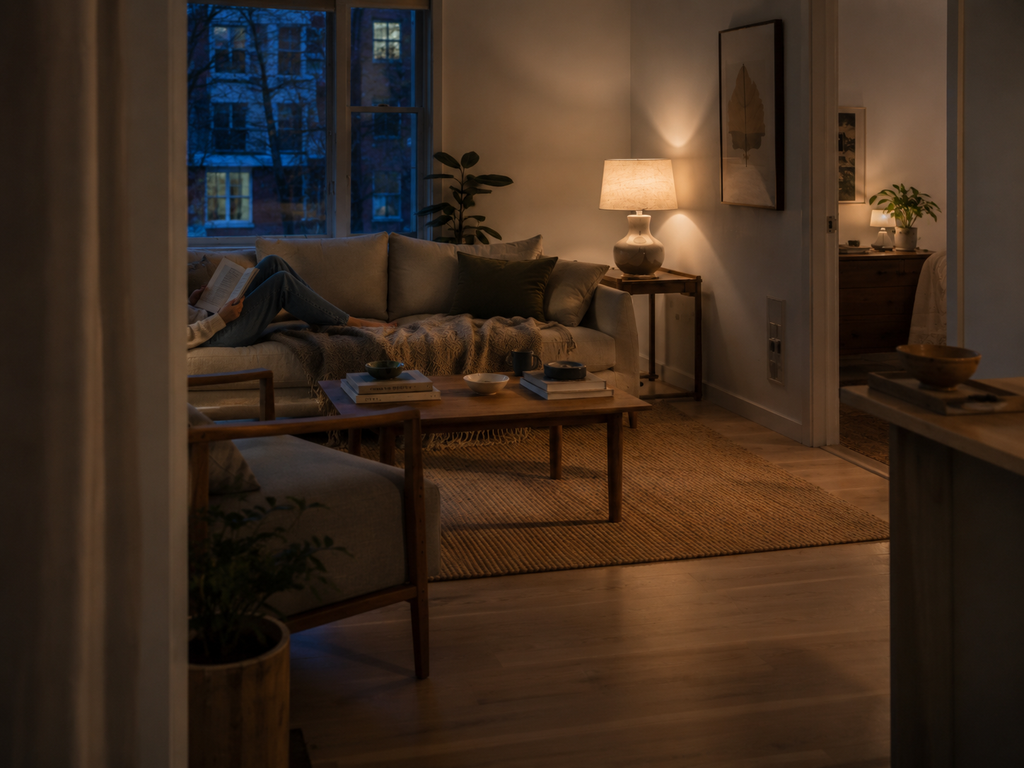
2. Give the Dark Corner a Job
Almost every living room has one corner that disappears after sunset.
During the day it might contain a chair, plant, little stack of books, or absolutely nothing. At night it becomes a dark void around the edge of the room.
That corner is surprisingly valuable.
Try placing a floor lamp there instead of adding more light to the center of the room.
A lamp aimed toward a wall or ceiling can spread a soft reflected glow without making the fixture itself the main event. A traditional shaded floor lamp beside an occasional chair creates a more concentrated reading zone.
Either way, the effect is less about brightness and more about depth.
Instead of one overhead source flattening the entire room, you now have one brighter area, one softer area, and shadows between them.
That variation is what makes evening lighting feel layered rather than simply dim.

You also do not need to fill the corner with decor afterward. The lamp itself can be enough.
A chair, lamp, plant, and a little negative space will almost always feel more natural than building an elaborate styled vignette around it.
3. Give the Kitchen an “After Dinner” Setting
Kitchen lighting is usually designed for chopping onions, washing dishes, and finding the lid that somehow disappeared into the back of a cabinet.
That makes sense while you are cooking.
It is less appealing at 9 p.m. when the kitchen is clean and you are only walking back in for a glass of water.
Create a second setting for the room.
If you have under-cabinet lighting, try using it on its own once dinner is finished. If you do not, a very small lamp on a safe, dry section of countertop can create the same visual shift.
A rechargeable lamp can be particularly useful when there is no convenient outlet, although anything placed near food-prep or water areas should be positioned safely and used according to its instructions.

The goal is not to make your kitchen look like a restaurant.
It is simply to stop asking the brightest lights in the house to stay on all night.
Once the counters are cleared and the dishes are done, lower lighting tells the room that its working day is over too.

4. Add Light at the Height You Need It
One reason overhead lighting can feel so harsh at night is simply its location: it is far away from everything you are actually doing.
Bring one source down.
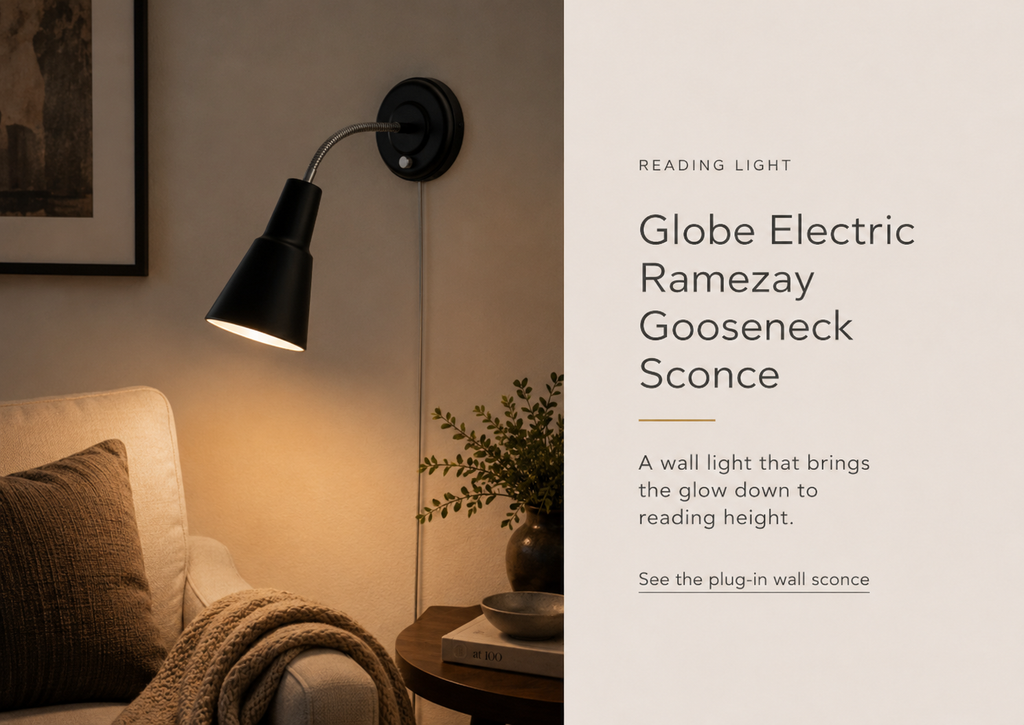
That could mean a bedside lamp, a plug-in wall sconce beside a reading chair, a little lamp on a dresser, or a small shaded light on an entry console.
This is especially useful in small homes because one low light can quietly define a zone without adding furniture or physically dividing the room.
A plug-in wall light, for example, can create the effect of a more considered lighting plan without requiring permanent electrical work. Just make sure any installation is secure and follow the manufacturer’s mounting instructions.
Think less about where a lamp “should” traditionally go and more about what happens in that spot.
Do you take your shoes off there?
Read there?
Leave your bag there?
Get ready for bed there?
Lighting becomes much easier once it follows behavior instead of furniture arrangements.
5. Make One Room Your No-Big-Light Zone
You do not need to overhaul every fixture in the house this weekend.
Pick one room.
For most people, the bedroom or living room is the easiest place to start.
Then see whether you can create a complete evening setup without turning on the overhead fixture at all.
Usually, two or three low sources are enough: perhaps a table lamp beside the sofa and a floor lamp in the opposite corner, or two bedside lights plus a small lamp on a dresser.
The exact number matters less than where the light lands.
If every square inch of the room is equally bright, you have recreated the ceiling light using more lamps.
Instead, leave some areas quiet.
Pay attention to the bulb, too.
For evening lamps, a warm-white bulb — often around 2700K, or even warmer if you prefer a softer amber effect — usually feels much calmer than cool white light.
Dimmable bulbs can make a lamp more flexible: brighter when you need to find something, lower when the evening slows down.
Smart bulbs are another option if you want to adjust brightness without getting off the sofa, but they are not necessary for creating a cozy room.
A simple warm bulb in the right lamp can do most of the work.


The Easy Rule: Lower, Warmer, Smaller
If you want to experiment before buying anything, walk around your home tonight and turn off the main lights.
Then switch on only the lamps you already own.
Move one if you can.
You may discover that the lamp from the guest room works better beside the sofa, that the little light on your dresser belongs in the kitchen after dinner, or that the living room feels much better with one corner intentionally left in shadow.
A good evening lighting setup tends to follow three simple ideas:
Lower: Bring light closer to where people sit, read, talk, and relax.
Warmer: Save cooler, brighter light for tasks and daytime; let evening light feel visibly softer.
Smaller: Use several defined pools of light instead of trying to illuminate the entire room from one source.
It is one of those rare home projects where the before-and-after can happen in ten minutes.
And once you get used to the room without the big light on, it can be surprisingly difficult to turn it back on.

Tonight, Start With One Lamp
You do not need a lighting plan for the whole house.
Choose the place where you most want to spend the evening, give it one good pool of warm light, and turn everything else off.
Then see how the room feels.
Sometimes the coziest home improvement is simply changing which switch you reach for.
Affiliate Disclosure
After Friday may earn a commission from qualifying purchases made through affiliate links in this article, at no additional cost to you.
As an Amazon Associate, After Friday earns from qualifying purchases.