
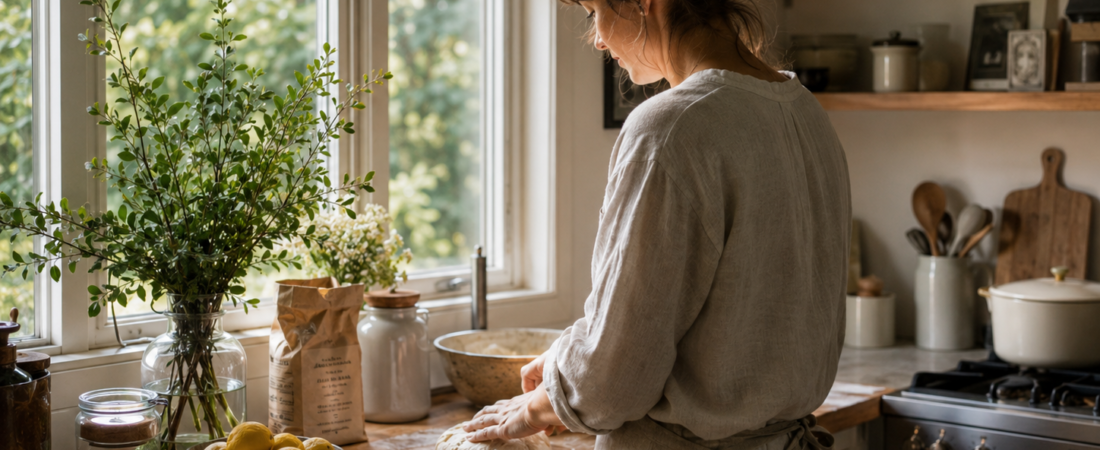
There is a big difference between deciding to make something from scratch because you have to and making it because you suddenly have a slow Saturday, good music on, and nowhere particularly urgent to be.
This is not an argument for making your own everything.
Buy the bread on Tuesday. Keep the jarred pasta sauce. Let someone else make the croissants.
But every once in a while, there are a few ordinary foods that are surprisingly satisfying to make with your own hands — not necessarily because they are cheaper, healthier, or objectively better, but because the process itself becomes part of the weekend.
These five are good places to start.
1. A Really Good Loaf of Bread
Bread is probably the obvious answer, but it deserves to be here.
Not because you should start maintaining a sourdough starter like another household dependent. Not because supermarket bread has somehow become unacceptable.
Because there are few kitchen projects with such an impressive gap between the amount of active work involved and the satisfaction of pulling the finished thing out of the oven.
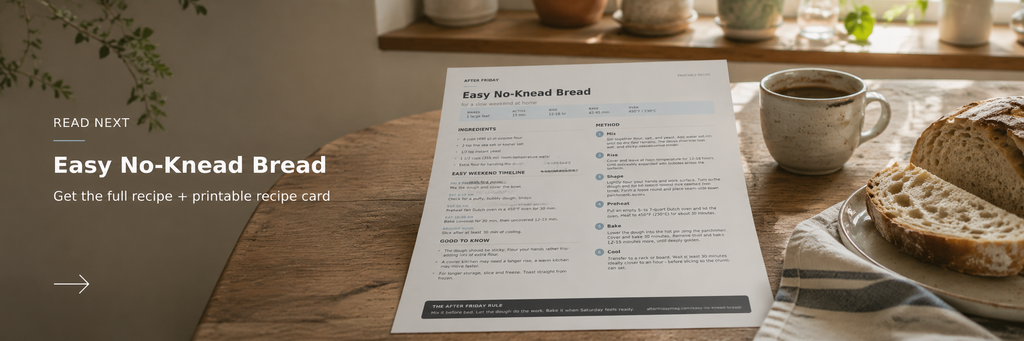
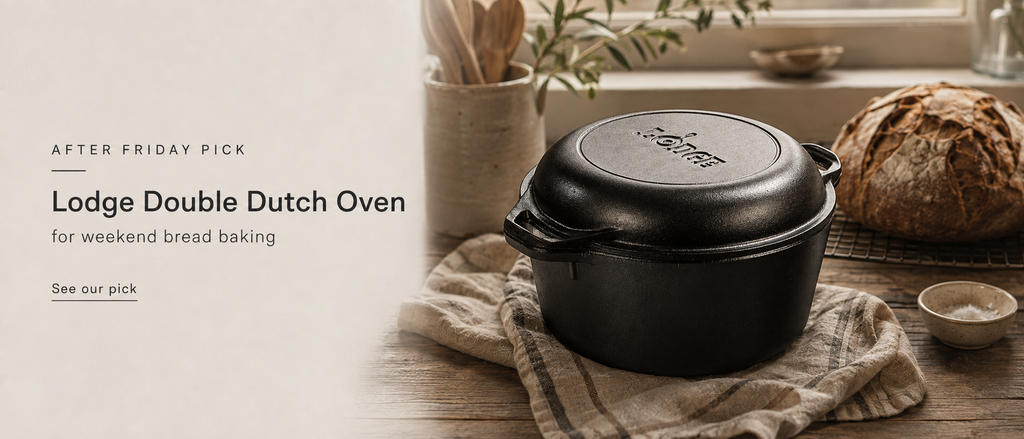
A simple no-knead loaf asks for very little: flour, water, yeast, salt, and time.
Most of that time is the dough doing absolutely nothing that requires your supervision.
Mix it in the morning, leave it alone while you go out, clean the house, read something, or do whatever else Saturdays are for, then come back to shape and bake it later.
The best part might not even be eating it.
It is the flour on the counter. The slightly ridiculous excitement when the crust starts to color. The sound it makes as it cools. The first uneven slice with butter while it is still warmer than it probably should be.
That experience is difficult to get from a plastic bag.
If bread baking sounds intimidating, skip elaborate scoring patterns and specialty techniques. Start with the least impressive-looking rustic loaf possible. A slightly misshapen loaf that tastes good is exactly the point.
Keep it low-pressure: Choose a beginner-friendly no-knead recipe and make one loaf, not a new lifestyle.
2. Fresh Pasta
Fresh pasta sits at the opposite end of the convenience spectrum from dried pasta.
Dried pasta is cheap, excellent, and ready whenever you need dinner in twelve minutes.
Which is exactly why fresh pasta works better as an occasional project than a replacement for it.
Make it when dinner is the plan.
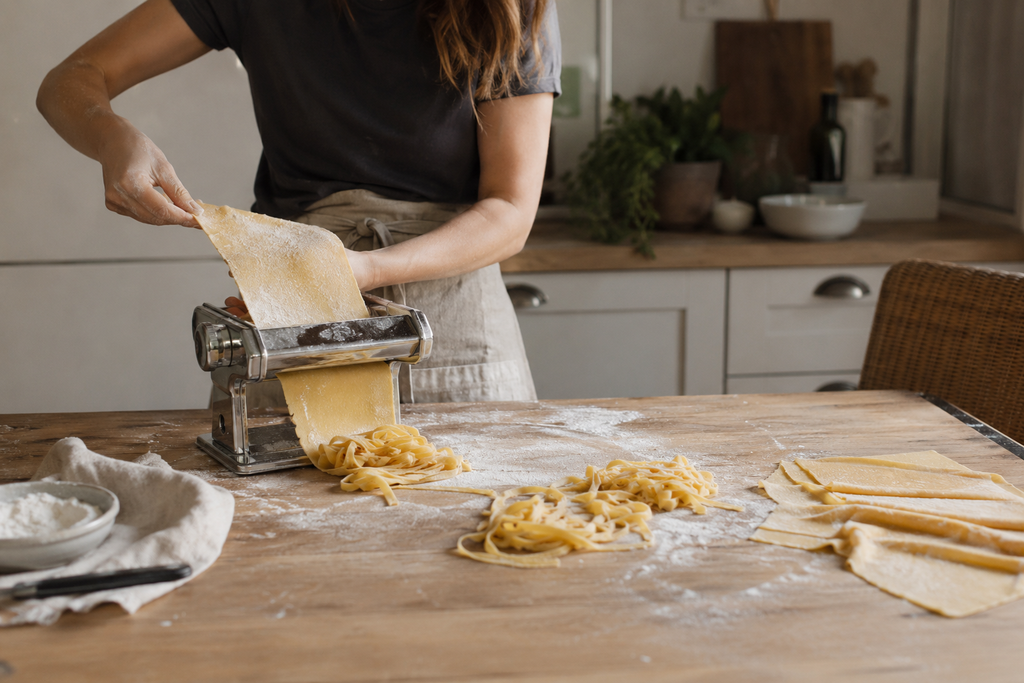
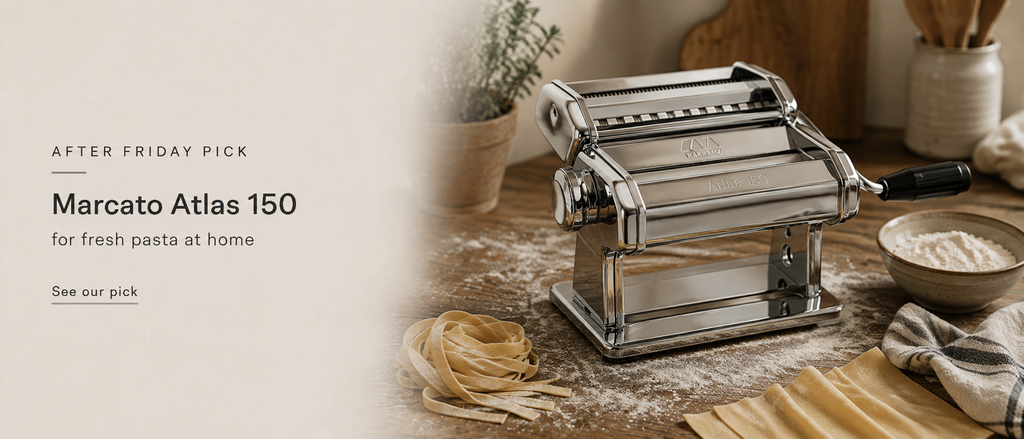
The basic dough can be remarkably simple. A useful starting point is roughly one large egg for every 100 grams of flour, adjusted as needed until the dough feels firm but workable.
Then comes the satisfying part: kneading it smooth, letting it rest, rolling it thinner than seems reasonable, and eventually watching a sheet of dough become ribbons of pasta.
You do not technically need a pasta machine. A rolling pin and a knife will get you there.
The machine just makes the transformation particularly fun.
There is also something forgiving about homemade pasta when you stop expecting every strand to look factory-made. Slightly different widths and floury edges make the finished bowl look better, not worse.
Keep the sauce simple the first time. Butter and Parmesan, olive oil and herbs, or tomatoes cooked quickly with garlic are enough.
You already did the interesting part.
3. A Small Batch of Jam
Late summer is exactly when making one tiny batch of jam starts to make sense.
Not twenty jars.
Not a pantry preservation operation.
One or two jars because the plums, berries, peaches, or other fruit you bought were particularly good — or because you bought slightly too much of them.
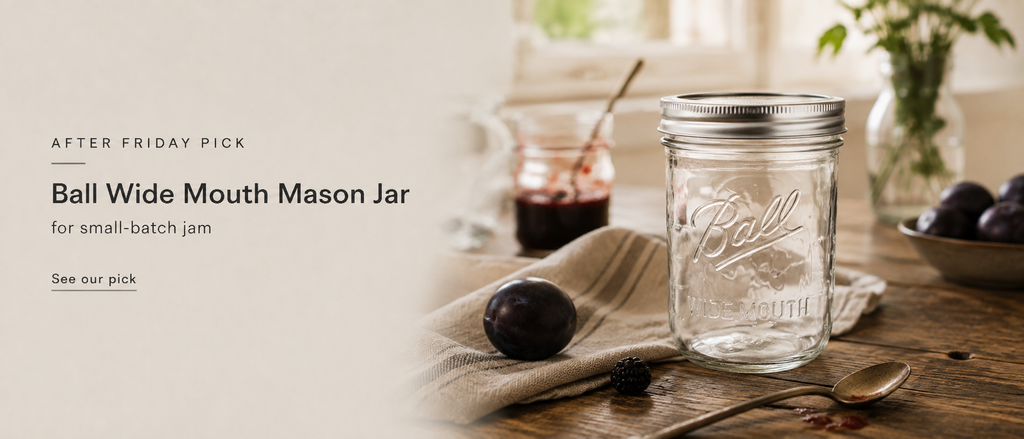
For an occasional weekend project, refrigerator jam is the easiest version.
Fruit, sugar, a little lemon, a saucepan, and some attention are enough to turn something very familiar into something that suddenly feels special.
You also get to decide what the jar tastes like.
Leave it a little tart. Add vanilla. Use rosemary with plums. Add ginger to peaches. Keep more pieces of fruit intact instead of cooking everything completely smooth.
The point is not achieving commercial consistency.
It is making a jar that tastes like the fruit you had that particular week.
Spoon it onto toast, yogurt, pancakes, or oatmeal over the next several days. Or put a handwritten label on the jar and bring it to somebody’s house.
A very small homemade thing makes a surprisingly good gift.
One important distinction: if you are not following a tested canning recipe and proper preservation process, treat it as refrigerator jam rather than shelf-stable preserves. Keep it refrigerated.

4. Granola You Actually Want to Eat
Granola is less romantic than fresh bread and considerably less dramatic than pasta.
That is part of its appeal.
It is one of the easiest from-scratch foods to make without turning the kitchen upside down, and homemade granola lets you correct all the things that annoy you about whichever bag you usually buy.
Too sweet? Use less sweetener.
Not enough nuts? Add more.
You only like the giant crunchy clusters? Do not stir it to death while it is baking.
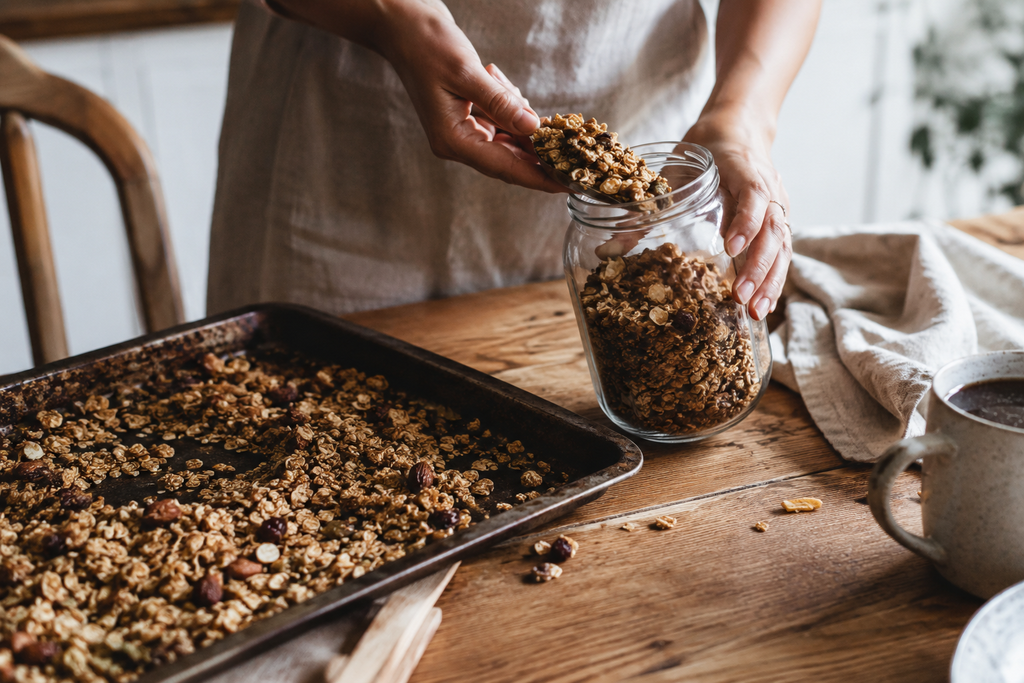
A loose starting formula is rolled oats, nuts or seeds, a little oil, something sweet like maple syrup or honey, a pinch of salt, and whatever spices make sense.
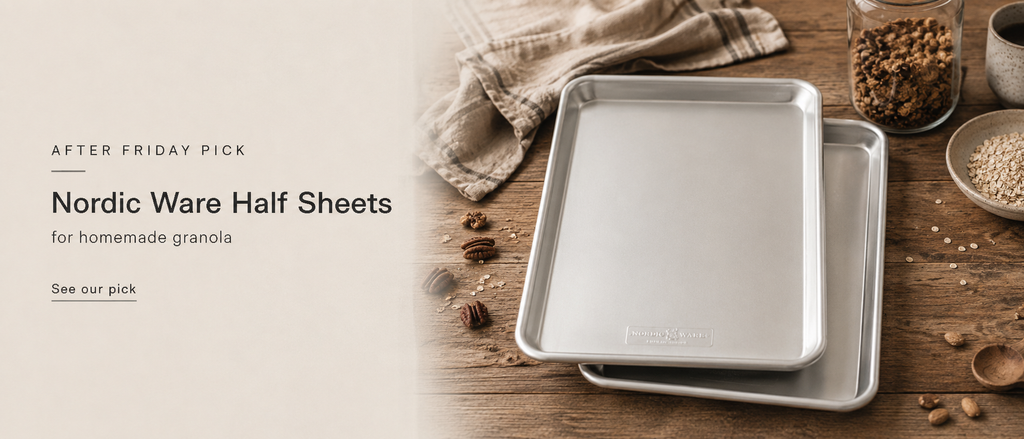
Spread everything over a rimmed baking sheet, bake until golden, then leave it alone until completely cool.
That final part matters if clusters are your goal.
Once you have the base, it becomes a very good use-what-you-have project. Pecans, almonds, pumpkin seeds, coconut, cinnamon, dried cherries, dark chocolate added after cooling — the jar can change every time.
And unlike making your own pasta on a Wednesday night, a batch of granola genuinely can make the following week easier.
Breakfast is already halfway done.
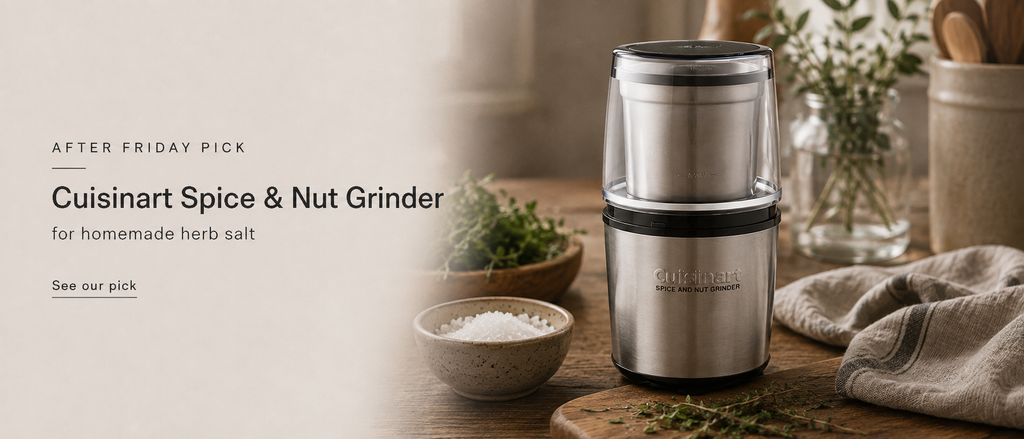
5. Herb Salt From Whatever Is Left
This is the smallest project on the list, which is precisely why it belongs here.
If you bought a bunch of rosemary, thyme, sage, or another sturdy herb for one recipe and the rest is slowly approaching its inevitable end in the refrigerator, turn it into something useful.
Herb salt is essentially a way to make ordinary salt taste like you made an effort.
Finely chop the herbs, combine them with coarse or kosher salt, then dry the mixture thoroughly before transferring it to an airtight jar. A food processor can make quick work of larger batches, but for a small amount, a knife is enough.
Use it on roasted potatoes, eggs, vegetables, chicken, tomatoes, focaccia, or anything that needs the very technical culinary instruction of a little something.
Lemon zest, garlic, or dried chile can also move the mixture in different directions, although anything containing fresh moisture needs to be fully dried before room-temperature storage.
The nicest part is that it turns an ingredient you were probably going to forget about into something you will keep reaching for.
It also happens to look satisfying in a small glass jar.
Which is not the reason to make it.
But it does not hurt.

The Point Is Not to Make Everything Yourself
There is an easy way to ruin this idea: turn it into another standard you are supposed to meet.
You do not need homemade bread every week.
You do not need matching pantry jars.
You certainly do not need to spend Sunday evening making things you could happily buy because the internet convinced you that a more impressive person would.
Making something from scratch is most enjoyable when it is optional.
Choose one thing.
Put something good on in the background. Clear enough space on the counter. Accept that there will be dishes.
Then spend an hour making something unnecessarily, pleasantly real.
That is enough.

Maybe next weekend, buy all five.
And make just one.
Affiliate Disclosure
This post may contain affiliate links, which means After Friday may earn a commission if you make a purchase through one of these links, at no additional cost to you. As an Amazon Associate I earn from qualifying purchases.