
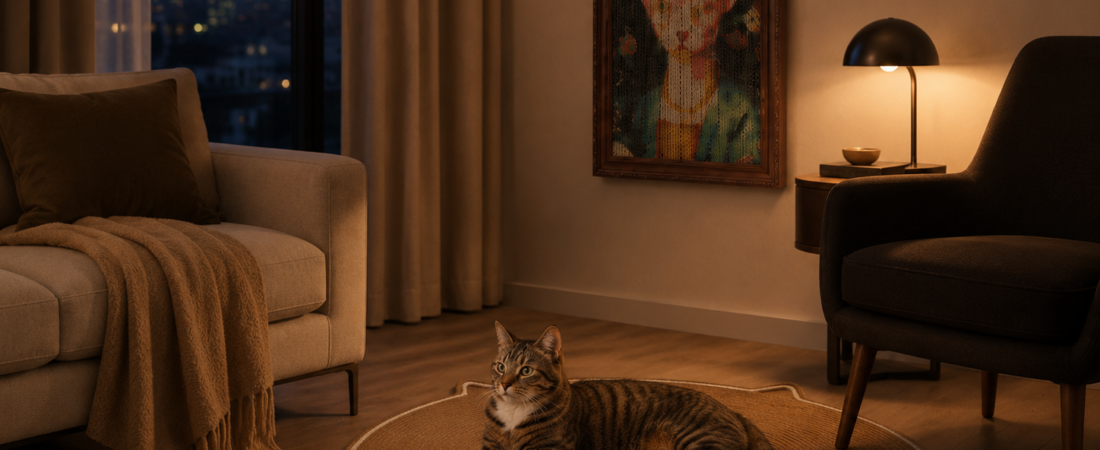
Living with a cat usually means accepting a few compromises.
Fur on the sofa? Fine.
A cardboard box becoming more interesting than the expensive toy inside it? Expected.
But an enormous beige scratching tower dominating the living room forever? Maybe not.
The good news is that cat furniture has quietly become much better looking.
There are now scratchers that mount to walls, double as beds, sit neatly beside furniture and, in one particularly brilliant case, look more like framed art than something designed for claws.
If your cat needs somewhere appropriate to scratch but you’d still quite like your home to feel like your home, start here.
1. Put the Scratcher on the Wall
Floor space is valuable, particularly in apartments.
A wall-mounted scratching pad solves two problems at once: it gives cats the vertical stretch many naturally prefer, while keeping bulky pet furniture off the floor.
The geometric versions are especially easy to integrate into a modern room because, from a distance, they almost read as wall panels rather than cat furniture.
They work particularly well:
- beside a sofa;
- near the place your cat already scratches;
- in a hallway;
- on the side of a cabinet;
- in a small apartment where every square foot matters.
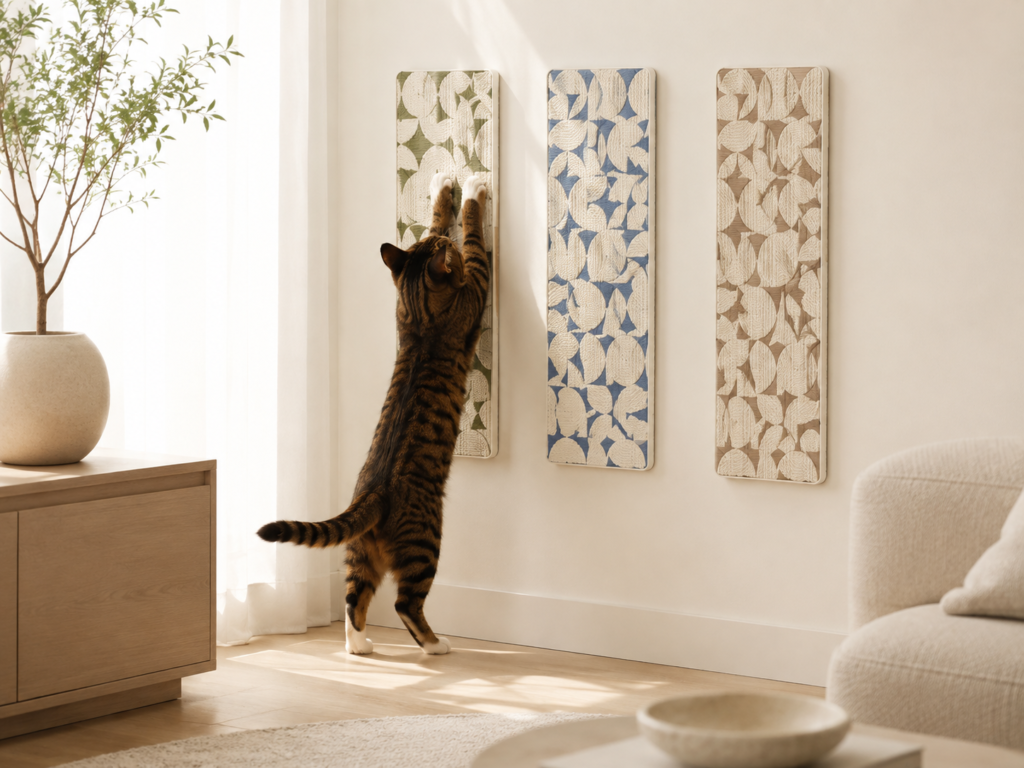
The idea
Choose a set of two or three panels and hang them vertically rather than treating them like pet equipment.
Suddenly the scratcher becomes part of the room.
SHOP THE WALL-MOUNTED SCRATCHER →
[Affiliate link]
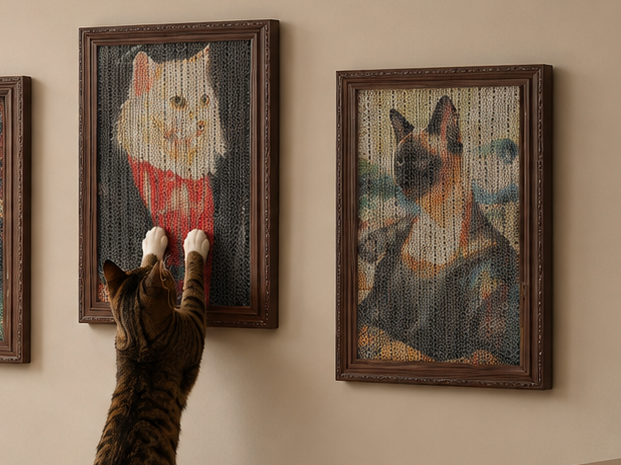
2. Or Turn It Into Actual Wall Art
This might be the most fun version of the idea.
Instead of disguising a scratching board, lean into it.
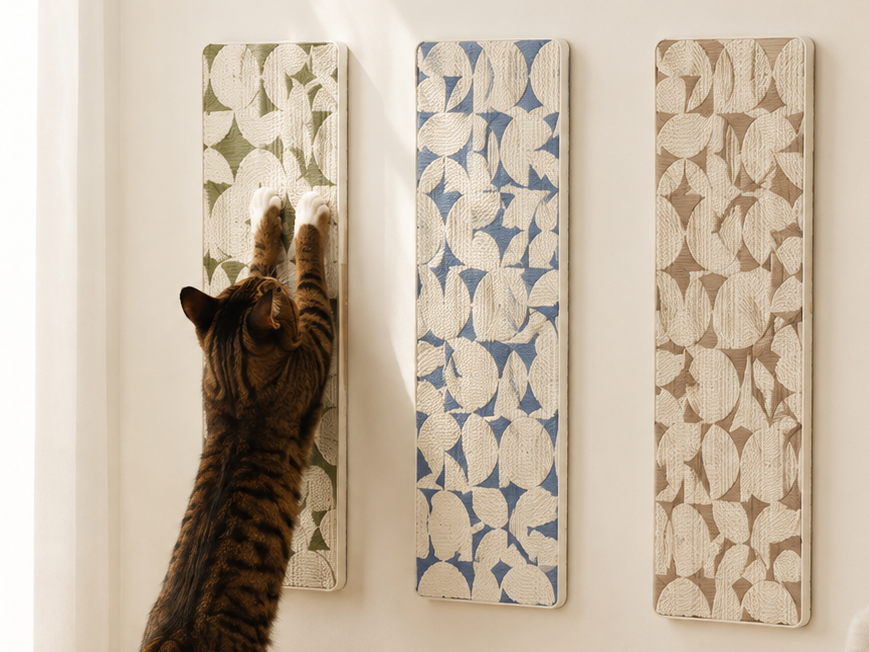
The framed art-style scratchers replace the traditional cardboard slab with something that looks deliberately decorative — until the cat walks over and starts scratching the painting.
Which is precisely why this type of product works so well.
It solves a real pet problem while also creating a small wait, what is that? moment in the room.
And for anyone who hates having obvious pet products everywhere, that is a surprisingly appealing combination.
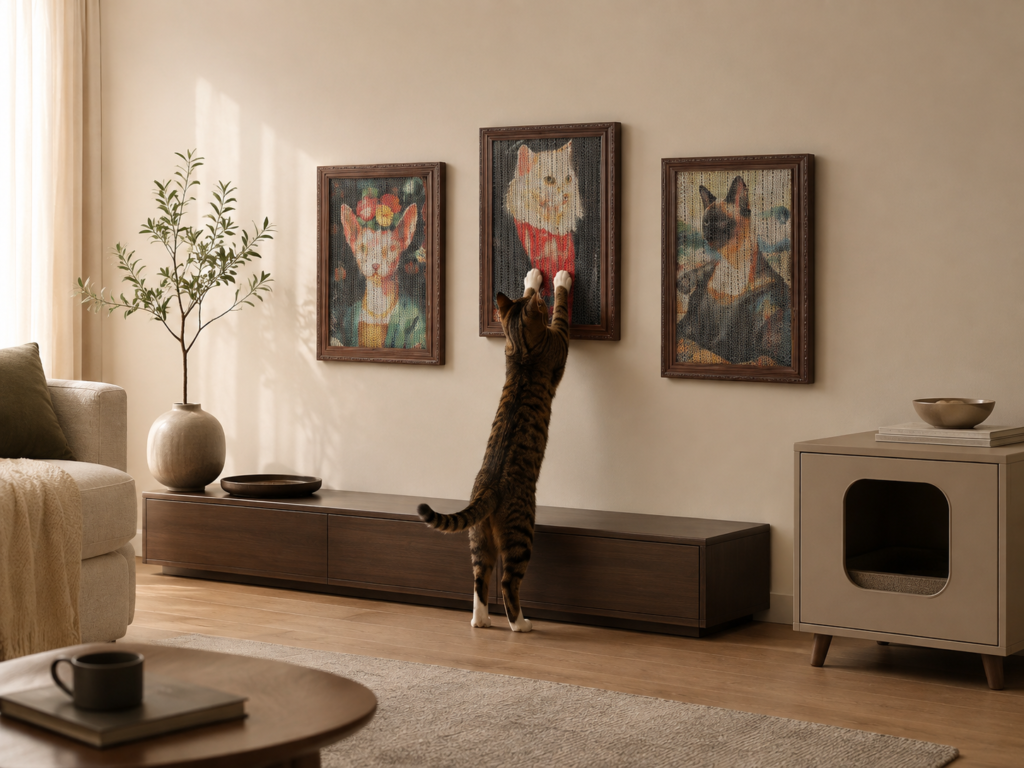
Where we’d put it
A small grouping of three above:
- a litter cabinet;
- a console;
- a pet corner;
- the end of a hallway.
Treat them exactly as you would a miniature gallery wall.
[Affiliate link]
3. Give Vertical Scratchers a Smaller Footprint
Some cats simply want to stand up and stretch.
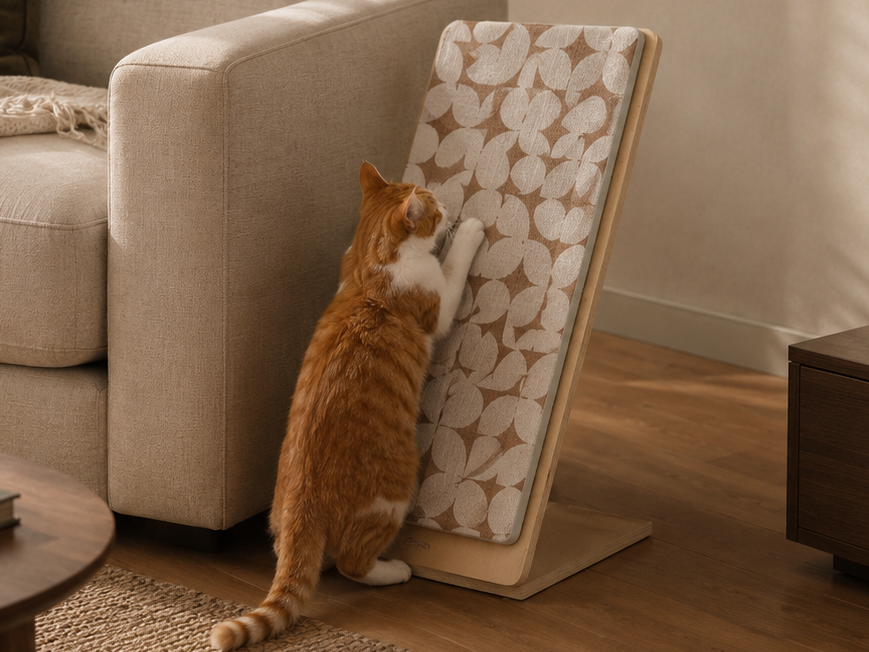
If that sounds familiar, a slim angled scratcher can make much more sense than a traditional scratching post.
It still gives them height and resistance, but takes up considerably less visual space.
A wooden frame also helps it blend with furniture far better than carpet-covered posts usually do.
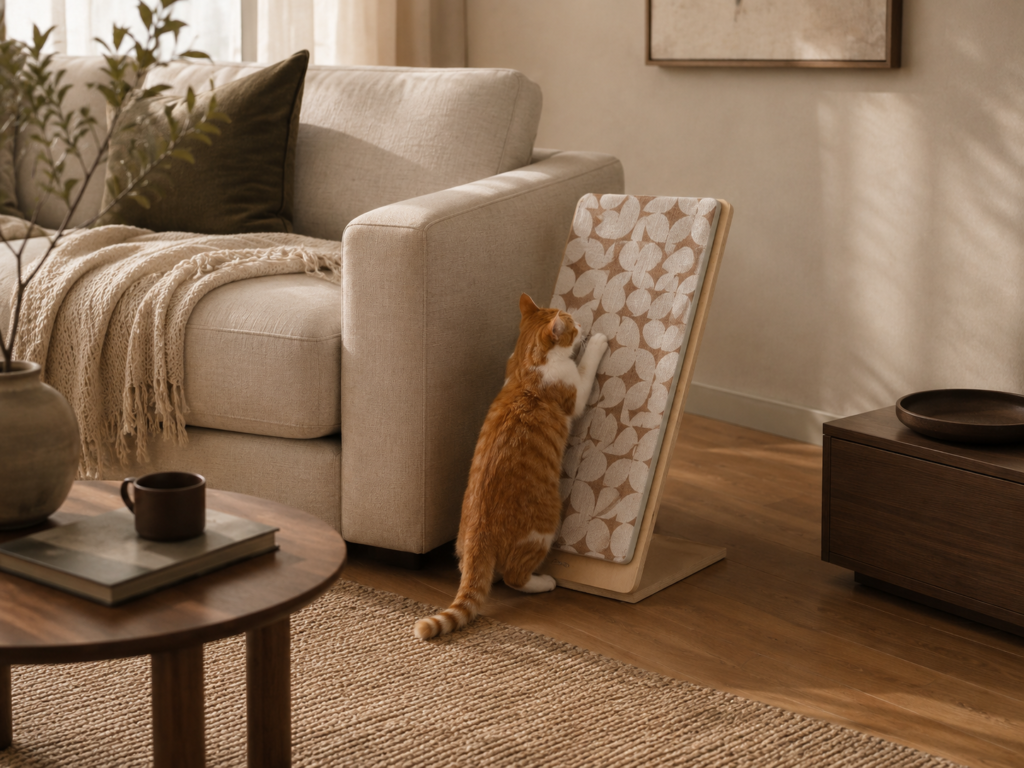
Best for
Cats that:
- scratch the arms of sofas;
- stretch vertically against furniture;
- ignore horizontal cardboard pads;
- prefer a more stable scratching surface.
Position it where the unwanted scratching already happens, rather than where you wish your cat would use it.
That tiny change often matters more than buying yet another scratching toy.
[Affiliate link]
4. Let the Scratcher Become the Bed
Cats have an impressive ability to turn almost anything into a nap location.
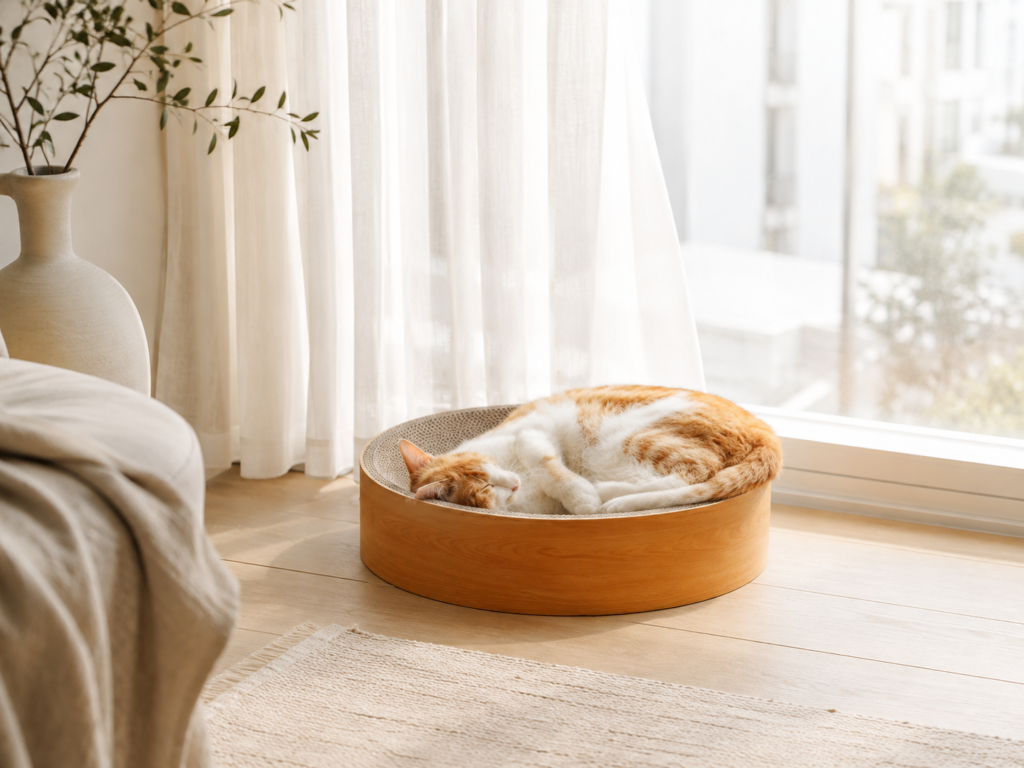
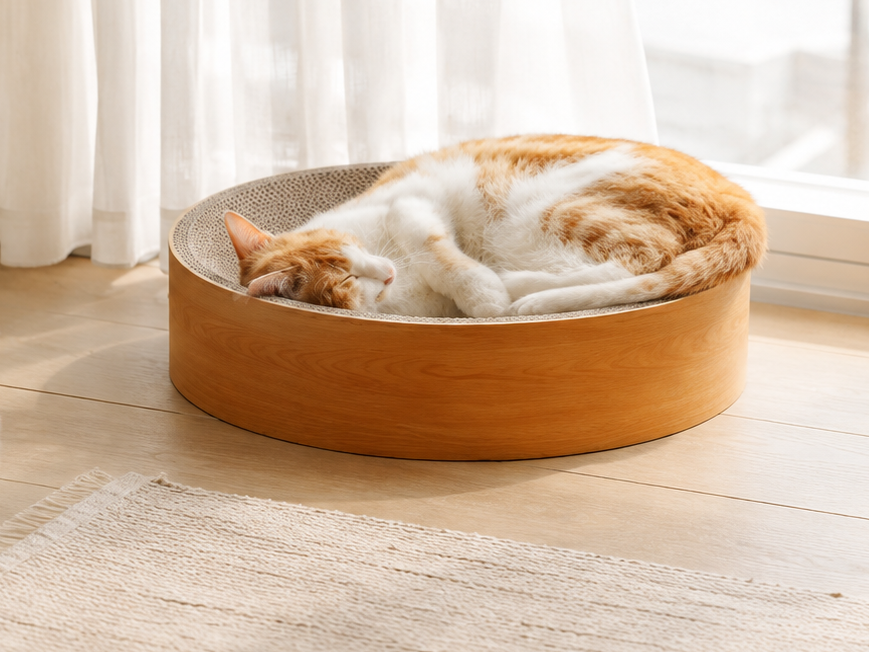
So a round cardboard scratcher that also works as a lounger makes an unusual amount of sense.
It gives them:
scratch → circle → collapse → sleep.
And because the form is low and simple, it can sit beside a sofa or window without becoming the visual centre of the room.
This is also the sort of pet product that earns its footprint because it replaces two things instead of adding another one.
Styling trick
Choose natural wood tones and place it:
- near a sunny window;
- beside the sofa;
- under a console;
- next to a plant.
It will read much more like a low pet bed than traditional cat furniture.
[Affiliate link]
5. Protect the Sofa Without Adding Another Cat Tower
Sometimes subtle is not enough.
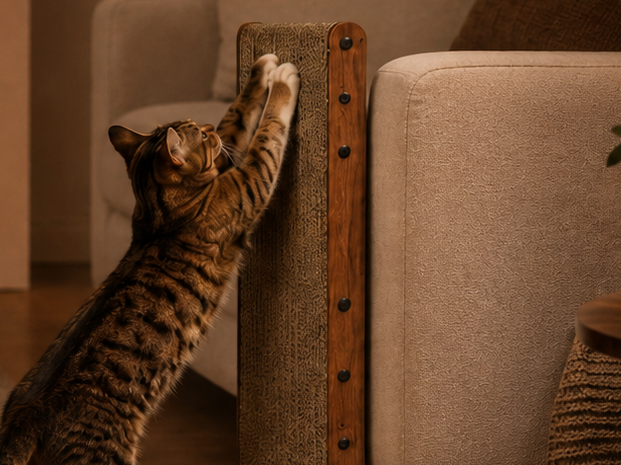
If your cat has decided that the sofa is the finest scratching surface ever invented, you need something placed directly beside the temptation.
An L-shaped scratcher is clever because it creates both a vertical and horizontal scratching surface while sitting neatly against furniture.
Some versions also include a small play area or lounging curve, giving cats several reasons to use the scratcher instead of the sofa.
This is less about creating a beautiful standalone object and more about making the useful thing disappear into the room.
And that counts too.
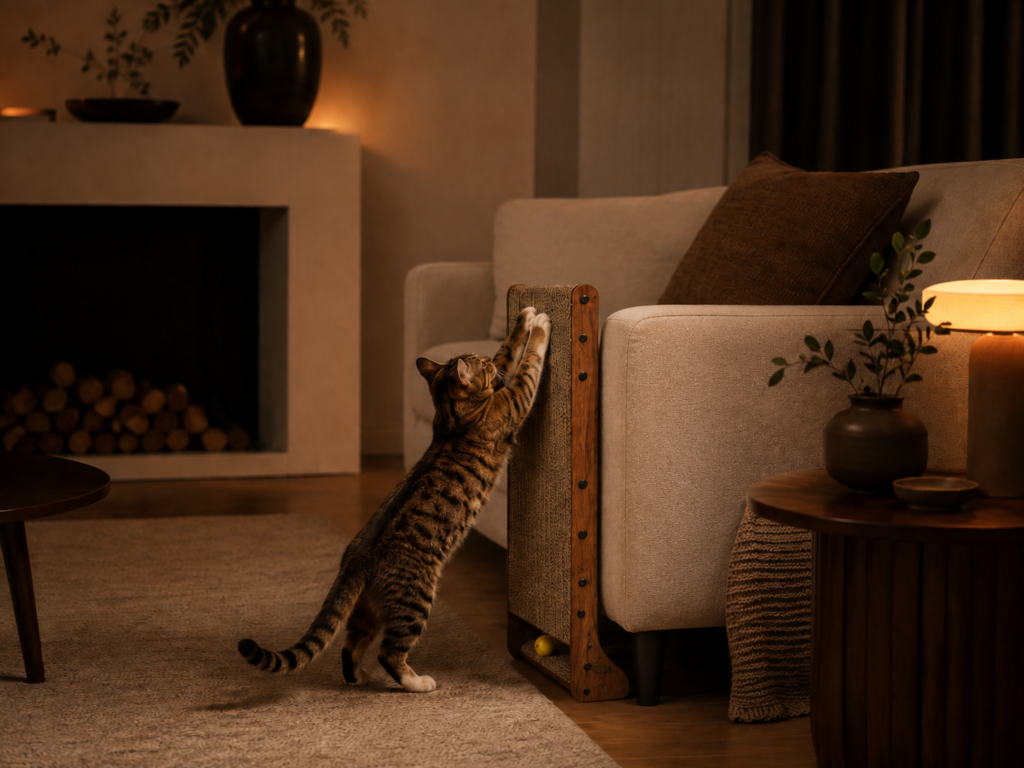
Put it where the crime happens.
Seriously.
Next to the sofa arm.
Not six feet away because it looked nicer there.
[Affiliate link]
6. Try a Scratching Mat That Looks Like a Rug
This is probably the least obviously “cat furniture” option of the lot.
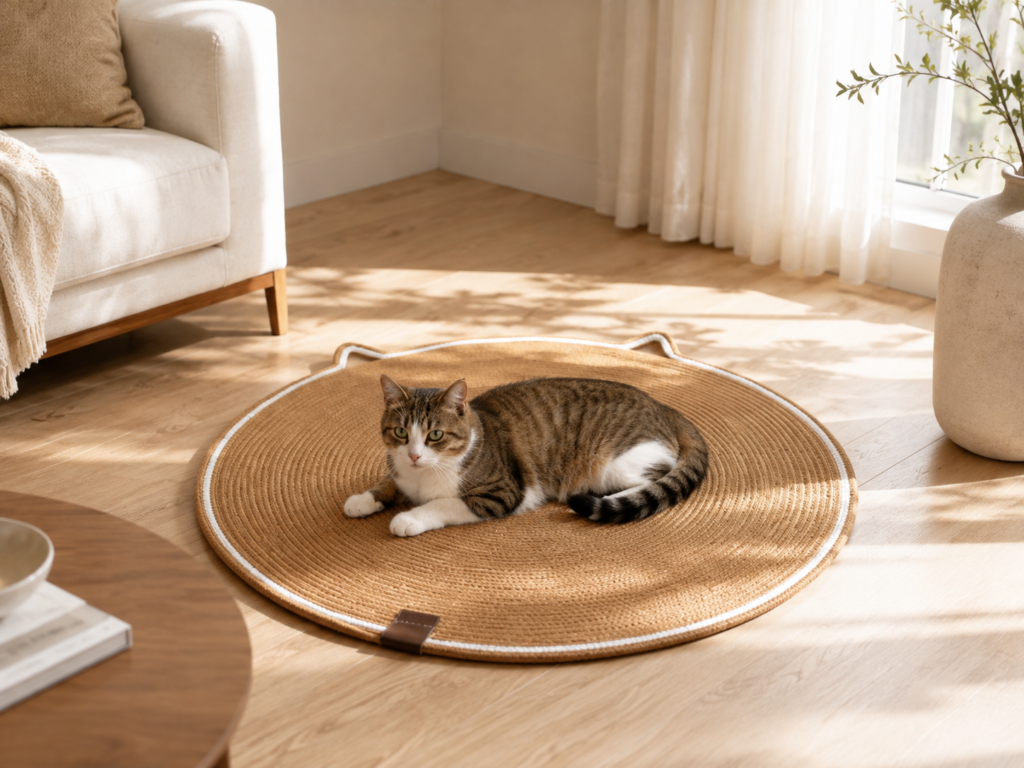
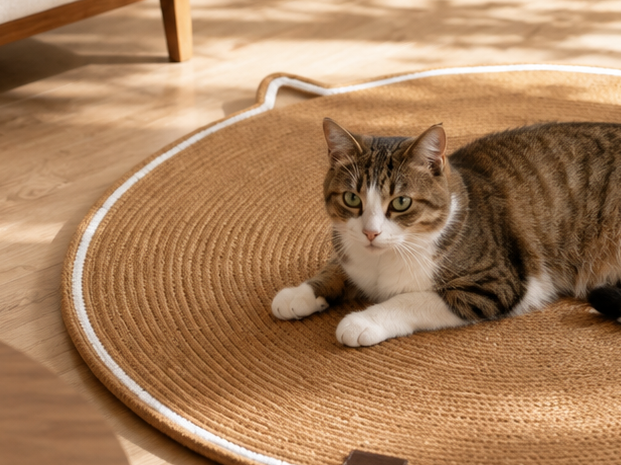
A large round scratching mat in natural cotton rope can read almost like a woven rug when placed in the right space.
Cats can scratch, stretch, roll around and inevitably fall asleep on it — while the room still feels relatively calm.
The larger size also works well if you have a cat that seems completely unimpressed by tiny scratching pads.
Best placement
Think:
- beside a window;
- underneath a cat tree;
- in a reading corner;
- beside the sofa;
- anywhere your cat already likes to lie on the floor.
Natural fibres make this particularly easy to pair with warm wood, cream upholstery and darker accent pieces.
SHOP THE NATURAL SCRATCHING MAT →
[Affiliate link]
The Trick Is Making Pet Things Part of the Room
A beautiful pet-friendly home does not need to look as though the pets disappeared.
Quite the opposite.
The best solutions acknowledge how they actually live.
If your cat scratches beside the sofa, put the scratcher beside the sofa.
If they stretch vertically, give them height.
If they scratch and immediately lie down, choose something that does both.
And if the product happens to look good while solving the problem?
Even better.
THE AFTER FRIDAY EDIT
Cat Things We Would Actually Keep in the Living Room
[Affiliate link]
A Better Home for Both of You
Small changes that make life with pets easier — without compromising the room.