
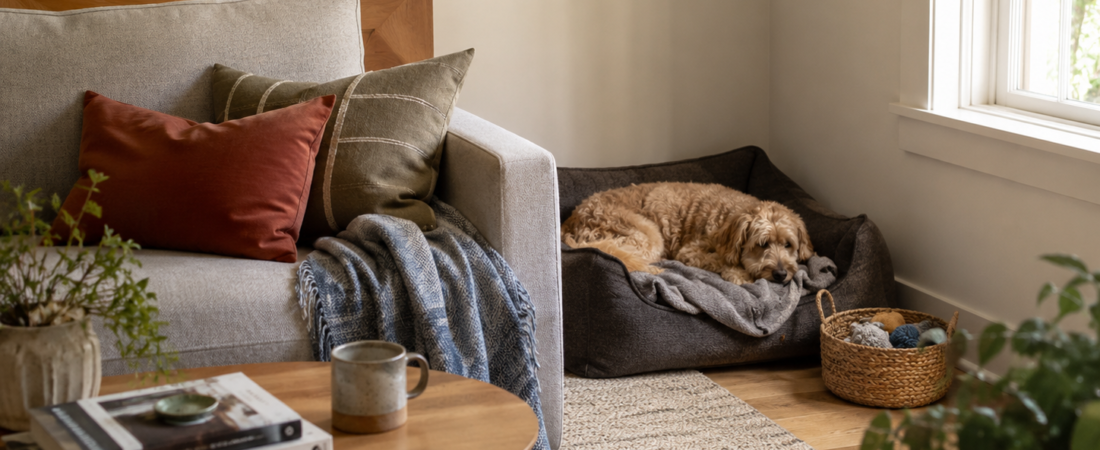
A pet corner doesn’t need custom cabinetry, a built-in feeding station, or an entire room of its own.
In most homes, it’s much less dramatic than that.
It’s the dog bed squeezed beside the sofa. The water bowls you keep stepping around. The basket of toys that somehow never stays contained. The leash dropped near the front door. The chair your cat claimed months ago and has no intention of giving back.
Those are exactly the spaces worth improving.
Instead of creating a perfectly styled “pet station,” spend an hour or two this weekend making one of the spots your pet already uses a little more comfortable, functional, and considered.
The goal isn’t to make your home look less like you have a pet.
It’s to make the evidence of having one fit into the room a little better.
1. Make the Bed Corner Feel Like It Belongs There
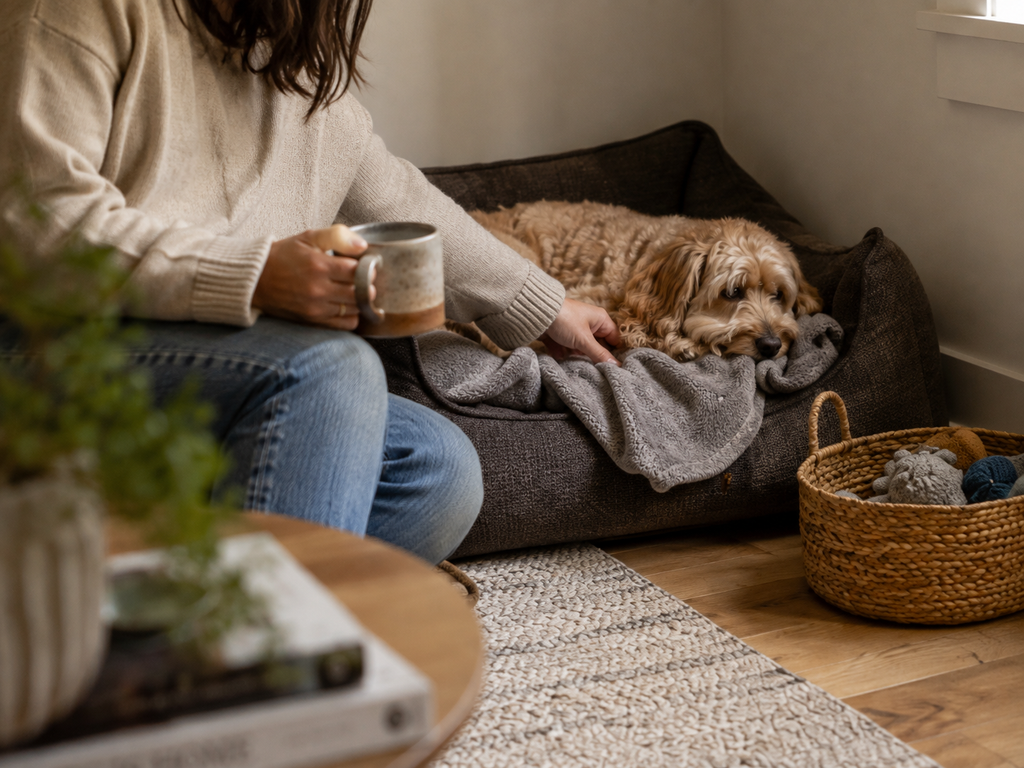
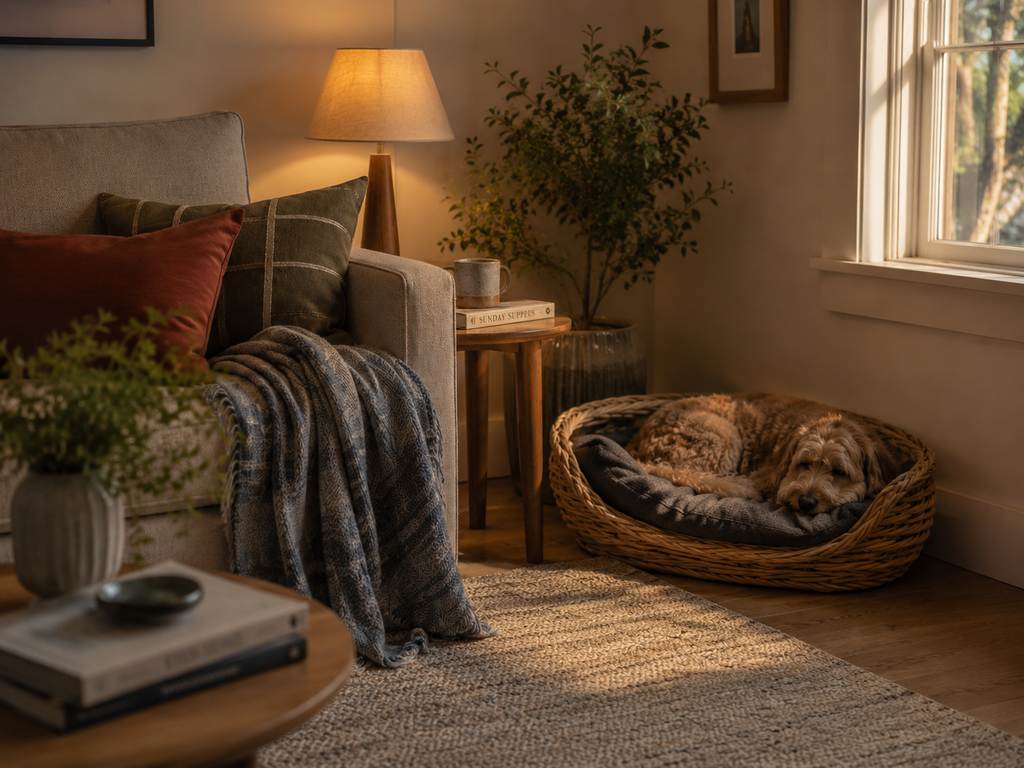
Start with the easiest place to improve: wherever your pet already sleeps during the day.
Before buying anything, look at the placement.
Is the bed half blocking a walkway? Does it constantly migrate across the room? Is it sitting in the one awkward gap left after the furniture was arranged?
Sometimes the best improvement is simply moving it 18 inches.
Look for a spot that keeps your pet close to everyday household life without putting the bed directly in the busiest path through the room. The end of a sofa, an unused section beneath a window, or the space beside a console can work beautifully.
Then treat the bed as part of the room.
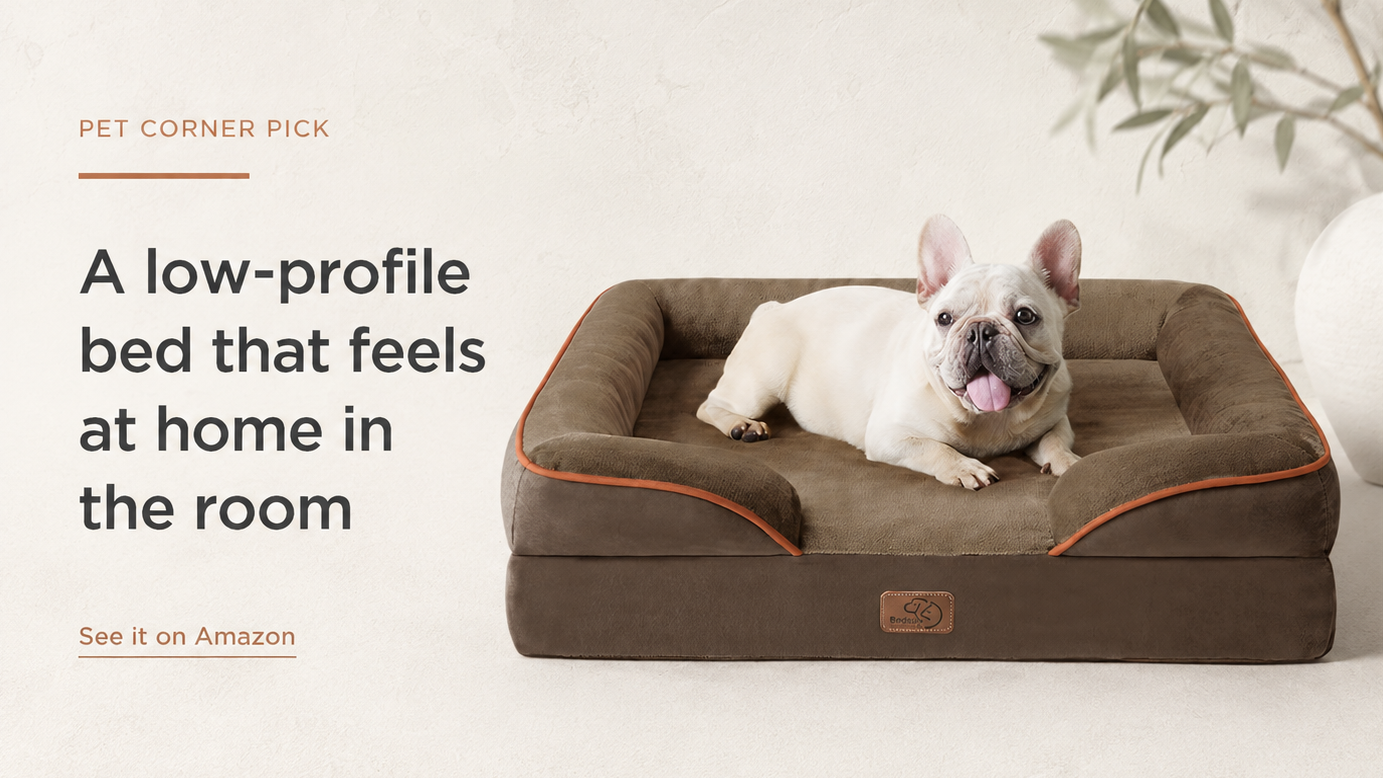
You don’t have to match it perfectly to the sofa, but choosing colors and textures that already exist nearby can make even a very obvious dog bed feel intentional. Charcoal, muted olive, washed canvas, oatmeal, denim blue, and soft gray are forgiving options in a lived-in home.
If the existing bed is still perfectly usable, a washable throw or simple blanket may be all it needs.
And resist the urge to decorate around it.
Your dog does not need a gallery wall announcing that this is the dog’s corner.
A comfortable bed, one blanket, and perhaps a small toy basket nearby are enough.
2. Fix the Feeding Area You’ve Stopped Noticing
Pet bowls have a talent for gradually becoming permanent fixtures in slightly inconvenient places.
Maybe yours sit beside the kitchen doorway because that was the obvious spot when you first brought your pet home. Maybe the water bowl is on a towel that never looks quite clean. Maybe bags of food, treats, and scoops have slowly accumulated around it.
Give the whole area a reset.
Start by removing everything except the bowls.
Then ask two questions:
Is this location convenient for your pet?
Is it convenient for the humans who use the room?
If everyone walks through the area twenty times a day, shifting the bowls to the quieter end of a cabinet run may immediately make the kitchen feel less cluttered.
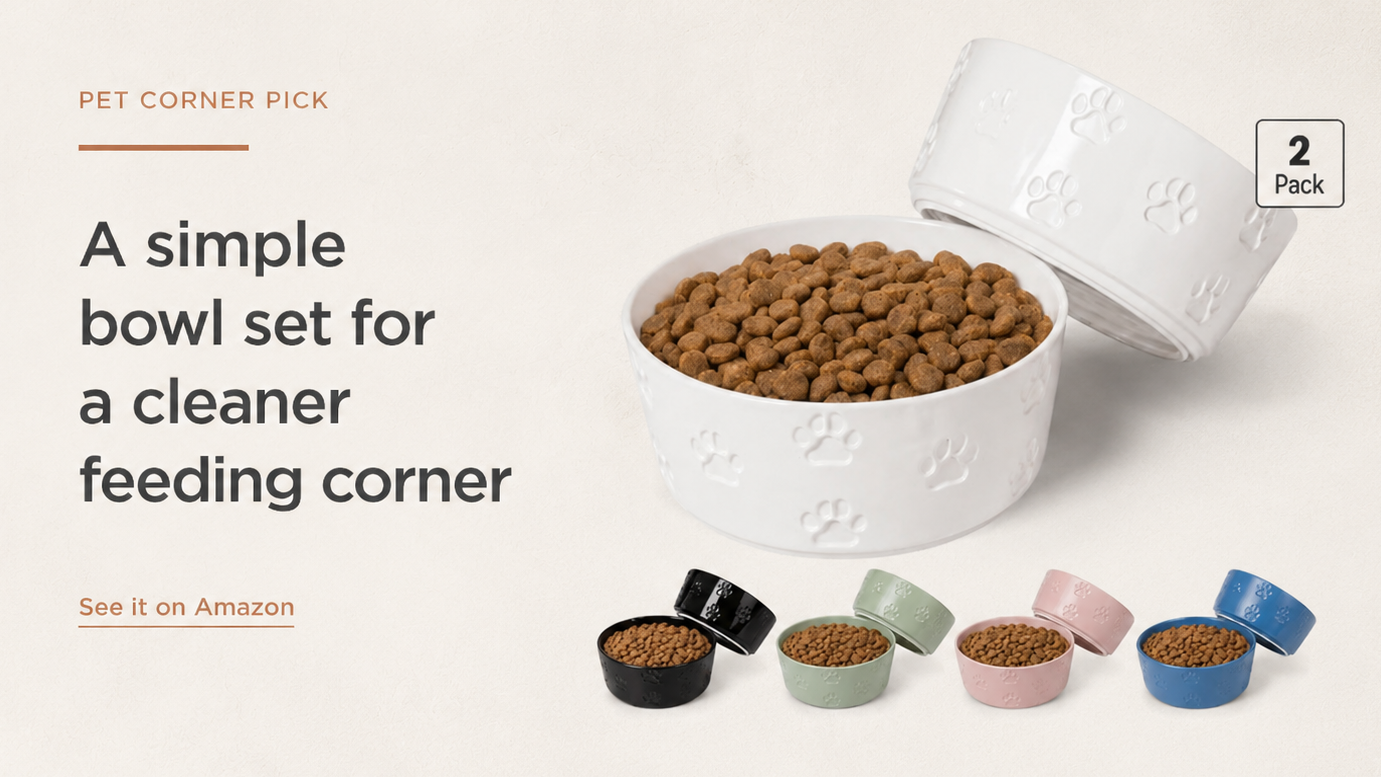
Next, define the zone with one practical surface underneath. A simple washable mat is usually enough to visually contain the bowls while also making everyday cleanup easier.
Keep the rest elsewhere.
Food bags, spare treats, medications, grooming supplies, and backup bowls don’t all need to live on the floor beside dinner.
One attractive container or a nearby cabinet can do more for the room than an elaborate feeding station.

3. Give the Toys One Easy Place to Land
There are two types of pet toy storage.
The system you imagine yourself maintaining.
And the basket you can throw everything into in 15 seconds.
Choose the basket.
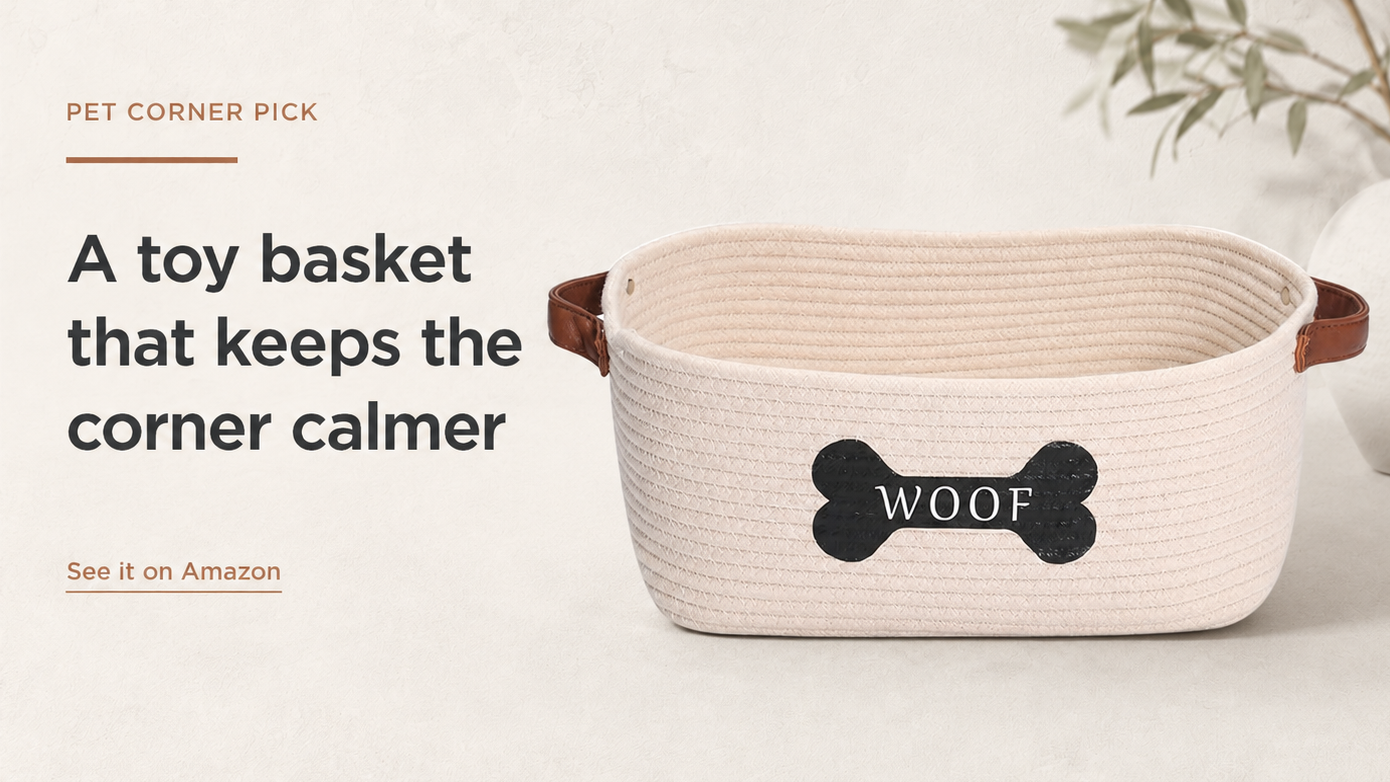
For a living room or family room, open storage is usually the easiest solution because putting toys away requires almost no effort. A sturdy woven basket, canvas bin, or low fabric container can sit beside the pet bed without making the room feel like a playroom.
Scale matters more than people think.
An enormous basket filled with every toy your pet has ever owned will still look cluttered. Keep a smaller selection accessible and store rarely used extras elsewhere.
This is also a good weekend moment to edit the collection.
Pull everything out. Set aside anything damaged beyond use, gather stray balls from under the sofa, wash whatever can be washed, and return only the things your pet actually reaches for.
There is no requirement for the basket to stay immaculate.
In fact, one toy on the floor is probably a sign that the system is working.
4. Turn the Front Door Into a Tiny Walking Station
If you have a dog, the most useful pet corner in the house might not involve a bed at all.
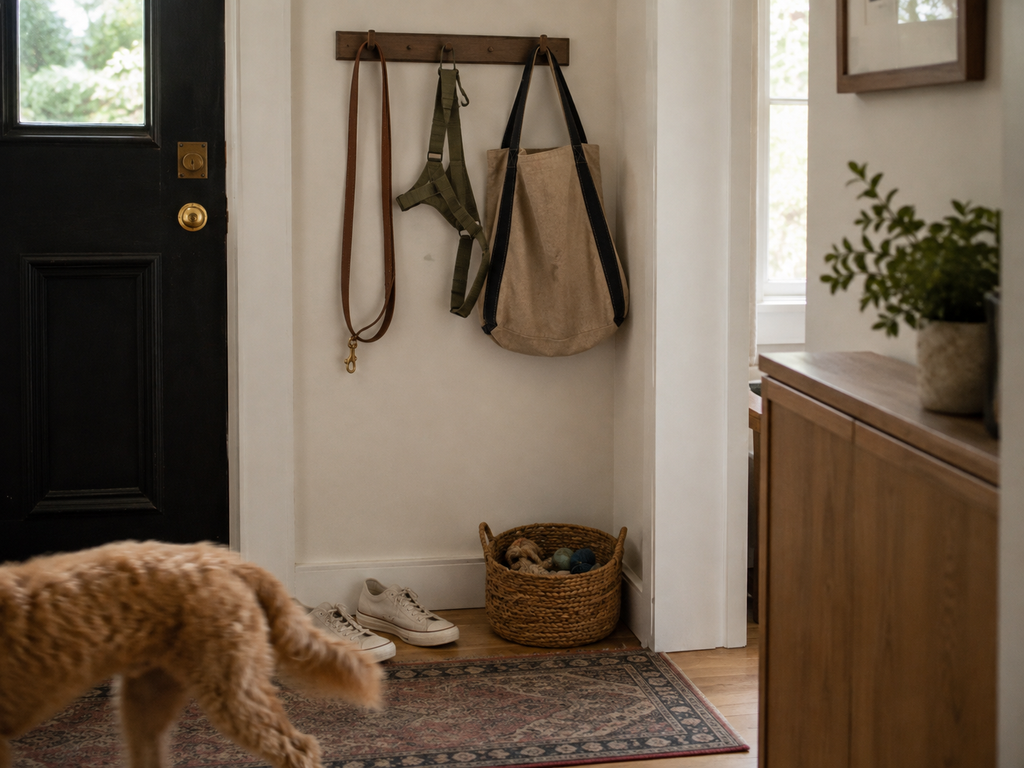
It might be the three feet beside your front door.
Leashes, harnesses, waste bags, towels, treat pouches, and muddy-weather essentials tend to scatter because they’re used quickly and repeatedly.
Instead of hiding everything in different cupboards, give the everyday items a small landing zone.
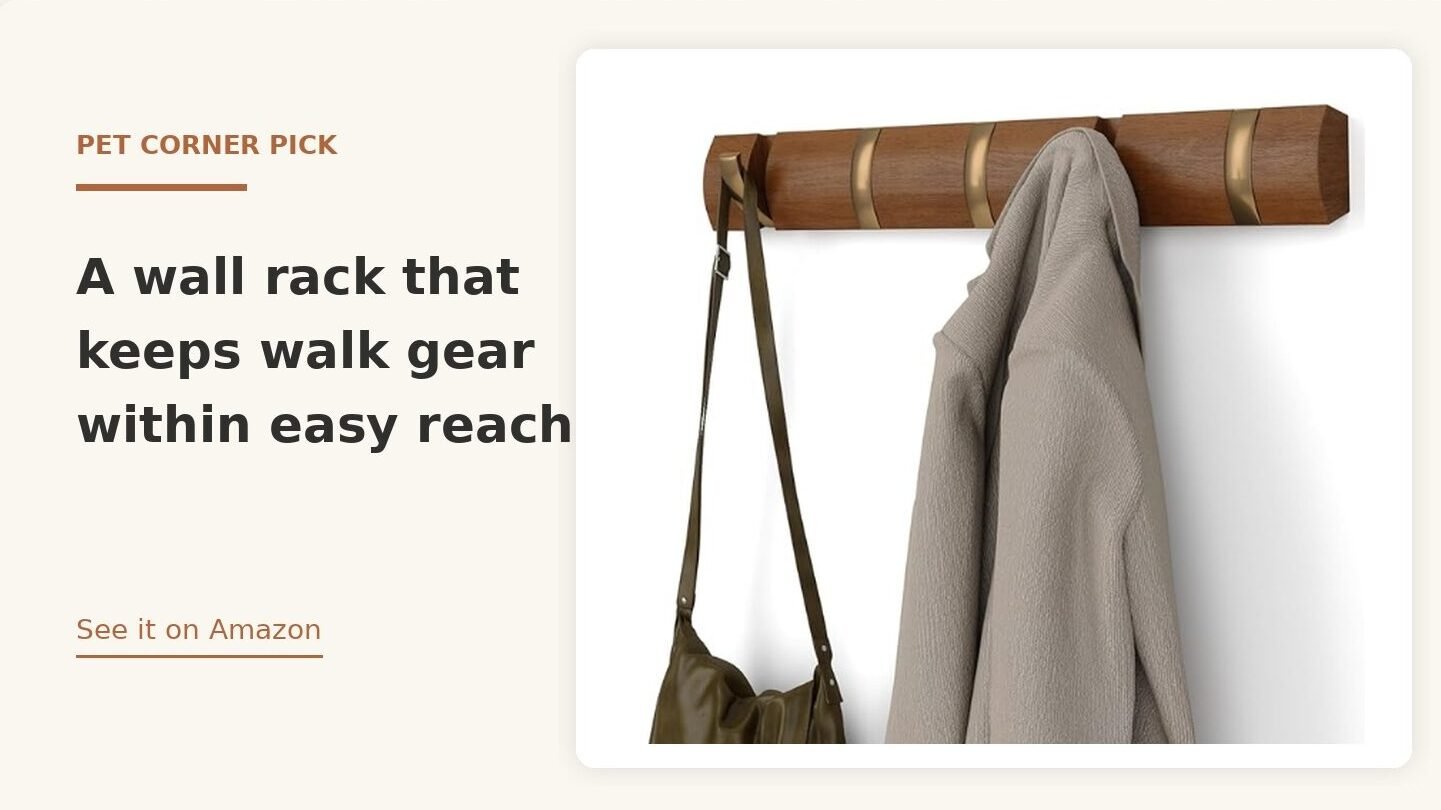
A couple of simple wall hooks can hold the leash and harness. A small basket can contain waste bags, a paw towel, and whatever else you reach for on almost every walk.
The trick is to keep this station edited.
This is not the place for the backup leash you use twice a year, three winter coats in August, flea treatments, nail clippers, and every pet accessory you own.
Think leaving-the-house essentials, not pet inventory.
If you already have an entry bench or console, use what’s there rather than adding a piece of dedicated pet furniture.
That’s the difference between integrating pet life into a home and creating another zone you have to maintain.
5. Improve the Spot Your Cat Chose for You
Cats are particularly good at ignoring the space you intended them to use and selecting a completely different one.
Work with that.
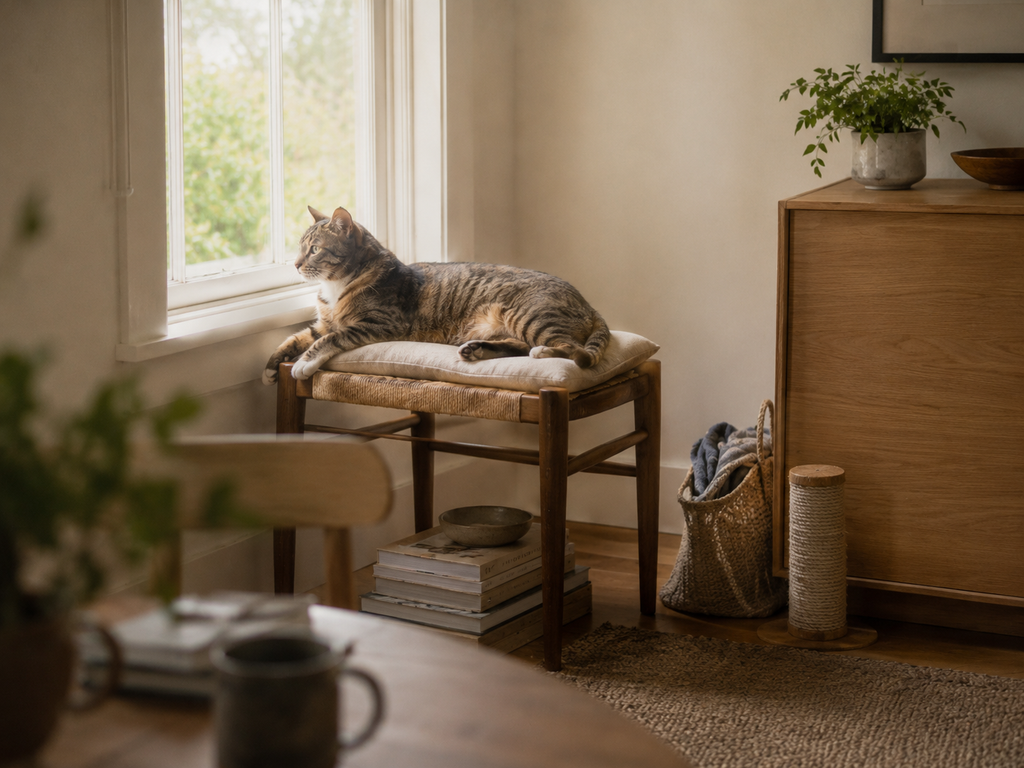
If your cat consistently naps on one end of a bench, watches the street from the same window, or scratches beside a particular chair, start there instead of trying to persuade them into an elaborate new “cat corner.”
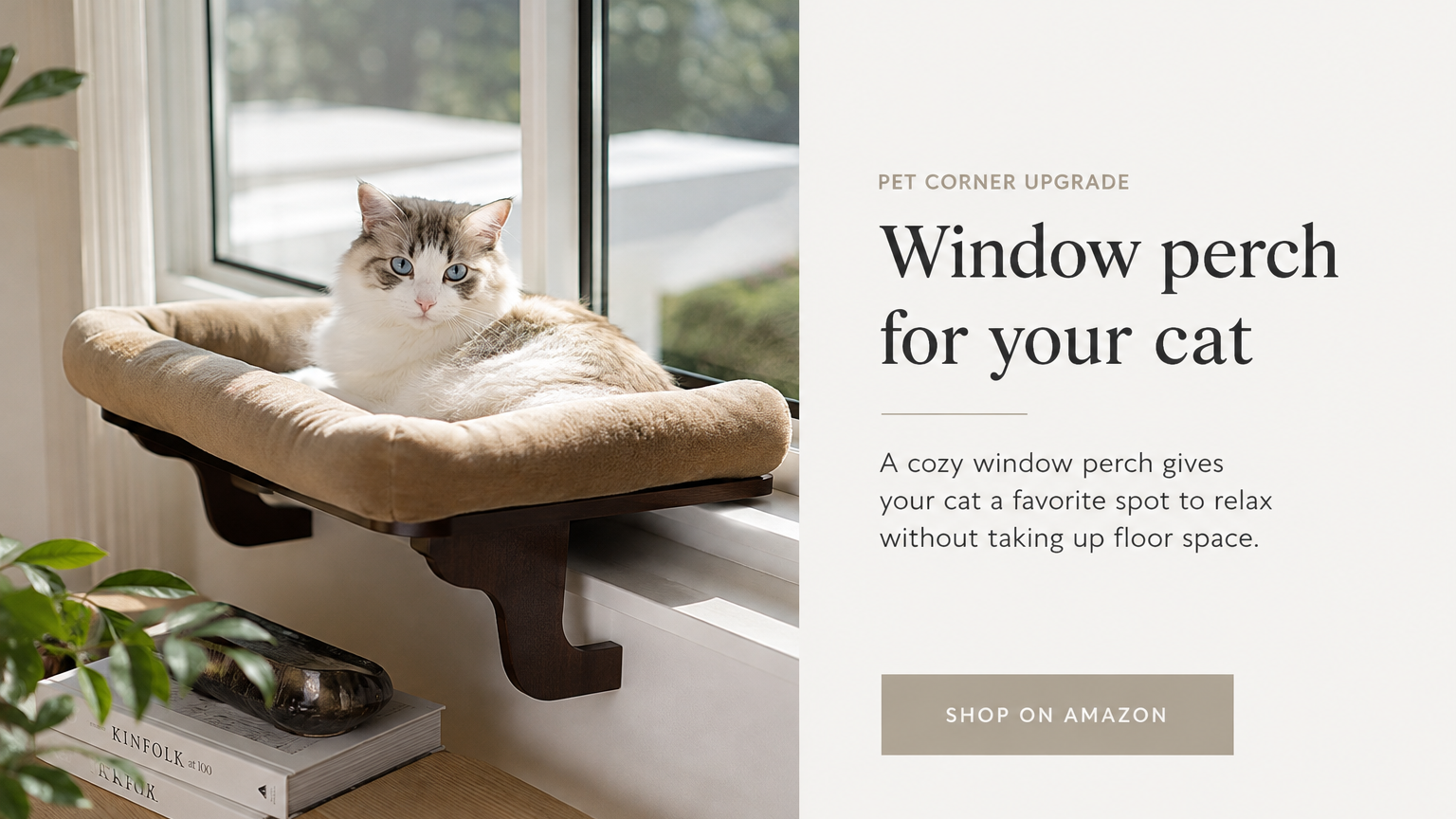
A window spot can become more comfortable with a washable cushion or stable perch.
An awkward section of wall can hold a compact scratcher.
A chair that has already been unofficially surrendered to your cat might simply need a washable throw that you’re happier to live with.
And in a small home, think vertically.
You don’t necessarily need to dedicate more floor space to pet furniture if a compact perch, taller scratching surface, or existing piece of furniture already gives your cat a useful elevated spot.
The visual rule stays the same as everywhere else in the article:
one or two useful things are better than an entire themed setup.
You want the room to say, “a cat lives here.”
Not, “this corner was styled for a cat furniture catalog.”
The Best Pet Corner Usually Starts With What You Already Have
Before you order a new bed, organizer, cabinet, perch, basket, or feeding station, try a 20-minute reset.
Take everything out of the area.
Clean the floor.
Put back only what is used there.
Move the objects that actually belong somewhere else.
Then live with the new arrangement for a few days.
You may discover that the feeding area didn’t need new bowls — it needed to move.
The living room didn’t need concealed toy storage — it needed a smaller basket.
The dog didn’t need a designer bed — the perfectly good one you already owned just looked better once it wasn’t floating awkwardly in the middle of the room.
The cat, meanwhile, may ignore all of your decisions and continue sleeping on a cardboard box.
That is also useful information.
A Simple Weekend Pet-Corner Reset
If you want to do this without turning it into an all-day project, keep the process simple:
- Choose one corner. Don’t reorganize every pet item in the house at once.
- Watch how the space is actually used. Your pet’s habits matter more than the setup you saw online.
- Remove the extras. Most small areas improve when fewer things live there.
- Use the room’s existing materials and colors. The pet corner doesn’t need its own decorating theme.
- Add one genuinely useful upgrade, if needed. A better mat, basket, hook, blanket, bed, scratcher, or perch can be enough.
- Stop when the corner works. It doesn’t need to look finished enough for a photo shoot.
The nicest pet-friendly homes aren’t the ones where every trace of animal life has been hidden.
They’re the ones where the bed beside the sofa, the leash by the door, the basket of toys, and the cat in the window simply look like they belong there.
And that’s a very manageable thing to improve before Monday.
Affiliate Disclosure
Affiliate Disclosure: After Friday is reader-supported. When you buy through links on our site, we may earn an affiliate commission at no extra cost to you. As an Amazon Associate, After Friday earns from qualifying purchases.