
There is a particular kind of optimism that comes with saying, “We should have people over.”
Then, almost immediately, the mental list begins.
The kitchen needs cleaning. The bathroom needs cleaning. Maybe the living room needs rearranging. What are we cooking? Do we need appetizers? Is there enough wine? Should there be flowers? Candles? A dessert? Better napkins? Something seasonal for the table?
Suddenly, a casual dinner with people you actually like has somehow become a weekend project.
It doesn’t have to.
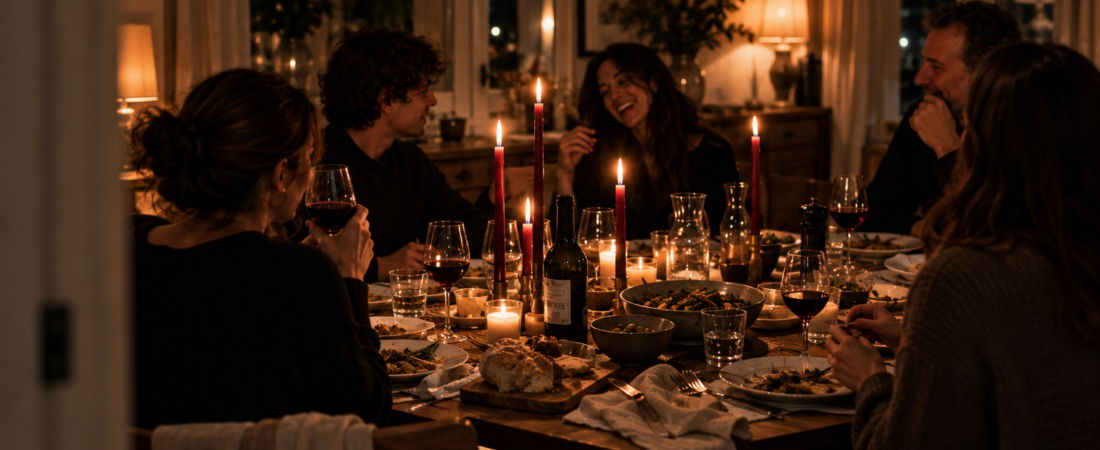
The best fall gatherings rarely feel memorable because the host spent twelve hours preparing them. They feel good because the room is warm, there is enough food, nobody is rushing, and the person who invited everyone over is actually sitting at the table.
That is the goal here.
Not perfect hosting. Not an elaborate autumn tablescape. Not a dinner party that requires a production schedule.
Just a simple way to have people over without giving up your entire weekend to make it happen.
Affiliate disclosure: This post contains affiliate links. If you make a purchase through one of these links, After Friday may earn a commission at no extra cost to you. As an Amazon Associate I earn from qualifying purchases.
First, Decide What Kind of Gathering This Actually Is
One of the easiest ways to make hosting unnecessarily complicated is to treat every invitation like a dinner party.
Sometimes you are serving dinner.
But sometimes people are coming over for wine and snacks. Or Sunday lunch. Or coffee and something sweet. Or a very casual meal where everyone arrives hungry and nobody expects three courses.
Decide what the gathering actually needs before you start planning anything else.
A couple coming over at 7:30 does not automatically require appetizers, a starter, dinner, dessert and a signature cocktail.
Neither does a Sunday lunch need to look like restaurant service.
Match the amount of preparation to the occasion you are actually having.
That decision alone can remove half the work.
Plan the Food Around How Much Time You Want to Spend Cooking
Instead of asking, “What would be impressive to make?”, start with a more useful question:
How much of the evening do I want to spend in the kitchen?
Ideally, very little.
Choose food that can mostly be finished before anyone arrives, can sit happily for a while, or can be put in the middle of the table for everyone to serve themselves.
For a proper meal, a very easy formula is:
one main + one simple side + something bought + dessert
That “something bought” might be really good bread, olives, a salad component, cheese or anything else that removes one more task from your list.
For drinks and snacks, think:
something warm + something crunchy + something bought + something sweet
It is enough.
The most useful rule is to make sure only one part of the food needs your real attention once guests arrive.
If one thing needs ten minutes in the oven, fine.
If three pans need watching, vegetables need finishing, drinks need mixing and dessert still needs assembling, you have created a shift for yourself.
Buy the Things That Are Not Worth Your Time
There is no prize for making everything yourself.
A bakery dessert on a plate is still dessert.
Good bread is good bread whether you baked it or picked it up that afternoon.
Olives poured into a bowl do not become more enjoyable because you spent forty minutes making an appetizer instead.
Homemade matters when making something is part of the pleasure. It does not need to become a requirement.
If buying one part of the meal gives you another hour to shower, get dressed, walk the dog, sit down for a few minutes or simply stop rushing, buy it.
That is not cutting corners.
That is designing the evening properly.
Do the Work That Actually Benefits From Being Done Early
There is useful prep, and then there is nervous prep.
Useful prep makes tomorrow easier.
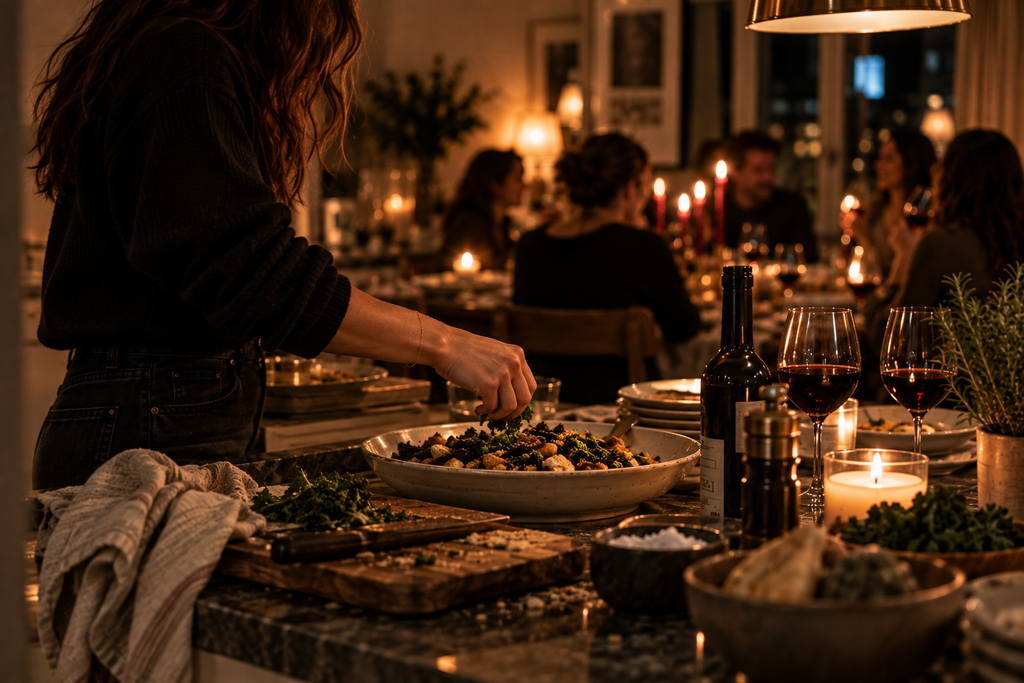
Make dessert ahead if it keeps well. Mix a dressing. Chop vegetables that will still be good later. Chill the drinks. Decide which dishes you are serving food in. Put water in the fridge.
You can also set out plates, glasses and napkins several hours before anyone arrives if that makes the evening feel calmer.
But you do not need to fill every available hour with preparation simply because people are coming over.
Once the things that genuinely need doing are done, stop.
Clean the Places People Will Actually Use
Guests do not need your entire home to look as though nobody lives there.
Think about the route they will actually take.
The entrance.
The bathroom.
The kitchen, dining area or living room where everyone will spend the evening.
Those spaces deserve your attention.
The bedroom with the laundry basket in it does not.
Neither does the cupboard you suddenly feel compelled to reorganize at 3 p.m.
Put obvious clutter away, wipe the surfaces people will use, give the bathroom a quick reset and make enough room for coats and bags.
Then leave the rest of the house alone.
A lived-in home is not a hosting failure.
Make Drinks Easy to Reach
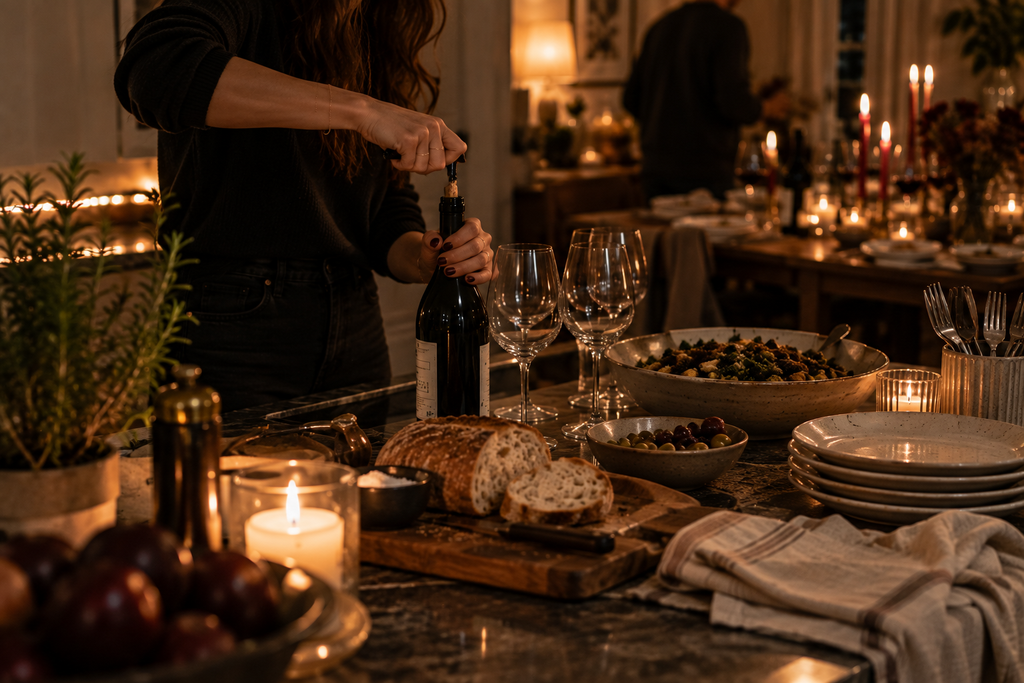
One surprisingly effective way to make a gathering feel more relaxed is to stop making yourself responsible for every refill.
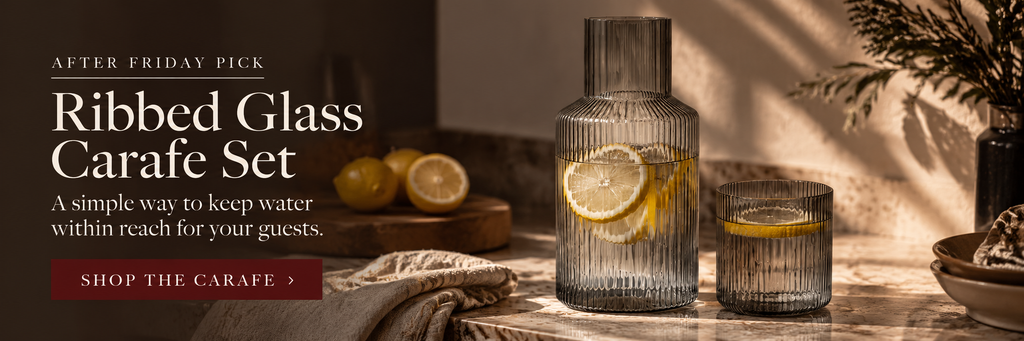
Put water somewhere obvious.
Set out the glasses.
Keep the wine, beer or other drinks somewhere guests can comfortably help themselves once the evening gets going.
This does not need to become a styled drinks station with garnishes, cocktail shakers and three kinds of ice.
It just needs to be clear where the drinks are.
You can still offer the first one when someone arrives.
After that, let the evening take care of itself.
Set a Table, Not a Tablescape
There is nothing wrong with loving a beautifully set table.
But hosting becomes much easier when a beautiful table is something you enjoy creating rather than another standard you need to meet.
You already have most of what you need:
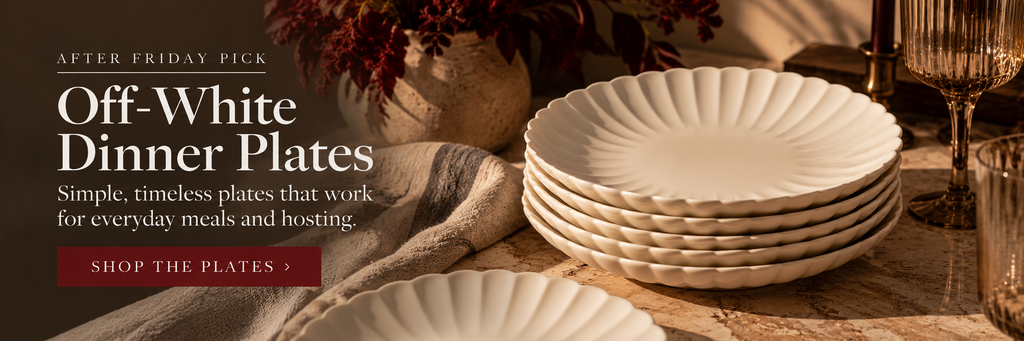
plates, glasses, napkins and cutlery.
Add candles.
Maybe put one simple seasonal element in the middle if you already have something you love — a small bowl of pears, a few branches, flowers from the garden or a piece you use throughout the year.
Then stop.
You do not need coordinated autumn dinnerware. You do not need miniature pumpkins at every place setting. You do not need a centerpiece so large that everyone has to talk around it.
In fact, a table often feels more inviting when everything is not perfectly matched.
Different glasses, old serving dishes and pieces collected over time can make the room feel more personal, not less finished.
Let the Lighting Do More of the Work
If you do one thing to change how the room feels, change the lighting.
Turn off the harsh overhead light if you can.
Use lamps.
Light a few candles.
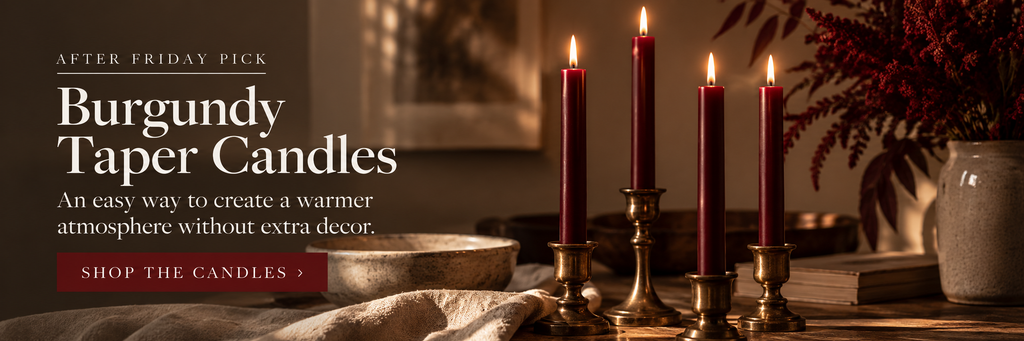
Keep the room warm rather than bright.
This does far more to make an ordinary dinner feel like an occasion than adding another layer of seasonal decor.
Fall atmosphere does not have to mean decorating the house with obvious symbols of fall.
Wood, food, candlelight, darker evenings, a bottle of wine on the table and people staying longer than expected are already doing most of the work.
Serve Food That Lets You Sit Down
The best hosting food is not necessarily the food people find most impressive.
It is the food that allows you to become part of your own evening.
A big pot, tray or serving bowl in the middle of the table is often better than individually plated food.
Family-style serving also removes the strange pressure of trying to make every plate look identical while everyone else waits.
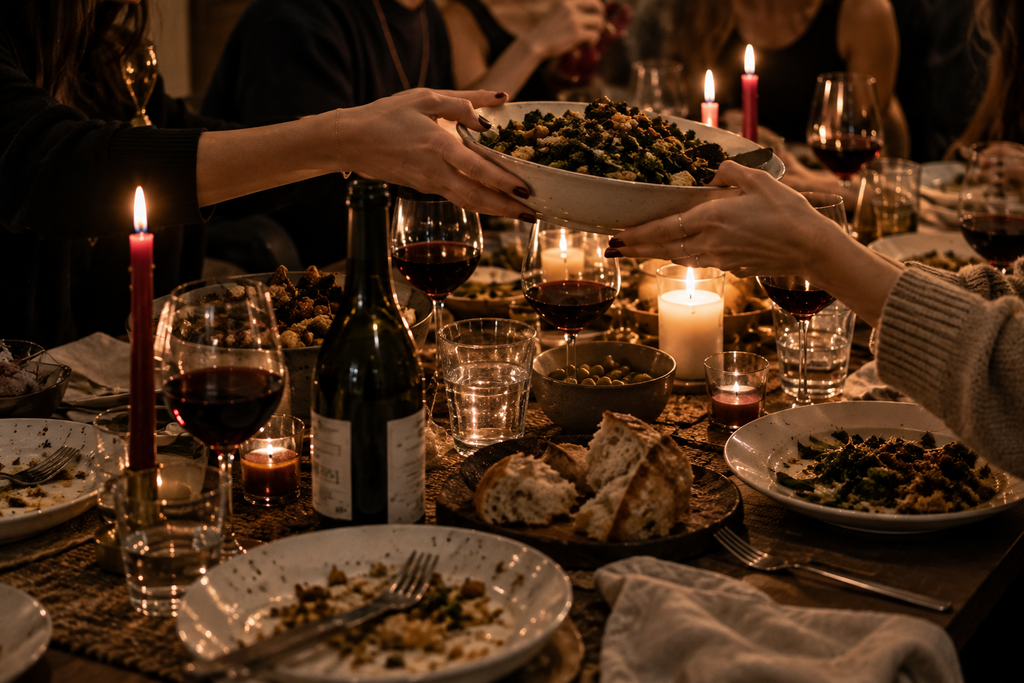
Put the food down.
Pass things around.
Let people take what they want.
If something is slightly messy, that is usually a sign that dinner is actually happening.
Let Go of the Things Nobody Cares About as Much as You Do
Hosting becomes dramatically easier once you decide which standards you are no longer interested in meeting.
You can skip deep-cleaning rooms nobody will enter, perfectly matching dishes, elaborate centerpieces, homemade everything, signature cocktails, several appetizers, multiple desserts and the idea that dinner must appear on the table at one exact minute.
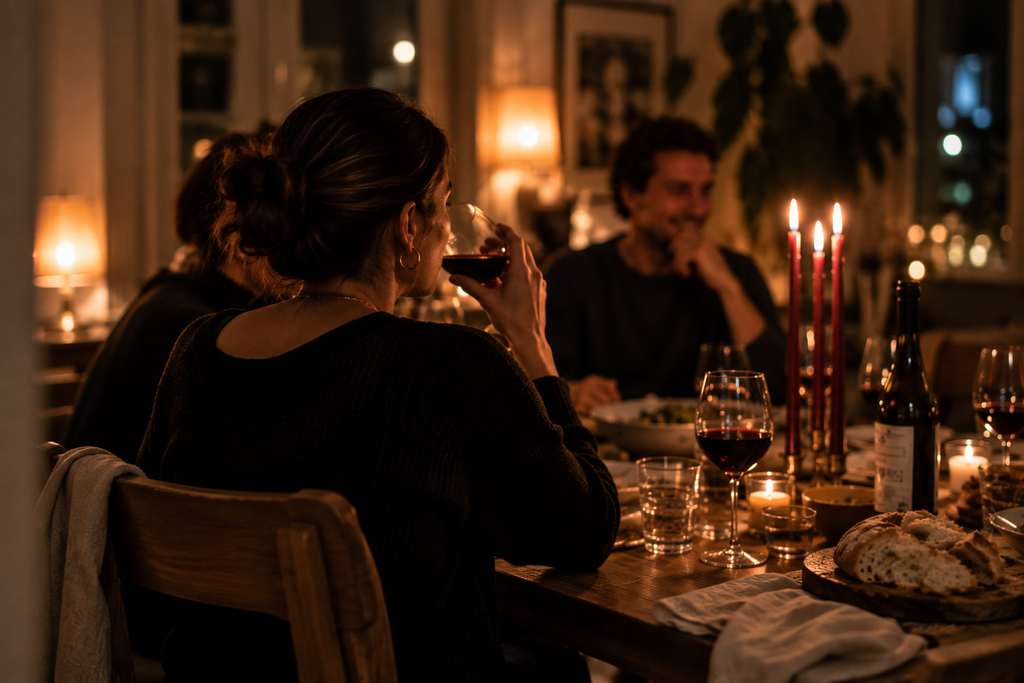
You can also stop hiding every piece of evidence that people live in your home.
The coat on the back of a chair is fine.
The stack of books beside the sofa is fine.
The kitchen looking as though dinner was made in it is fine.
The goal is not to care less.
It is to care selectively.
Spend your energy on the things guests actually experience: enough food, comfortable places to sit, good light, something to drink and a host who is not exhausted before the doorbell rings.
Make Tomorrow Morning Easier Before Anyone Arrives
The least glamorous part of hosting may also be one of the most useful things to think about.
What happens after everyone leaves?
Before guests arrive, empty the dishwasher if you have one.
Start with an empty sink.
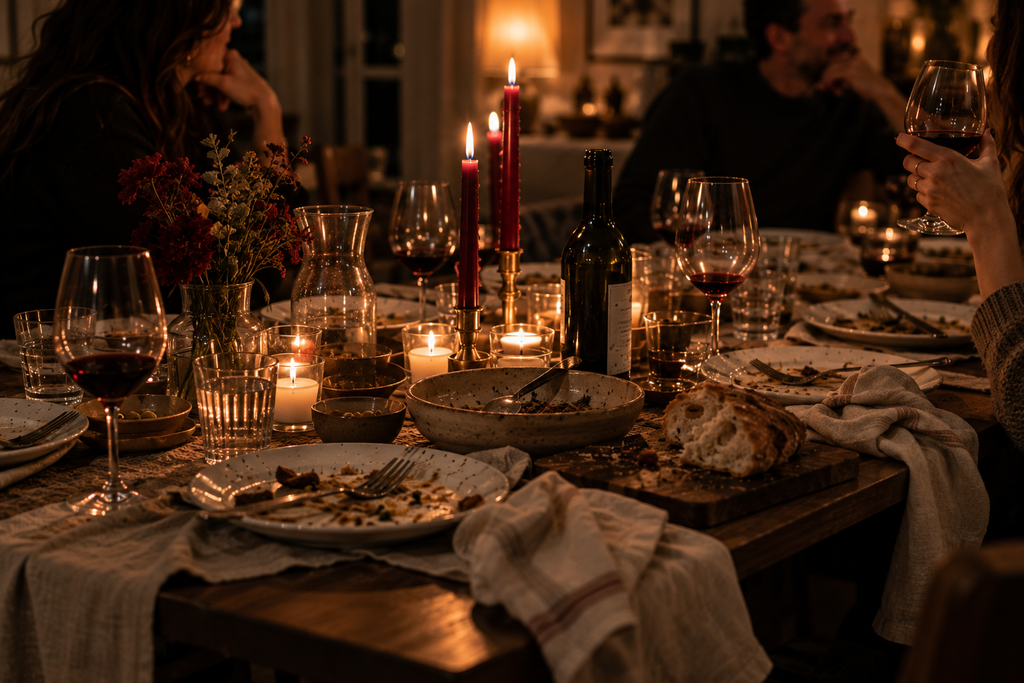
Make sure the bin and recycling are not already full.
Clear a little space in the fridge for leftovers.
Have a few containers ready.
None of this makes the evening prettier, but it makes the end of it significantly better.
And when the night is over, you do not need to return the entire house to perfect order.
Put the food away.
Collect the glasses and dishes.
Load the dishwasher.
Deal with anything that genuinely cannot wait.
Then stop.
The remaining glasses can survive until morning.
So can the crumbs.
The Relaxed Hosting Formula
You do not need a different formula every time people come over.
In fact, having a loose rhythm you already trust makes inviting people much easier.
Decide what kind of gathering it is.
Keep the food simple.
Prepare the rooms people will actually use.
Put drinks somewhere accessible.
Set the table without turning it into a project.
Make most of the food before guests arrive.
Dim the lights.
Then sit down.
That last part matters.
Because the point of having people over was never to prove how well you can host them.
It was to spend time with them.
A table can be simple and still feel generous. Dinner can include something bought and still feel thoughtful. The house can look lived-in and still feel welcoming.
The host should be part of the evening, not the person running it.